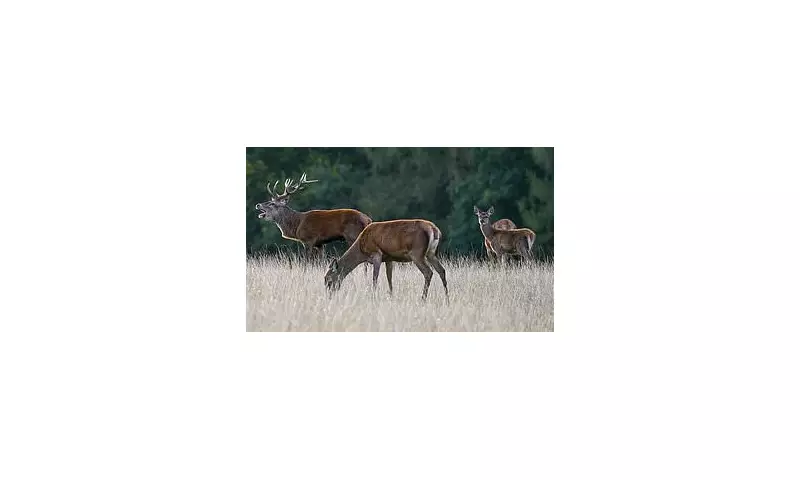
Britain's native red deer are facing a severe threat from a hardier, invasive rival, with experts warning they could follow the red squirrel into catastrophic decline. A new scientific study has revealed that sika deer, introduced from East Asia in the 19th century, are dramatically outcompeting their native counterparts.
The Alarming Population Shift
Research published in the journal Ecological Solutions and Evidence has uncovered a stark contrast in the fortunes of the two deer species. The analysis, focused on Scottish estates, showed that despite increased culling efforts, sika deer populations grew by 10% in the 2024–25 period. In a worrying parallel trend, the population of native red deer declined by 22% over the same timeframe.
Scientists state that current management strategies, which often do not distinguish between species during culls, are inadvertently favouring the invasive sika. Calum Brown, lead author of the study from the Karlsruhe Institute of Technology and co-chief scientist at Highlands Rewilding, told the Sunday Telegraph that land managers are seeing clear parallels with the historical displacement of red squirrels by grey squirrels.

Why the Sika Deer is Winning
The sika deer's success is attributed to a suite of natural advantages that make it a formidable competitor. Researchers note that sika are more fertile, smarter, and adapt more quickly than red deer. They can tolerate poorer quality habitats and harsher weather, maintain better physical condition on the same amount of food, and survive at higher densities.
"They do better on limited food, they can survive without problems at high densities that would cause issues for other species, they breed more," explained Calum Brown. "They're then really hard to cull too... They learn and adapt very quickly." Furthermore, sika have a broader diet and appear more resistant to parasites and pathogens.
Visually, sika are distinguishable by their smaller heads and pointed antlers. Their coat changes with the seasons: a grey winter coat is replaced by a summer coat of brown with distinctive white spots.
A Call for Strategic Action to Avoid a Wildlife Crisis
Experts are raising the alarm that without a decisive change in approach, the red deer could be pushed towards a fate similar to that of the red squirrel. The introduction of the North American grey squirrel led to the decimation of native reds through competition and disease.
Compounding the problem is the ability of sika and red deer to interbreed. The resulting hybrid offspring may inherit competitive advantages, further eroding the genetic integrity and resilience of the native red deer population.
The study team warns that the issue may not be confined to Scotland. "It is possible the situation in Scotland is being replicated across the country," said Brown, advocating for a coordinated national and local strategy. Highlands Rewilding stated, "Without strategic action, Scotland could find itself with a landscape increasingly dominated by a species that is more invasive, more prolific and harder to manage."
The clear message from researchers is that conservation efforts must become more targeted, focusing culls on the invasive sika to secure the future of Britain's majestic native red deer.