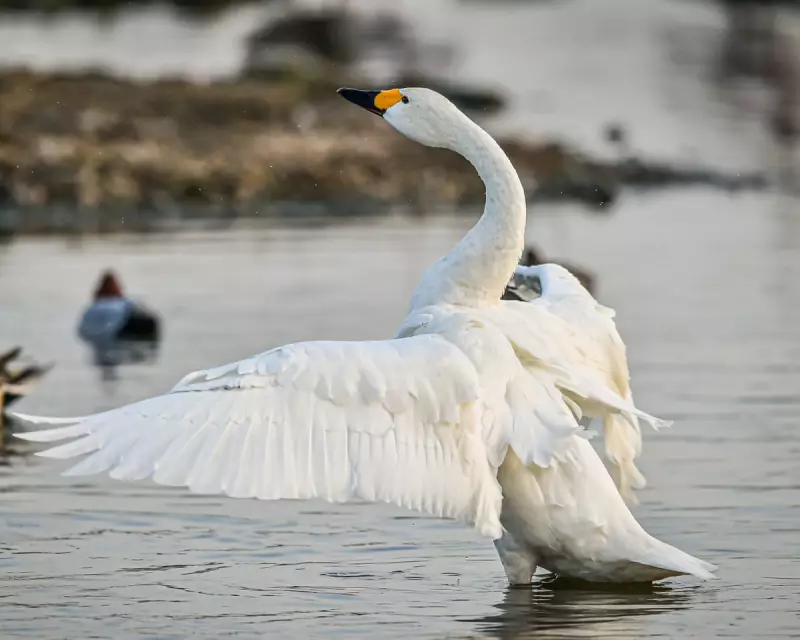
This weekend, a dedicated army of volunteer birdwatchers across the UK and Ireland will take part in a major international effort: the six-yearly census of wintering swans. The survey, last held in January 2020, is a crucial barometer for the health of two iconic migratory species, the whooper swan and the Bewick's swan.
A Tale of Two Swan Populations
The latest data paints a stark picture of diverging fortunes. The UK's wintering population of whooper swans has nearly doubled over the past 25 years, now standing at an impressive 20,000 birds. These majestic swans, which make the journey from Iceland, are thriving. In stark contrast, the smaller Bewick's swan, which migrates from the Russian Arctic, is in steep decline. A mere 700 individuals were reported in early 2025, with almost all of them found at a handful of familiar sites in southern England.
The Climate Change Connection
Ironically, experts suggest that the same environmental force is behind both the rise of one species and the fall of the other: climate breakdown. The recent succession of milder winters has significantly boosted the survival rate of whooper swans, leading to a substantial increase in the breeding population in Iceland. For the Bewick's swan, however, the warming climate is having the opposite effect. Equally mild conditions in Scandinavia and the Low Countries mean these birds are increasingly 'short-stopping' – they no longer need to undertake the arduous crossing of the North Sea to find hospitable winter grounds, leaving traditional UK and Irish sites emptier than ever.

The Global Count
The international swan census is a far-reaching endeavour. It extends beyond the British Isles to monitor overwintering Bewick's swan populations in the eastern Mediterranean and central Asia. Similarly, it tracks whooper swans across their wintering range in Iceland, continental north-west Europe, and around the Black Sea. This coordinated global effort provides invaluable data for conservationists trying to understand the complex pressures on migratory bird populations.
The results from this weekend's count will offer a vital update on these trends. The dramatic shift from the last full count in winter 2020, when Bewick's swans were still a more common sight in places like Gloucestershire, underscores the rapid impact of environmental change on our wildlife. The story of the two swans serves as a powerful indicator of the broader ecological shifts underway across the globe.