The lethal removal of three gray wolves in Utah has ignited a fierce debate between wildlife conservation advocates and state agricultural interests, highlighting the complex tension between federal endangered species protections and local management authority.
Controversial Killing in Cache County
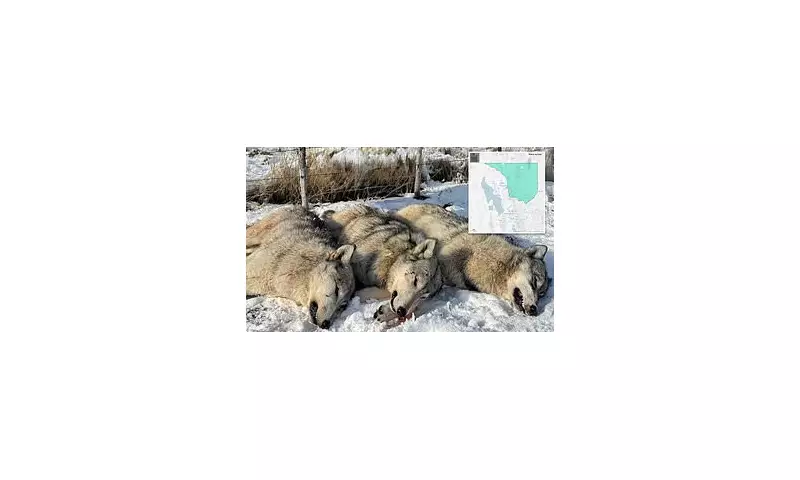
The Utah Division of Wildlife Resources has confirmed to media outlets that three gray wolves were "lethally removed" by the state's Department of Agriculture on January 9th. The animals were shot in Cache County, within a specifically designated "delisted zone" in northern Utah where federal Endangered Species Act protections do not apply.
A photograph showing the three dead wolves lying on the ground, which circulated online and was published by local media, prompted immediate outrage from animal conservation groups. This reaction stems from the gray wolf's status as an endangered species across most of the United States, following historic population declines driven by hunting and habitat loss that brought them to the brink of extinction.

Legal Framework and State Authority
A spokesperson for the Utah DWR provided detailed clarification on the legal justification for the action. "State law directs the DWR to prevent wolves from establishing breeding pairs in the delisted area of northern Utah," the official stated. "The wolves were removed in the delisted area of northern Utah in Cache County and were in areas with livestock."
The spokesperson explained the geographical and jurisdictional boundaries at play. "Currently, the delisted zone—the small area both north of I-80 and east of I-84—is the only area where the state of Utah has authority to manage wolves. In the rest of the state, wolves are still considered an endangered species and fall under federal control and protection."
This arrangement results from Utah officials challenging the federal endangered status and requesting management authority due to the wolves' perceived impact on agriculture. The federal government subsequently permitted the state to establish this delisted zone where officials may act to prevent wolves from becoming established.
Public Reaction and Divided Opinions
The killing has provoked strong and contrasting responses from the public and local residents. On social media platforms, many questioned the state's justification.
"You have to prove they are predating livestock before such drastic measures," one person commented on Facebook. Another wrote, "There needs to be more explanation as to why they shot the wolves. Why would we reintroduce them some places and keep them out of others?"
Conversely, others supported the Department of Agriculture's action. "The only good wolf is a dead wolf," one individual stated bluntly. A second commenter argued, "Wolves don’t just kill when hungry, they kill constantly and continually until everything is gone, then move on to another area to kill everything! They are not just trying to feed! They need to be heavily controlled."
Local Perspectives and Management Reality
Launie Evans, a resident of the area where the wolves were shot, expressed mixed feelings in an interview with local broadcaster KSL. "I wish they would have had a way to relocate them rather than kill them," Evans said. "But I also don't want to see a calf killed either. Nature's hard." This sentiment captures the difficult balance between protecting livestock and preserving wildlife.
The DWR spokesperson confirmed that, despite occasional sightings and rare instances of livestock depredation, there are currently no known established wolf packs in Utah. The official reiterated the department's mandate: "The law directs DWR to prevent the establishment of packs in the delisted portion of Utah, and we don’t have jurisdiction over the ESA-listed areas of Utah or other surrounding states. Lethal removals ensure they don’t establish breeding populations in Utah."

Broader Conservation Context
This incident occurs against a backdrop of ongoing national debate about gray wolf recovery and management. Listed as endangered in 2022 following significant population declines, the species remains protected under federal law across most of its range. However, specific areas like Utah's delisted zone create exceptions where state authorities can implement population control measures to address agricultural concerns.
The controversy underscores the persistent challenges in wildlife management, where ecological conservation, legal frameworks, agricultural economics, and public sentiment frequently collide. As Utah officials exercise their limited authority in the northern delisted zone, the fate of individual wolves continues to spark intense discussion about the appropriate balance between species protection and practical land management.