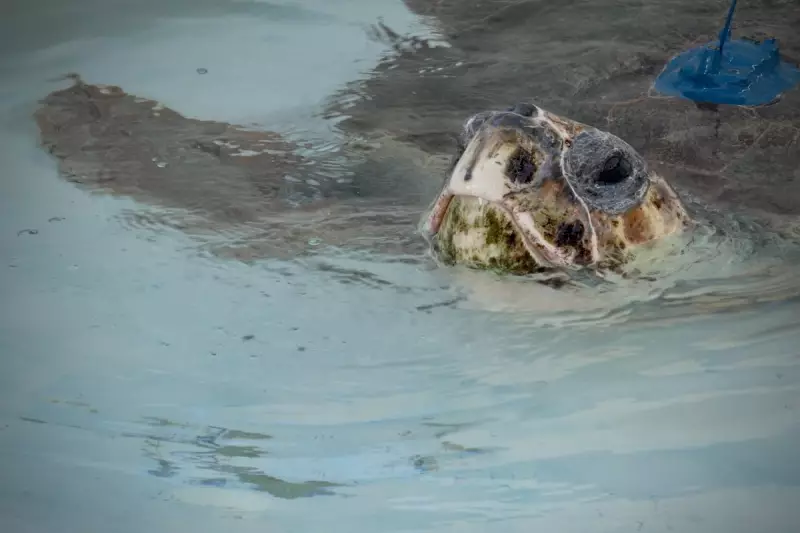
Cheers erupted from a warmly dressed crowd gathered on a Florida beach as a resilient loggerhead sea turtle, having endured months of intensive rehabilitation, made her determined journey back into the Atlantic Ocean. The remarkable creature, now equipped with a sophisticated satellite tracker, is navigating the seas with only three flippers, providing scientists with invaluable data on her post-recovery adaptation.
A Triumphant Return to the Ocean
The turtle, affectionately named Pyari—a Hindi term meaning "lovely" or "beloved"—was released from the Loggerhead Marinelife Center in Juno Beach. She arrived at the facility in November from the nearby Inwater Research Group, bearing extensive injuries to her neck, shell, and both front flippers, consistent with a likely predator attack. This traumatic event necessitated the amputation of most of her left forelimb.
Heather Barron, chief science officer and a veterinarian at the centre, expressed the profound satisfaction of witnessing such releases. "It's definitely always very gratifying to see these animals go back into their ocean home," Barron remarked. "And I think it's particularly gratifying when you can track them on satellite, and see exactly where they're going and what they're doing."

Scientific Monitoring and Environmental Conditions
Despite the chilly beach air, with temperatures in the 40s Fahrenheit (approximately 4 to 9 degrees Celsius), the Atlantic Ocean maintained a comfortable 77 F (25 C). To ensure a smooth transition, the rehabilitation team acclimatised Pyari by keeping her tank water at around 80 F (27 C). As she crawled across the sand, her satellite tracker's long antenna waving distinctively, beachgoers captured the poignant moment before she vanished into the waves.
The satellite tags, while costly at about $10,000 each, are crucial for research. Barron emphasised the importance of gathering data on amputee turtles, as little is known about their long-term survival post-rehabilitation. "Every little bit of information helps us to understand the behaviour and the success of these animals," she noted. The centre is currently tracking two other amputee turtles alongside Pyari, enhancing the collective understanding of their resilience.
Implications for Wildlife Conservation
This release underscores the critical role of marine rehabilitation centres in wildlife conservation. The ability to monitor Pyari's movements via satellite offers unprecedented insights into how three-flippered turtles adapt to their natural habitat, informing future rescue and care strategies.
The Loggerhead Marinelife Center's efforts highlight the ongoing challenges marine life faces from natural predators and human impacts, reinforcing the need for continued support and research in marine conservation initiatives.