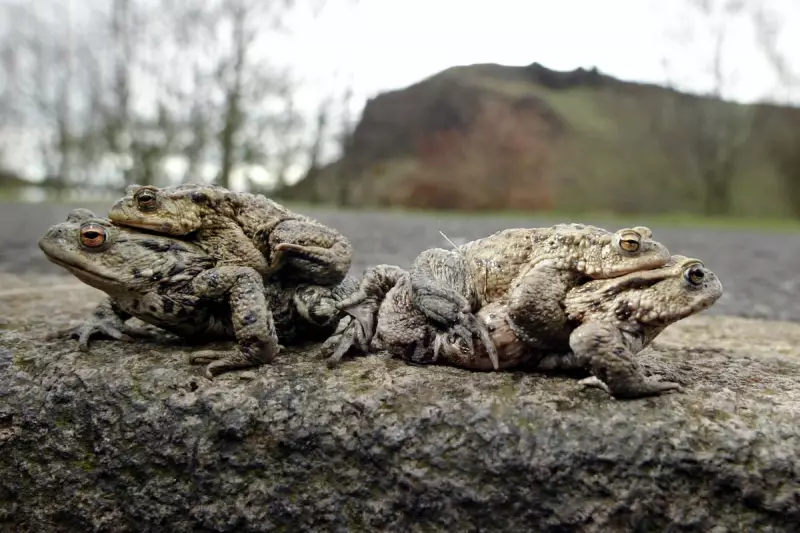
Two Million Toads Safely Guided Across UK Roads by Dedicated Volunteers
Dedicated volunteers have achieved a remarkable conservation milestone by safely guiding more than two million toads across British roads during their annual spring migrations over the past five decades. The wildlife charity Froglife has revealed this extraordinary figure as "toad patrollers" prepare to assist common toads navigating treacherous routes to their breeding ponds this season.
Vital Protection for a Declining Species
Froglife has underscored the critical importance of this volunteer work for a species experiencing widespread decline across the United Kingdom. Data collected by the charity's volunteers and published last year indicated a significant 41 per cent decline in common toad populations over forty years, although some regional recoveries have been noted since 2013.
The charity reported a record-breaking year in 2025, with 280 volunteer groups moving 156,227 toads and submitting their observations. In total, over two million toads have received assistance crossing British roads since Froglife began systematically collecting records in 1974.

How Toad Patrols Operate
Volunteers who patrol roads situated between the toads' overwintering grounds—such as woodlands—and their breeding ponds perform multifaceted conservation work. They not only save individual animals from road traffic but also help prevent local population extinctions while gathering valuable data about how the species is faring nationwide.
During patrols, volunteers venture out on wet nights early in the year equipped with torches and buckets. They walk slowly along designated routes, carefully collecting toads, frogs, and newts to transport them safely across roadways, allowing these amphibians to continue their essential migratory journeys.
At a handful of particularly critical sites, local authorities implement temporary road closures specifically for the toad migration season, demonstrating institutional support for these conservation efforts.
Benefits for Volunteers and Conservation Science
Froglife emphasises that volunteers gain substantial well-being benefits from participating in toad patrols. These include spending time outdoors, forming friendships with like-minded individuals, and experiencing genuine pride in making a tangible difference for local wildlife.
Meanwhile, the citizen science data gathered through these patrols proves "vitally important" for conserving common toads throughout the UK. This information serves multiple purposes—from protecting breeding ponds within the planning system to informing research about climate impacts—and is made available to anyone interested in their local wildlife.
Geographical Gaps in Patrol Coverage
An analysis of Froglife's data has highlighted concerning geographical gaps where registered toad crossings exist but lack active patrols. The highest concentrations of counties without active patrols occur in Scotland, the Midlands, and north-east England.
Ashlea Mawby, Froglife's Toads on Roads Coordinator, appealed: "We encourage anyone living in these areas to please consider establishing a patrol at an inactive site. Wherever you reside, opportunities exist to get involved—whether by joining your local toad patrol, registering a known crossing, or starting a new patrol."
She added: "Just one evening of toad patrolling can save hundreds of toads and other amphibians during migration. It represents one of the most direct ways to assist your local wildlife."
Ongoing Threats and Policy Concerns
Despite these volunteer efforts, Froglife warns that common toad populations continue suffering from persistent habitat loss and pollution. The charity expresses particular concern about the Planning and Infrastructure Act passed last year, which they believe weakened protections for wildlife.
Froglife is now calling for the planned Water Reform Bill to effectively tackle freshwater pollution from agriculture and sewage—both significant threats to amphibian health. Alongside other conservation organisations, the charity advocates for the bill to deliver several crucial measures:

- A robust environmental regulator with proper enforcement powers
- Strengthened water quality regulations
- Strict enforcement of polluter-pays principles
- Creation of adequate space for water management, including wide habitat corridors along river systems
These combined efforts—from grassroots volunteer patrols to national policy advocacy—demonstrate the multifaceted approach required to protect Britain's declining amphibian populations for future generations.