Global Photography Contest Captures Humanity's Deep Connection with Water
The global Walk of Water photography contest has unveiled a remarkable collection of images that powerfully illustrate the profound and intimate relationship between humanity and water across diverse cultures and landscapes. Organised by UNESCO and Onewater, this international competition has attracted entries from photographers worldwide, each capturing unique perspectives on how water shapes lives, traditions, and environments.
Vanishing Waterscapes and Changing Traditions
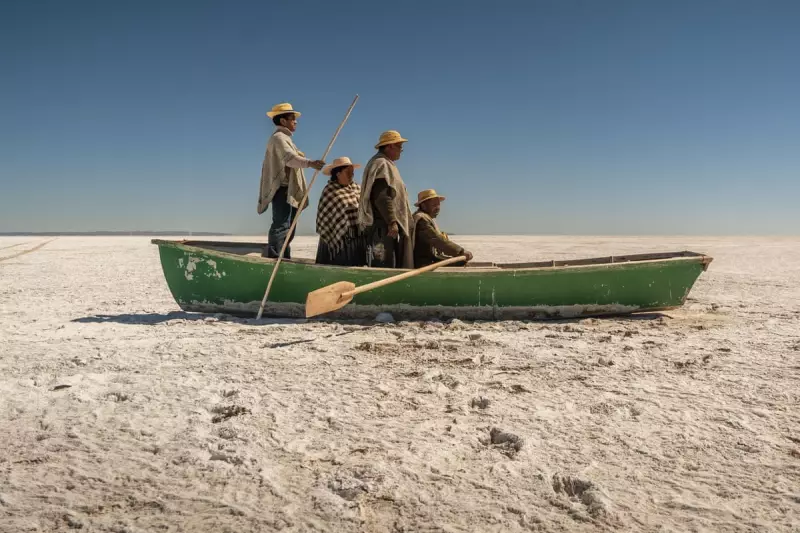
From Bolivia's vanished Lake Poopó to Iran's shrinking Lake Urmia, the photographs document water's disappearance and its profound impact on communities. In Bolivia, Florencio, Pablo, Cipriana and Félix Mauricio sit in a boat stranded on what was once their ancestral fishing ground, now transformed into a barren salt flat. This poignant image represents the Qotzuñi people's lost way of life, forcing them to adapt through crafts and reenactments of their former existence.
Similarly striking is the photograph from Iran showing a grandmother's hands swimming in the highly saline remains of Lake Urmia, once one of the largest saltwater lakes in the Middle East. These images serve as powerful reminders of how climate breakdown is reshaping landscapes and livelihoods across the globe.

Traditional Practices and Water-Based Livelihoods
The contest entries beautifully capture traditional water-based practices that have sustained communities for generations. In South Korea, a haenyeo (sea woman) diver prepares to plunge beneath the surface in search of mussels, continuing a centuries-old tradition of female divers who harvest seafood without breathing apparatus.
In Tanzania, women of Zanzibar wade into low tide waters draped in traditional kangas to tend their seaweed crops, while in Cambodia, the economy of Tonle Sap Lake relies on processing millions of small 'money fish' into prahok, a fermented fish paste central to local cuisine.
Belgium's entry shows Stefaan riding his horse Dina to catch shrimp in the summer waters of the North Sea, demonstrating how traditional fishing methods persist alongside modern industrial practices.
Climate Change Through Children's Eyes
Perhaps most moving are the images from Greenland, where children in the Uummannaq settlement carve words into thinning sea ice to describe the climate changes they witness firsthand. Their vocabulary includes terms like Isippoq (falling through sea ice), Imarorpoq (the sea ice disappears), and Sikoqqinngisaannassooq (in the future, there will be no more sea ice). This powerful documentation shows how climate change is becoming part of everyday language for communities living on the front lines of environmental transformation.
Conservation Efforts and Cultural Preservation
The photographs also highlight conservation initiatives and cultural preservation efforts. In the Philippines, the community of Dunoy releases a young crocodile into a creek near the Disulap River as part of a 'head-start programme' designed to help hatchlings survive and rebuild the Philippine crocodile population.
In Malaysia, two Bajau Laut girls wear borak, a traditional paste made from turmeric and rice that serves as both beauty treatment and sun protection for the sea nomad community. Meanwhile, in Indonesia, 16-year-old Emen practices traditional whaling techniques, leaping off rocks into the sea repeatedly, viewing this practice as carrying the weight of tradition rather than proving skills to others.
Water's Central Role in Human Existence
From Russia's Kolyma River, where the Samotishchuk family stores food in an ice cellar threatened by riverbank erosion, to India where a boy determinedly saves his pet from rising waters, the photographs collectively demonstrate water's central role in human existence. The Brazilian entry shows butterflies flying around the old chief of the Kayapó people in the Middle Xingu region, a biodiversity hotspot where water sustains both people and wildlife.

The Walk of Water photography contest serves as a powerful visual testament to water's multifaceted importance – as livelihood, tradition, threat, and life source. These images remind viewers that water connects humanity across continents and cultures, while highlighting the urgent need to protect this precious resource for future generations.