Winter Discovery in Devon's Frosty Woods
As dawn broke over a frost-laden car park in Devon, the sharp winter air provided an invigorating wake-up call. Tall oak trees stood sentinel, their branches adorned with icy droplets that glistened like frozen tears in the early morning light. The surrounding woodland was enveloped in a profound silence, broken only by the eager footsteps of a young explorer and her bounding dog venturing into the solemn, cold forest.
The Unexpected Nest Encounter
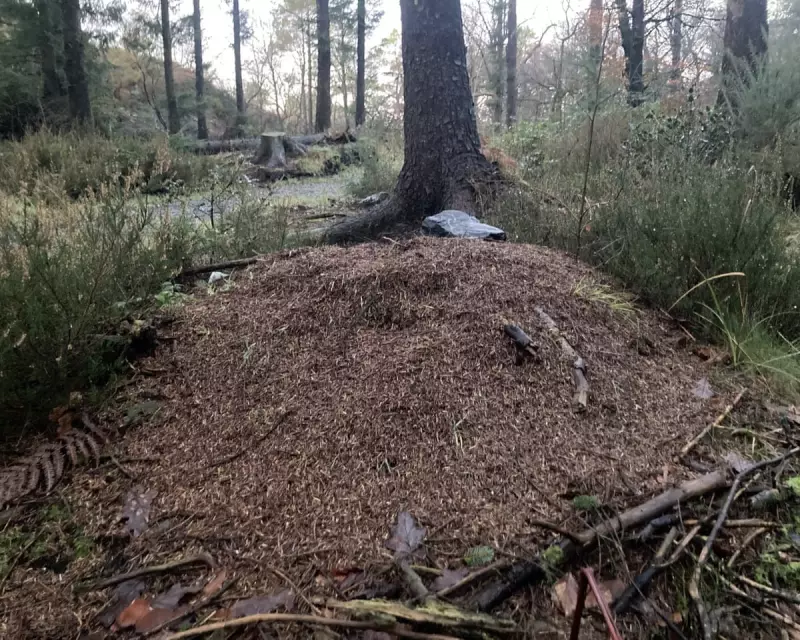
Further along the winding path, a remarkable sight emerged: a substantial mound composed of soil and pine needles, unmistakably the structure of a wood ant nest. Upon closer inspection, a few drowsy ants could be observed moving slowly around their winter home, an unexpected sight during the hibernation season.
The Hibernation Strategy of Wood Ants
During winter months, wood ants enter a state of dormancy similar to hibernation. They retreat to the deepest chambers of their nest and employ a fascinating survival tactic: huddling together in tight clusters, much like emperor penguins in Antarctic conditions, to conserve collective body heat. The ants spotted during this Devon excursion may have been roused from their slumber by the morning sun's gentle warmth, perhaps beginning early preparations for the coming spring.

This contrasts dramatically with summer activity, when these nests become bustling metropolises teeming with hundreds of thousands of industrious individuals. Despite their classification as insects, wood ants represent one of the United Kingdom's largest ant species, a fact that often surprises observers who expect all ants to be minute.
Defensive Mechanisms and Further Discoveries
These remarkable creatures possess a unique defensive capability. When their nest is threatened by intruders, wood ants can release a protective chemical spray from their abdomen. Observers have noted this substance carries a distinctive odour reminiscent of fish and chips, adding another curious dimension to their biology.
Elated by this winter wildlife encounter, the exploration continued back toward the warming car. Along the return journey, additional wood ant nests became visible throughout the woodland. Once attuned to their distinctive mound structures, these insect dwellings proved surprisingly easy to identify amidst the winter landscape.
This firsthand account from nine-year-old Meg demonstrates how winter reveals different aspects of wildlife behaviour, with even hibernating species occasionally displaying unexpected activity during milder moments. The discovery underscores the value of careful observation during colder months, when nature's rhythms continue in subtler, yet equally fascinating, patterns.