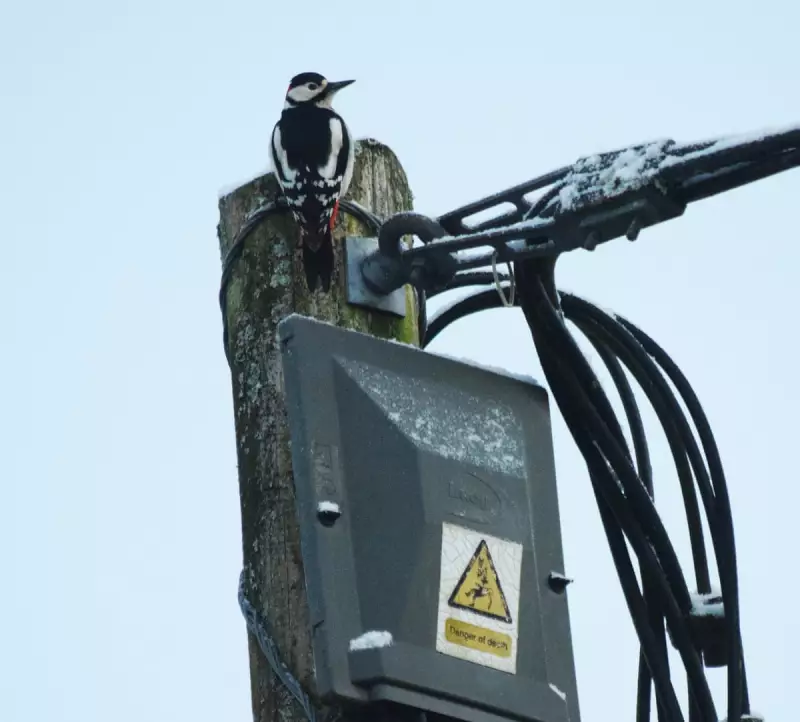
In the serene landscapes of West Dartmoor, Devon, a remarkable avian spectacle has been unfolding at dawn, capturing the attention of local residents and nature enthusiasts alike. A male great spotted woodpecker has eschewed traditional hollow branches in favour of an unconventional percussion instrument: an electrical junction box mounted on a roadside telegraph pole.
An Unusual Dawn Chorus
Early one snowy morning in January, the peaceful quiet of a village near the historic Brentor church was interrupted by short, rapid bursts of drilling. While woodpeckers are a familiar presence in the area, this particular sound stood out. It resonated with the impatient tapping of fingers on a desktop, yet carried the swift rhythm of a marching band's snare-drum roll.
Peering through the curtains, the source of this distinctive noise was revealed just metres away. The woodpecker, perched atop the plastic box, was fully engaged in a drumming session, exploiting the box's exceptional acoustics. Despite a yellow warning sign on the box reading "Danger of death," the bird appeared entirely unperturbed, focused solely on its rhythmic performance.

A Creative Adaptation
Great spotted woodpeckers typically rely on hollow branches for their territorial drumming, using the resonant sounds to stake out territories and attract mates. However, this individual has demonstrated a keen adaptability, discovering that the electrical wiring rain cover offers a superior percussive quality. Since this initial discovery, the woodpecker has returned regularly, turning the junction box into its preferred stage for sunrise performances.
There is an inherent comical charm to woodpeckers, from their tree-chiselling antics to their pointed features and gravity-defying ascents up tree trunks. The great spotted woodpecker boasts bold markings: a striking black and white plumage with a vivid flash of crimson under the tail, reminiscent of accidentally sitting in wet paint. Males are further distinguished by an additional square of red at the back of the head.
The Science Behind the Drumming
These birds employ their power-drill-like bills not only to extract grubs from wood and carve out nest holes but also to produce loud, rapid drumming as a mating signal. Contrary to earlier beliefs that shock-absorbing tissues in the skull prevent injury, recent research indicates that such cushioning would reduce effectiveness. Instead, the head and beak function as a unified hammer, maximising impact without causing harm to the bird.
Thus, this headbanging woodpecker is well-adapted to avoid injury during its vigorous sessions. The only ones potentially suffering from headaches as it pounds out its sunrise beats are the human listeners, awoken by its persistent and percussive dawn chorus.
This unique behaviour highlights the adaptability and resilience of wildlife in changing environments, offering a fascinating glimpse into the daily lives of Dartmoor's avian residents.