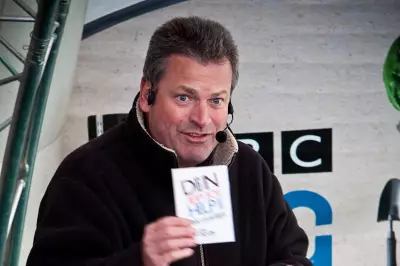
When Warren Williams' heart stopped beating for an entire minute during what should have been a routine coastal run, his friends believed they had just witnessed him die. Yet in what medical professionals are calling a miraculous recovery, the 64-year-old teacher and professional musician somehow stood up, brushed himself off and insisted on continuing his run.
The ultimate health poster boy
Hailing from Maroubra in Sydney's eastern suburbs, this father-of-two has faced more life-threatening cardiac events than most people encounter in a lifetime. What makes his story particularly remarkable is that Warren grew up as what he describes as the ultimate 'poster boy of health'.
From his youth, Warren maintained an active lifestyle, experimenting with surfing and rugby league before discovering his true passion at age 17 when his father-in-law introduced him to running. 'That's when I got into ultra-fitness and then progressed to triathlons,' he recalled. 'By the time I'd reached 21, I'd become utterly obsessed.'

His athletic achievements became increasingly impressive over the years, with countless five and ten-kilometre races conquered, half-marathons dominated, and even the gruelling Ultra-Trail Australia completed - a 50-kilometre challenge weaving through NSW's Blue Mountains.
The shocking diagnosis
While maintaining his peak physical condition, Warren simultaneously balanced teaching high school by day and performing in a popular band with his brothers by night. For sixteen years, he maintained this demanding schedule while still training seven days a week.
This relentless pace continued until 2010, when a routine visit to his family GP with his son Jordan would change everything. Out of casual curiosity, Warren asked for his blood pressure to be checked and his chest listened to - something he'd never done before.
'My doctor had this strange look on his face, and immediately asked me if I was okay,' Warren remembered. After conducting an ECG, the doctor delivered shocking news: Warren had both atrial fibrillation (AF) and an atrial flutter - dangerous arrhythmias that can cause blackouts, strokes and sudden death.
Common warning signs include shortness of breath, fatigue, chest discomfort and sudden dizziness, but the condition often presents unpredictably. Many experience no symptoms at all, while others have intermittent warnings without pattern.
'I was in complete shock, I thought he was joking,' Warren said. 'To that point, I had absolutely no warning signs, I was the fittest I'd ever been and felt great.'
The dramatic collapse and miraculous recovery
After what he describes as a 'disastrous' three months on heavy medication, Warren was fitted with a seven-day Holter monitor. The results horrified his doctors: his heart was stopping repeatedly, with one pause lasting an alarming 14 seconds. Remarkably, Warren hadn't noticed anything unusual.
As an emergency measure, he received a pacemaker that week, believing the ordeal was behind him. For over a decade, it seemed to be.
Then in April 2021, during a coastal run with his squad, tragedy struck again. 'As soon as I stopped running, everything just went completely black,' he recalled of his dramatic collapse beside a busy road.
Witnesses reported Warren was unconscious for a full minute as his heart completely stopped. Yet in a moment that defies medical logic, he suddenly stood up, brushed blood from his face and head, and insisted he was fine to continue running.
Later hospital examinations revealed data from his pacemaker showing his heart had completely stopped at the scene. Further tests identified a rupture in his left anterior descending artery - a notoriously deadly injury.
Doctors told him the only solution was another major surgery to insert a combined pacemaker-defibrillator, along with the grim prediction that he would likely never run again.
Defying the odds
True to his determined nature, Warren was defying expectations within two weeks. He returned to coaching, singing with his band, and of course, running. He hasn't slowed down since.

Medical specialists have since admitted his survival defies every medical expectation, with many believing his exceptional fitness level is the sole reason he survived an episode that should have been fatal.
Today, Warren coaches more than 300 athletes through his booming Sydney Run Squad, mentors elite juniors, and represents several heart health organisations including The Heart Foundation and The Victor Chang Cardiac Research Institute.
'I'm not scared of death in the way I was before,' he reflected. 'There was no bright light, no angels or anything, and that's okay.'
But he remains adamant that his extraordinary story should serve as a crucial warning to others: 'Regardless of how fit you are, once you turn 40, get your heart checked out.'