Wife's Quick Thinking Saves Husband After Cardiac Arrest at 70mph on Dual Carriageway
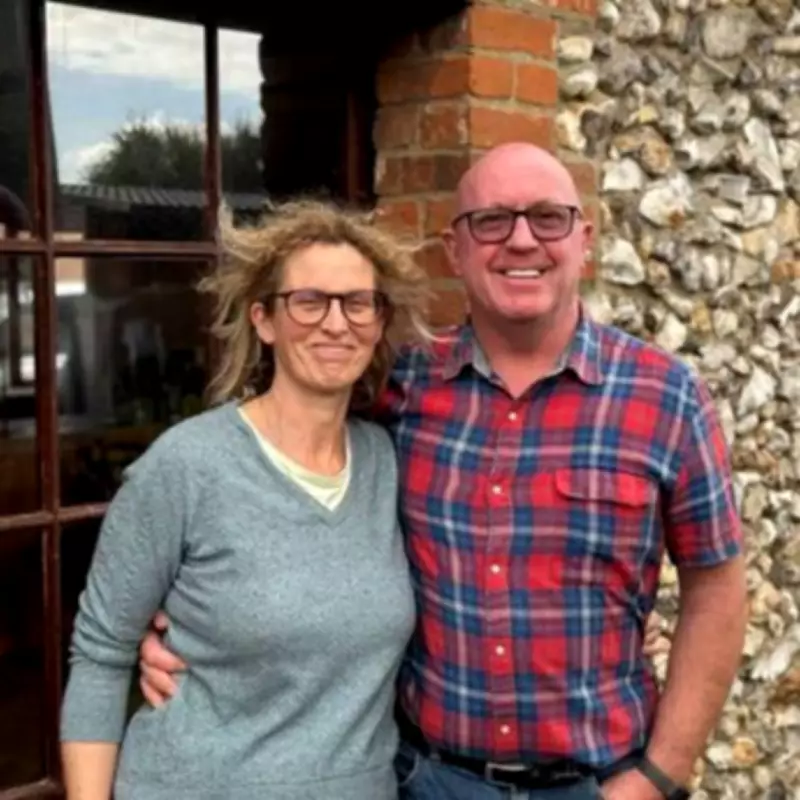
Stevie Chalmers experienced a sudden cardiac arrest while driving at 70mph on a dual carriageway in Cambridgeshire, leaving his wife Elly with only moments to react and prevent a potential disaster. The couple were on their way to meet friends for a weekend getaway when the life-threatening incident unfolded, highlighting the critical importance of emergency preparedness and rapid medical intervention.
A Terrifying Moment on the Road
Elly, seated in the passenger seat, described the harrowing scene as Stevie made a snoring sound before slumping against the car window, his hands falling off the steering wheel. "It was like an out-of-body experience – and I suddenly realised I was screaming," she recounted. With Stevie unresponsive, Elly had to act fast, removing her seatbelt to stretch her foot over to the brake and steer the vehicle away from a lorry ahead, eventually stopping safely on a roundabout.
Bystanders and Emergency Services Spring into Action
The drama attracted the attention of passing motorists on the A47 near the Worzals roundabout, close to Wisbech, in March 2024. A lorry driver and a former police officer witnessed the events, pulling over to extract Stevie from the car and begin performing CPR. A works vehicle driver, who had a defibrillator on board, promptly stopped to assist, bringing the life-saving device to the scene.

Cardiac arrest survival rates outside of hospital are approximately eight percent, but using a defibrillator alongside effective CPR within the first three to five minutes can boost chances to between 40 and 70 percent. Stevie received five shocks from the defibrillator, regaining consciousness briefly to ask about Elly, though he remained critically ill at the roadside.
Air Ambulance Provides Critical Care
An ambulance service crew arrived swiftly, followed by Dr James Price and critical care paramedic Gary Spitzer from the East Anglian Air Ambulance (EAAA). Dispatched by helicopter from their base in Cambridge, they brought advanced medical equipment and skills to the scene. After assessing Stevie and administering blood-thinning medication, they determined that the Royal Papworth Hospital in Cambridge, a specialist heart and lung facility, was the best destination for his care.
"I needed to get to Papworth Hospital quickly," said Stevie. "I remember somebody saying that whoever called the air ambulance saved my life. It was a 50-minute drive from the scene to Papworth. The flight time in EAAA's helicopter was just 12 minutes." This rapid transport was crucial, as time is of the essence in cardiac arrest cases to maximise recovery prospects.
Recovery and Ongoing Support
Stevie spent 10 days in hospital, including three in intensive care, where doctors initially doubted his survival. He was diagnosed with a hardening of the left ventricle of his heart and had a dual-chamber internal defibrillator fitted. Reflecting on the ordeal, Stevie noted, "Before my incident, I didn't know the difference between a heart attack and a cardiac arrest. I am now acutely aware of what a cardiac arrest is."
The EAAA's aftercare service provided essential support to both Stevie and Elly following the traumatic experience. Elly expressed gratitude, saying, "It was an incredible service. I was watching Stevie unresponsive on the road for 22 minutes – that's a long time. EAAA made sure we were aware this support was available to both of us." The couple, from North Norfolk, have since urged the public to support EAAA, a charity that relies almost entirely on donations to deliver 24/7 critical care across Cambridgeshire, Bedfordshire, Norfolk, and Suffolk.
A Call to Action for Public Support
Stevie emphasised the importance of community generosity, stating, "Anyone who donates any amount – big or small - to East Anglian Air Ambulance is a life-saver. We are supremely grateful to the people who helped at the scene and to the people who donate to EAAA. We didn't know we needed them until that day, and we continue to be amazed and humbled by the kindness of strangers." This story underscores the vital role of emergency services and public awareness in saving lives during medical crises.