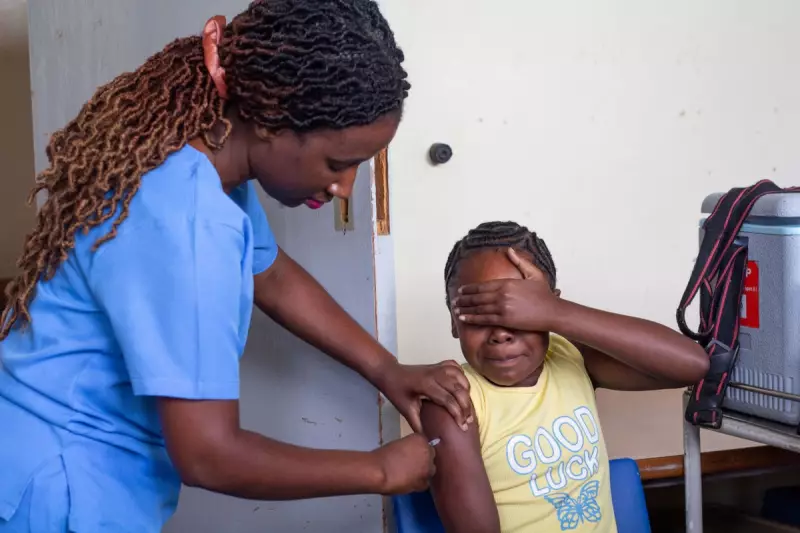
Girls' Football Tournament in Zimbabwe Champions HPV Vaccine Awareness
A regional Under-17 girls' football tournament held in Zimbabwe has become a powerful vehicle for promoting trust in cervical cancer vaccination, with organisers using sport to tackle deep-seated stigma and misinformation.
Sporting Event Transcends Final Score
When Lesotho's Lishoeshoe soccer club faced South Africa's Mamelodi Sundowns in the tournament final, the 5-0 defeat mattered less than the tournament's broader mission. For 16-year-old winger Nteboheleng Leticia Sooane, participating represented an opportunity to learn and spread vital health messages.
"Participating in the tournament was very good because we had to learn and spread the message even though we did not win the finals," Sooane said as she collected her finalist's medal at a rain-soaked stadium in Norton, on the outskirts of Harare.

Goal Getters Campaign Blends Sport and Health
The tournament formed part of the Goal Getters campaign, organised by Africa's football governing body CAF together with the European football body, GAVI (the Vaccine Alliance), and health ministries from several African countries. Approximately 200 girls from six nations participated in the December event.
GAVI spokesman Olly Cann explained: "One of the great aspects of the Goal Getters campaign is that it enables us to blend two things that teenage girls are passionate about - sport and health. It creates a really safe space where the girls can feel trusted, secure, and empowered."
The campaign, which previously launched in Tanzania and Eswatini, uses football to build awareness about the HPV vaccine, which can prevent up to 90% of cervical cancer cases when administered to girls aged 9-14.
Addressing Africa's Cervical Cancer Burden
Cervical cancer represents a significant health challenge across Africa. According to the World Health Organization, it's the fourth most common cancer among women worldwide, killing approximately 350,000 women annually. Africa accounts for nearly a quarter of global deaths, with 19 of the 20 most affected countries located in sub-Saharan Africa.
Zimbabwe faces particular challenges, with cervical cancer being the most common cancer among women in the country and claiming about 2,000 lives each year according to national cancer registry data.
Overcoming Misinformation and Stigma
Health officials report that misinformation and stigma around reproductive health remain major obstacles to vaccination uptake. At Budiriro Polyclinic in a densely populated Harare township, nurse Barbara Mashonga described the challenges.
"Many families are not bringing their children to the clinic to be vaccinated," Mashonga explained. "Even when we follow up at schools, some refuse. The biggest challenge is religious beliefs. Some parents think the injections are a secret family planning method that will prevent their children from having babies. There are many misconceptions, which is why health education is a major part of the campaign."
Vaccination Progress and New Approaches
Following setbacks caused by COVID-19 lockdowns and uneven national immunisation programmes, Africa has intensified HPV vaccination drives in recent years. WHO data shows coverage for at least one dose of the HPV vaccine rose to 40% in 2023 from 28% the previous year.
Ahead of the tournament, Zimbabwe introduced a single-dose HPV vaccine, a shift authorities hope will boost uptake following the two-dose regime rolled out nationally in 2018.
Football Creating Community Connections
The tournament's launch mixed dance and song before the eight-team competition began. On the sidelines, mothers streamed to a nearby clinic, some drawn by the chance to see well-known women's football figures while also getting their children vaccinated.
Nqobile Magwizi, president of Zimbabwe's football association, emphasised the initiative's community value: "We are embracing these opportunities so our communities can become better because of football."
For participant Sooane, the tournament's message extended far beyond football: "Cancer is a big disease, so every child should get the vaccine so they can be protected. All of us came here to learn about it so we can keep our health intact."