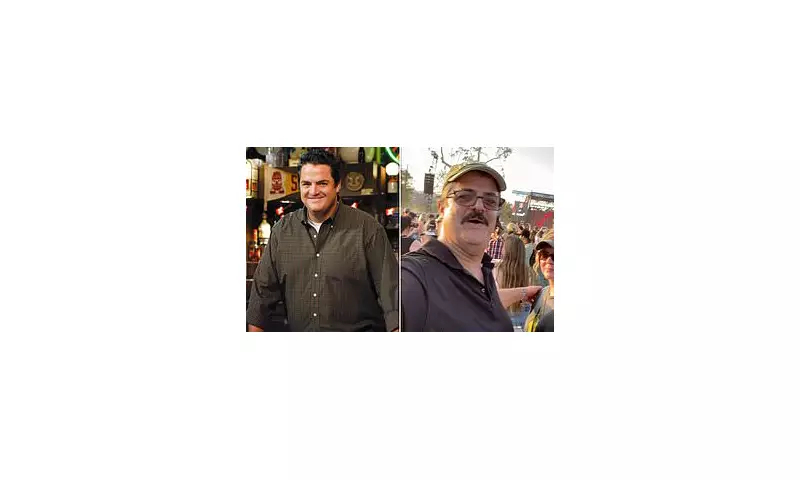
Steven W. Bailey, the actor best known for playing bar owner Joe on the long-running medical drama Grey's Anatomy, has spoken publicly for the first time about his diagnosis with a rare and incurable muscle disease.
A Life-Changing Diagnosis
The 54-year-old actor revealed he was diagnosed with congenital myasthenic syndrome (CMS) in 2020, a genetic neuromuscular disorder he has been battling in private for over five years. Bailey decided to end his silence last week, sharing his story in a thread on X (formerly Twitter) and during an emotional interview on Good Morning America.
He described the moment he first noticed something was seriously wrong. "I tried to turn my hand with a screwdriver and my entire arm just went into a lockdown situation," Bailey recalled. The disorder disrupts communication between nerve and muscle cells, leading to profound muscle weakness and fatigue during physical activity.

Navigating Life and Career with CMS
Bailey explained that the condition means his hands, arms, and legs tire much quicker than expected, and sustained repetitive movements can cause his muscles to temporarily seize up. To manage his energy, he now alternates between walking and using an electric wheelchair, a necessity he had previously kept hidden due to "career caution and diagnostic uncertainty."
"There's a lot of private moments of everything kind of falling apart and then, you know, you kind of have to bolster yourself back up and try to stay positive," he shared candidly about his journey.
Despite the challenges, Bailey is determined to continue his acting career. "I can still work," he affirmed, "but I'll just get tired quicker and I might need to move around the set on a wheelchair just to save my energy for the scene itself." He sees his new reality as an opportunity to increase representation, expressing a desire to portray "ambulatory wheelchair users" on screen.
Looking Forward with Hope
Bailey, whose career spans from 1990s roles in Buffy the Vampire Slayer and Angel to 33 episodes of Grey's Anatomy and recent work in the 2025 film Swiped, is now ready for his next chapter. "I am hopeful that there is still room for me in this industry that I love," he wrote. "Same guy. Same actor. Same artist. Now with wheels."
He aims to use his platform to raise awareness for CMS and to advocate for more authentic representation of disabled individuals in film and television, forging ahead with resilience and a renewed sense of purpose.