Jesy Nelson and the Reality of Raising Disabled Children in a Social Media World
Former Little Mix singer Jesy Nelson has brought significant attention to the emotional, physical, and practical realities of raising children with rare genetic conditions. As she shares her journey with twin daughters diagnosed with Spinal Muscular Atrophy Type 1, Olivia Petter examines why such cases are increasing and speaks to other parents about the unique challenges and unexpected joys of parenting disabled children.
The High-Profile Spotlight on Parenting Challenges
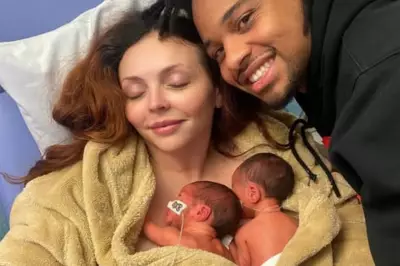
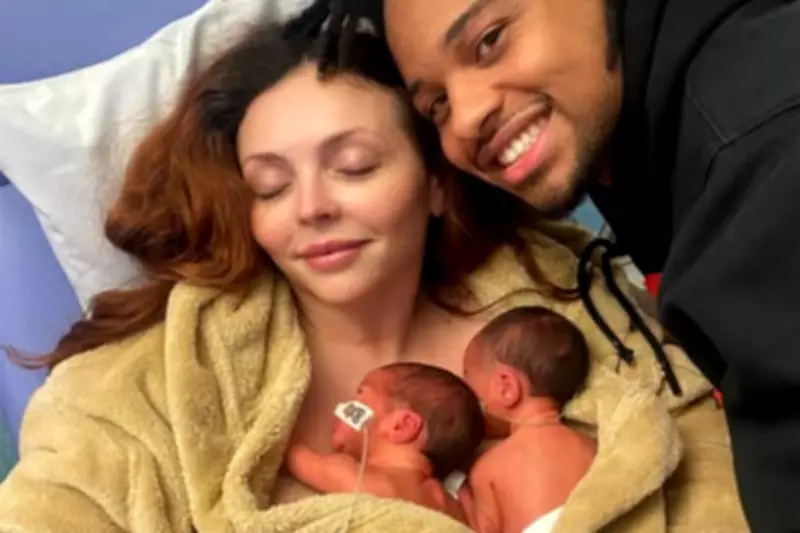
In February, an Amazon documentary titled Jesy Nelson: Life after Little Mix detailed how the 34-year-old singer delivered her twin daughters prematurely at 31 weeks last May. Earlier this year, Nelson revealed that both children had been diagnosed with the genetic neuromuscular disease SMA1. Since then, she has provided regular updates to fans, explaining how her daughters require feeding tubes and may never walk.
"I've only ever watched this series once because it's genuinely too emotional for me to watch right now," the singer said in an Instagram post ahead of the documentary's release. "But when I did watch it, I saw everything through a completely different lens, now knowing what I know about my girls and their diagnosis."

Similarly, last week, Katie Price expressed fresh concerns for her 23-year-old son, Harvey, who has Prader-Willi syndrome and septo-optic dysplasia. "He's just getting bigger, and he'll end up dying of a heart attack," the former glamour model said on her podcast.
The Silent Struggle of Many Parents
There are numerous parents in similar positions to Price and Nelson who struggle to have their voices heard or their experiences recognised. One such parent is Sian, a 29-year-old registered vet nurse, who discovered during her pregnancy that her daughter, Amelia, had holes in her heart.
"Everything shifted in that moment," she remembers. "The room went really quiet; I just squeezed my partner's hand." Doctors informed Sian and her partner that Amelia had an atrioventricular septal defect, meaning she would go into heart failure at birth and likely have Down syndrome.
Today, at four years old, Amelia sees more than 25 doctors. As the only recorded person with her unique genetic sequence, she is partially sighted and has decreased muscle tone, preventing her from sitting, walking, or crawling unaided. Caring for her has become Sian's full-time occupation.
The Growing Landscape of Rare Conditions
In the UK, there are approximately 230,000 disabled children under the age of three, many born to parents who expected healthy babies. The psychological toll is immense, as families confront a reality few have properly considered.
Contact, a UK-based charity for children with disabilities, lists more than 400 rare conditions on its website, adding 38 newly identified conditions last year alone. "Everyone has an image of what becoming a parent will be like, and no one expects that this will involve supporting a child with a disability," says Stephen Morgan, director of charitable services at New Life.
Genetic disorders can affect anyone. While some issues might be detected during pregnancy, others remain undiscovered until birth or later. Talia Oatway, former partner of Geordie Shore's Aaron Chalmers, has a three-year-old son named Oakley born with Apert syndrome, which affects facial bone formation and often results in learning difficulties and vision impairment.
The Social Media Pressure and Isolation
Parenting in today's social media-dominated world can feel particularly challenging for families with disabled children. The rise of "mummy bloggers" presenting filtered, glamorous versions of parenthood creates unrealistic expectations.
"I'm at peace with our lives now, but several years ago, seeing other parents, children, and families on social media was devastating," says Larissa Evans, 29, whose nine-year-old daughter, Summer, has the incredibly rare genetic condition HERC1. Summer is nonverbal, has severe developmental delays, and cannot walk independently.

Larissa, who also has a nine-month-old son, has felt compelled to limit her social media use: "The constant barrage of information and content all curated by an algorithm was making me anxious all over again."
The Financial and Systemic Challenges
According to a Contact survey of more than 4,000 parents, families lose an average of £21,000 annually due to additional costs for treatment, travel, specialist foods, and equipment required for disabled children. Meanwhile, 62 percent of parents have given up work or reduced hours to provide care.
"Everything is a fight when it comes to supporting a disabled child," says Larissa. "I've lost track of the number of professionals who told me to just let her sleep on the floor rather than funding her for a bed."
Moments of Celebration and Unexpected Joy
Despite the obvious challenges, there are numerous moments of celebration, gratitude, and joy. "Anytime Summer learns even the smallest of things, we celebrate," says Larissa. "I would love people to experience the pride and honour I have every day at being my child's parent."
Meanwhile, Amelia consistently exceeds expectations. "She copies sounds back to us," says Sian. "When she was really little, she even said, 'Hello, Daddy'. We told her doctors, and they thought it was incredible."
Tragic Loss and Lasting Legacy
For some families, these experiences are tragically short-lived. Salman Waqar and his wife were told early in pregnancy that their daughter, Yusra, had neurological abnormalities. Before birth, Yusra was diagnosed with Joubert's Syndrome, an extremely rare genetic condition.
The couple spent their first month with her at Great Ormond Street Hospital, adapting to numerous appointments and hospital stays. Then in 2022, Yusra suffered a sudden cardiac arrest and passed away at four years old.
"We named her Yusra because in Arabic, it means 'ease'," says Salman. "It's the state that comes through enduring difficulty; she was our ease." Genetic tests revealed Yusra had been carrying a cancer gene, enabling early detection and treatment in a family member.
The family has since welcomed a second child through NHS genetic testing and established the Yusra Jinaan Foundation to support children with disabilities and their families, celebrating her birthday annually.