Glasgow Hospital Infection Scandal: Families Demand Leadership 'Reckoning'
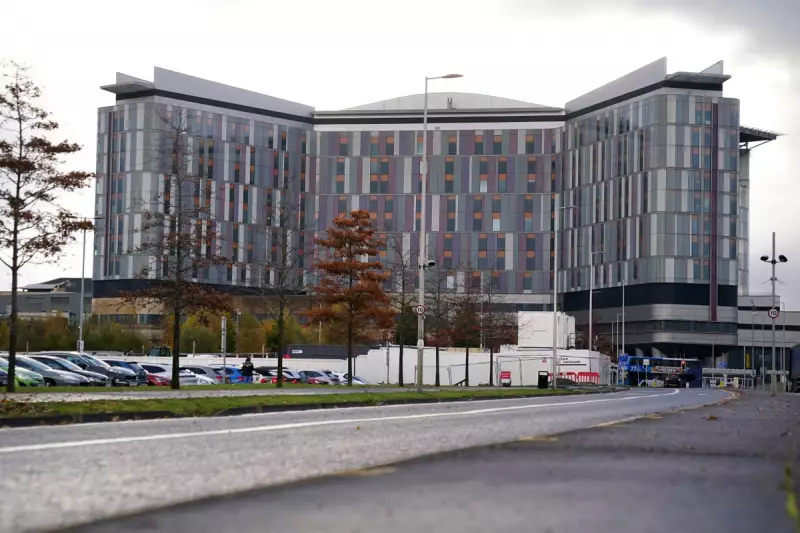
Families whose loved ones were treated at a major Scottish hospital complex at the centre of infection concerns have delivered a devastating statement, claiming that fundamental flaws in the building's environment 'killed and poisoned our loved ones'. The emotional declaration comes as the Scottish Hospitals Inquiry prepares to hear oral closing submissions regarding the Queen Elizabeth University Hospital (QEUH) and Royal Hospital for Children (RHC) in Glasgow.
A Legacy of Lies and Devastation
In a powerful statement released through Thompsons Solicitors Scotland, which represents the majority of affected families, relatives described being systematically 'lied to', 'disbelieved', and 'demeaned and smeared' by NHS Greater Glasgow and Clyde (NHSGGC). The statement paints a picture of institutional failure and cover-up, alleging that as patients fell ill and died, families were repeatedly told 'there is nothing to see here'.
The inquiry was established following infection-related deaths, including the tragic case of 10-year-old Milly Main in 2017. It has been examining the design, construction, and commissioning of the hospital campus, which opened as a single-site facility combining adult and paediatric services.

Health Board's Partial Admissions and Apology
In written closing submissions to the inquiry, NHSGGC has made significant concessions. The health board acknowledged that pressure to open the hospital 'on time and on budget' led to it opening 'too early' when it 'was not ready'. Crucially, NHSGGC accepted it is 'more likely than not' that a material proportion of bloodstream infections in paediatric haemato-oncology patients between 2016 and 2018 were connected to the hospital's water system.
Despite these admissions, the board maintained in its submissions that 'there is no definite link between infections and the water system' has been broadly acknowledged. NHSGGC has offered a 'sincere and unreserved apology' to affected patients and families while asserting that both hospitals are safe today following comprehensive remediation work.
Families' Unwavering Demands for Accountability
The families' statement leaves no room for ambiguity about their demands. They explicitly call for past and present leadership at NHSGGC to face what they term a 'reckoning' for what they describe as 'despicable incompetence and cover-up'. Their declaration emphasises that without their collective solidarity, there would have been no public inquiry to investigate these matters.
The families made three central demands:
- That the QEUH be made genuinely safe, stating they do not trust current leadership to achieve this
- That political leaders take decisive action to ensure hospital safety
- That those responsible for failures be held properly accountable
They also paid tribute to 'brave and decent clinicians and staff' who attempted to raise concerns but were allegedly 'silenced' by the health board's management.
Political Response and Inquiry Process
Scottish Health Secretary Neil Gray acknowledged the families' trauma and diligence, stating that the public inquiry was established specifically to provide answers to their questions. He emphasised that the government has provided all relevant evidence to the inquiry and believes the process is 'getting to the truth'. Mr Gray declined to comment further until the inquiry publishes its final conclusions, respecting the independence of the investigative process.
The Scottish Hospitals Inquiry continues its work, with all parties awaiting its final determinations regarding one of Scotland's most significant healthcare controversies. The families concluded their statement with a firm warning to authorities: 'We are not going away' – a clear indication that their campaign for justice and systemic change will continue regardless of the inquiry's eventual findings.