Massachusetts Hospital Faces Violence Surge After Defensive Weapons Ban
A Massachusetts hospital has experienced an alarming escalation of violent incidents this month following a controversial policy change that prohibits security personnel from carrying defensive weapons while on duty.
Recent Assaults Highlight Growing Safety Concerns
Tewksbury State Hospital recently witnessed a particularly disturbing incident where a 45-year-old patient allegedly assaulted another patient with a sharp object after accusing him of theft. The accused patient, who now faces assault with a dangerous weapon charges, was housed in the Nicholas building, which hosts a second-step detoxification program. According to reports, the patients were separated before police arrived at the scene.
Tewksbury Police Chief Ryan Columbus revealed to news outlets that the accused patient had an extensive criminal history with 129 previous entries on his record. This assault marked the hospital's fourth violent incident in just three weeks, creating significant concern among staff and community members.

Pattern of Violence Emerges
Since April 7, the hospital has recorded multiple violent encounters involving both patients and staff members. The troubling pattern began with a 59-year-old patient allegedly striking a staff member after becoming erratic. Less than a week later on April 12, a visitor was arrested for allegedly assaulting a pregnant employee by pushing a chair into her.
Just three days after that incident, another patient reportedly hit a staff member twice in the face. Police Chief Columbus noted that, fortunately, no serious injuries have occurred in these recent attacks, but the frequency and nature of the incidents have raised serious safety questions.
Policy Change Sparks Controversy
The safety concerns intensified significantly after hospital administrators implemented a new policy banning security personnel from carrying defensive tools including handcuffs, pepper spray, and batons within the facility. Officials ruled that the use of such defensive equipment was inappropriate for the healthcare setting.
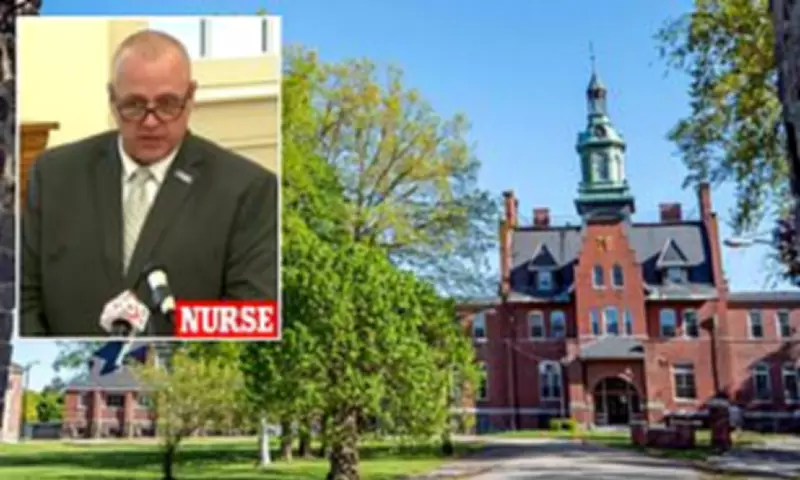
Nurse Ryan Wilkins, a union official with twelve years of experience at Tewksbury State Hospital, described the situation as "an epidemic of violence at this facility." Wilkins expressed frustration that calls for meetings between state leaders and hospital workers have yielded little progress, leaving staff feeling abandoned and vulnerable.
"We largely feel that we've been left out to dry here," Wilkins stated. "It's disheartening, it's disappointing and it's scary altogether."
Official Responses and Community Reaction
The Massachusetts Office of Health and Human Services issued a statement emphasizing that patient and staff safety remains a "top priority." The statement continued: "We appreciate our partnership and ongoing discussions with town officials, Tewksbury State Hospital leaders and union to make sure staff have an appropriate range of tools available to keep themselves and others safe."
However, Police Chief Columbus criticized the policy change, arguing that it wasn't "grounded in data and it does not reflect the realities faced on that campus every day." He warned that removing critical safety tools increases risks to staff, patients, and the broader community.
Democratic State Representative David Robertson expressed strong opposition to the weapons ban, stating: "My opinion on this is an absolute 'no' to remove those tools. The nurses here, the frontline care providers, they're not here for fame or fortune. They're here because their hearts are in the right place."
Community Meetings and Growing Tensions
A public meeting took place on April 14 where the Tewksbury Select Board voted to seek legal advice regarding possible next steps. Board member Mark Kratman noted that issues between the town and hospital have been long-standing, and the defensive weapons ban has further strained relations.
"We finally got to a place of trust, and in one vote, that trust has been gone," Kratman explained. "At no time was the town of Tewksbury involved in this decision."
Town manager John Curran called the policy change a "very big step back" and a "serious oversight," attributing the problem partly to inadequate communication between state authorities and local officials.

Staff Concerns and Union Response
Nurse Wilkins emphasized that the decision to remove defensive weapons "came down with no guidance for the frontline workers on how we should be responding." He reported that violent attacks have been increasing at a significant rate throughout his twelve-year tenure at the facility.
Wilkins further warned that the state's failure to engage with union representatives and frontline staff has left workers feeling "demoralized and unsafe," causing many experienced staff members to consider leaving Tewksbury State Hospital and exacerbating existing staffing challenges.
Ongoing Discussions and Future Steps
State officials have maintained that communication channels remain open and noted that Tewksbury State Hospital was among the last facilities in Massachusetts to permit defensive weapons. An official with the Executive Office of Health and Human Services stated that de-escalation techniques, communication strategies, and conflict resolution remain priorities, while clarifying that no policy prohibits physical intervention when necessary.
Sergeant Ryan DiPeitro of the Department of Public Safety at the hospital warned that "this policy change will create negative outcomes to staff, patients, visitors and the greater community." Meanwhile, a petition has been launched calling for reversal of the defensive weapons ban and implementation of comprehensive workplace violence prevention protocols.
Police Chief Columbus confirmed he is working with the Executive Office of Public Safety in hopes that the policy will be thoroughly reviewed and ultimately reversed. "This is not something I will let go," Columbus pledged. "I will continue to advocate strongly for the safety of everyone involved."