In the quiet aftermath of the festive season, many parents face the familiar ache of an emptying home. For one mother, that void has been unexpectedly filled by the most unlikely of companions: a baby tortoise determined to hibernate through winter.
The Lingering Echo of an Empty Nest
It feels somewhat embarrassing to confess, but I remain profoundly unsettled by my sons' departure after Christmas. Each time they leave, there's a necessary readjustment period – returning to unnerving silence, sending carefully casual WhatsApp messages that go unanswered, and attempting to picture their daily lives by obsessively checking the weather in their locations. With my natural caretaking impulses suddenly thwarted, I find myself anxious and restless, perpetually offering unsolicited care packages and unwanted advice. "Let them live their own lives," I repeatedly tell myself, while simultaneously doing everything possible to remain involved in theirs.
The Rise of the Stay-at-Home Son Phenomenon
This current wave of parental adjustment was prompted by reading about the emerging trend of "stay-at-home hub-sons." This particular category of boomerang children first gained attention last year when 28-year-old Brendan Liaw described himself as a professional stay-at-home son on the American quiz programme Jeopardy!, sparking numerous analytical articles and understandable eye-rolling in communities where intergenerational living has long been commonplace.

While much of the discussion around hub-sons remains anecdotal, it's firmly rooted in demographic reality both in the United States and here in Britain. Office for National Statistics data released in July revealed that 34% of men aged 20 to 34 lived with their parents in 2024, compared with just 22.1% of women in the same age bracket. The Washington Post recently interviewed several contented homebody sons, including Abdullah Abbasi, who creates tongue-in-cheek stay-at-home-son merchandise, and Luke Parkhurst, who lives with his mother while wholeheartedly embracing the SAHS lifestyle. "I can look someone in the eyes and say, 'Hell, yeah, I'm a stay-at-home son,'" he declared proudly.
An Unconventional Stay-at-Home Child
My own sons would rather chew off their own limbs than consider remaining at home, and while this independence represents a parenting success – raising self-sufficient adults being the ultimate goal – it doesn't always feel triumphant. Thankfully, I have one stay-at-home child who remains perpetually needy and wonderfully clueless, still filling my heart with that particular brand of sweaty, stomach-churning love that feels like standing precariously on a cliff edge.
My concern for my youngest reached its peak recently, because if you believe watching your children venture into the world is agonising, try placing one inside a straw-filled plastic container in the refrigerator for six weeks while wondering constantly if they'll survive the experience.
The Tortoise Hibernation Dilemma
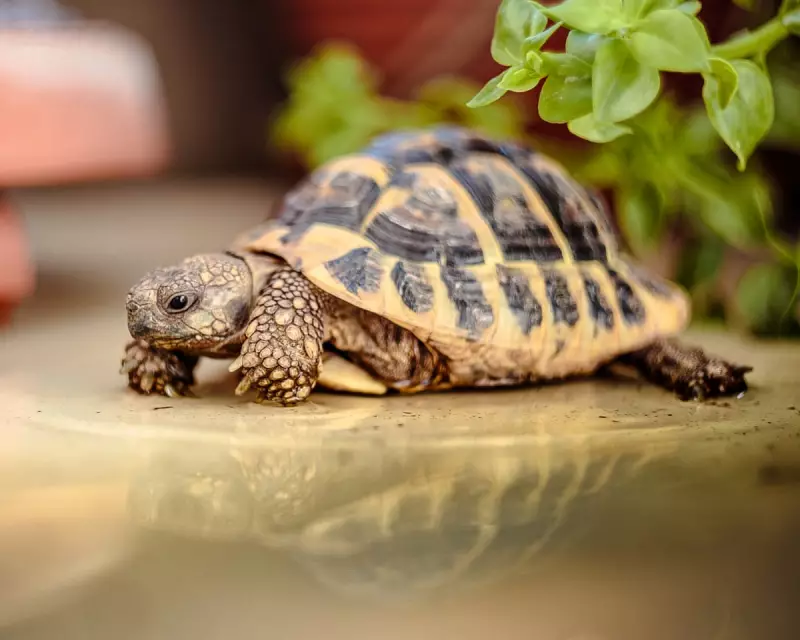
I refer, of course, to our completely unexpected baby tortoise. Born surprisingly in 2024, this winter marked the first occasion the baby – gender still undetermined, meaning I might actually have the rarer stay-at-home daughter – had grown sufficiently robust to hibernate properly. From initially being the size of a fifty pence piece at hatching, it has now expanded to resemble a generously proportioned National Trust scone.
The mere concept of hibernation was frightening enough, but tortoises must enter their dormant state completely fasted, requiring us to keep the baby awake in chilly conditions without food for several days beforehand. We relocated the tortoise table into the hallway, and while I acknowledge the anthropomorphism, witnessing that small head snap upward to look at me whenever I walked past – with what I interpreted as hopeful expectation, followed by wounded, hungry confusion, day after relentless day – proved utterly harrowing.

The Emotional Rollercoaster of Reptile Care
It was almost a relief to finally place the baby in its specially prepared box and close the lid, yet even then, it felt profoundly unnatural, even cruel, to position my child inside the refrigerator. This act felt decidedly worse than leaving their human siblings, as university freshers, in slightly grubby halls of residence with basic groceries and a duvet stuffed into an Ikea bag. How was I supposed to manage this process? My husband eventually took charge of the operation.
Occasional checks and careful weigh-ins confirmed our precious charge remained alive throughout the festive season, but the unboxing procedure last week was still intensely agonising. We positioned the baby, who remains too young for full-length hibernation, beneath a carefully calibrated heat lamp and waited anxiously. To our immense relief, it stumped around briefly and took a small, tentative bite of chicory. However, it then promptly burrowed back into its bedding and attempted to return to sleep.
We've been repeating this waking process for several days now, offering the seductive temptation of warm baths, grated cuttlefish sprinkled over fresh greens, and even occasional pieces of banana. Yet the baby's interest in conscious existence remains, at best, decidedly lukewarm.
A Shared Desire for Winter Hibernation
This reluctance is worrying, yet somehow completely understandable. Who among us wouldn't occasionally prefer to burrow back into comforting darkness for several months, shutting out the bleak realities of January 2026? Furthermore, I've come to realise that I'm also, on some fundamental level, quietly grateful for this situation. Keeping a grumpy, scone-sized creature alive despite its determined efforts to sleep forever provides the perfect distraction from my newly empty nest.
And if I successfully manage this delicate caretaking challenge, I receive the ultimate parental reward: a child who can never, under any circumstances, leave me. This unexpected baby tortoise has become my stay-at-home child in the most literal sense, offering companionship and purpose during this transitional phase of family life.