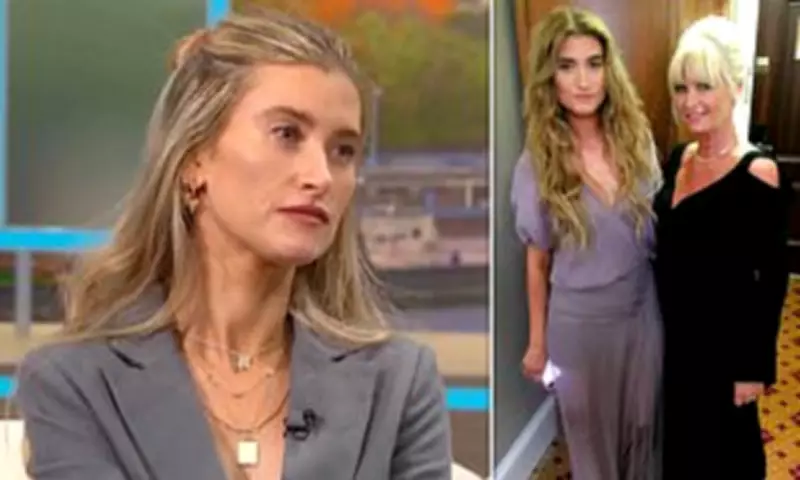
Emmerdale star Charley Webb has courageously shared the devastating journey of her mother's early-onset dementia diagnosis, revealing the significant challenges she faced in securing medical recognition of the condition when her mum was just 64 years old.
A Mother's Forgotten Memory
The 37-year-old actress, renowned for her long-running portrayal of Debbie Dingle in the popular Yorkshire-based soap, explained during an appearance on Monday's Good Morning Britain that a critical moment alerted her to her mother Helen's serious cognitive decline. Webb disclosed that her mother forgot an immensely important piece of personal information, which she chose to keep private, signalling that something was profoundly wrong.
'I just knew in that moment it was something that she wouldn't have forgotten,' Charley told the programme's hosts. 'I think everyone around me at the time was like, you're being dramatic, everything's fine. I was like, "No, something is not right."'

The Long Road to Diagnosis
Webb described the protracted and frustrating process of obtaining a diagnosis, a common hurdle for younger individuals showing symptoms. 'The process is quite long, especially for someone who's younger, because they sort of go, "Oh, I think it could be this or [that]."' she explained. The family faced initial dismissals, with potential causes like water infections being suggested, which can sometimes affect memory.
Her powerful testimony resonated with co-host Ed Balls, who recounted a similar pre-diagnosis experience with his own mother, involving an attempt to serve an uncooked chicken casserole despite her culinary skills.
Advocating for Answers and Care Decisions
Reflecting on her experience, Charley Webb issued urgent advice to anyone suspecting a loved one might have dementia. She emphasised the importance of persistence with healthcare professionals. 'I wouldn't delay getting diagnosed... I ultimately felt like my GP did and didn't listen to my concerns... my advice is to not take no for an answer.'
The situation eventually led to the difficult decision to move her mother into a specialist residential care home. Webb admitted this choice brought complex emotions. 'And as much as you want to be there and have them at your house, even if it's not safe, it is such a relief... It's a massive decision, but actually, once you make that choice, you [get to] see them in a much healthier environment.'
The Emotional Toll and Public Revelation
Webb's appearance followed earlier comments on the Mail's The Life of Bryony podcast, where she described the intense isolation she felt following her mother's diagnosis. She revealed her motivation for speaking out was twofold: to support Alzheimer’s Research UK, for which she is an ambassador, and to connect with others feeling similarly alone.
'I felt selfish not talking about it because I knew how alone I'd felt,' she confessed. 'I don’t think I've ever felt so alone as when that diagnosis happened.'
She also grappled with conflicting feelings about privacy, knowing her glamorous mother would have disliked the public attention. 'My mum was all about makeup and being glamorous and I just felt like I wanted to protect her privacy.'
The Reality of Visits and Public Perception
In a remarkably honest moment, Webb discussed the emotional difficulty of visiting her mother, who now receives round-the-clock care. She contrasted her own struggle with her sister's more uplifting experience, acknowledging feelings of guilt.
'I feel selfish, because I'm literally like, "Oh God I've got to go see my mum". And that is a controversial thing to say... but I have to be honest, it's not something I enjoy. It's s**t.'
She anticipates judgement but believes those undergoing similar experiences will understand. Webb also highlighted the awkwardness of well-meaning questions about her mother's health, noting the painful reality that 'there is no answer' for a progressive illness where patients do not improve.

Understanding Early-Onset Dementia
According to Dementia UK, dementia is a degenerative brain condition causing a progressive decline in cognitive functions like thinking, reasoning, communication, and memory. Personality, behaviour, and mood can also be impacted. Early-onset dementia refers to symptoms developing between the ages of 35 and 65.
Charley Webb first publicly discussed her mother's diagnosis in 2023 on This Morning, describing how her family had been through 'hell' as they grieved the person her mother once was. Her continued openness serves as both a personal catharsis and a public service, shedding light on the familial and emotional complexities of caring for a loved one with dementia.