Professor Green has issued a concerning health update, revealing he has four tumours — one behind his eye and three on his spine. The multi-platinum-selling rapper, 42, whose real name is Stephen Manderson, detailed his battle with a rare and painful condition in a lengthy social media post.
Diagnosis and Tumour Details
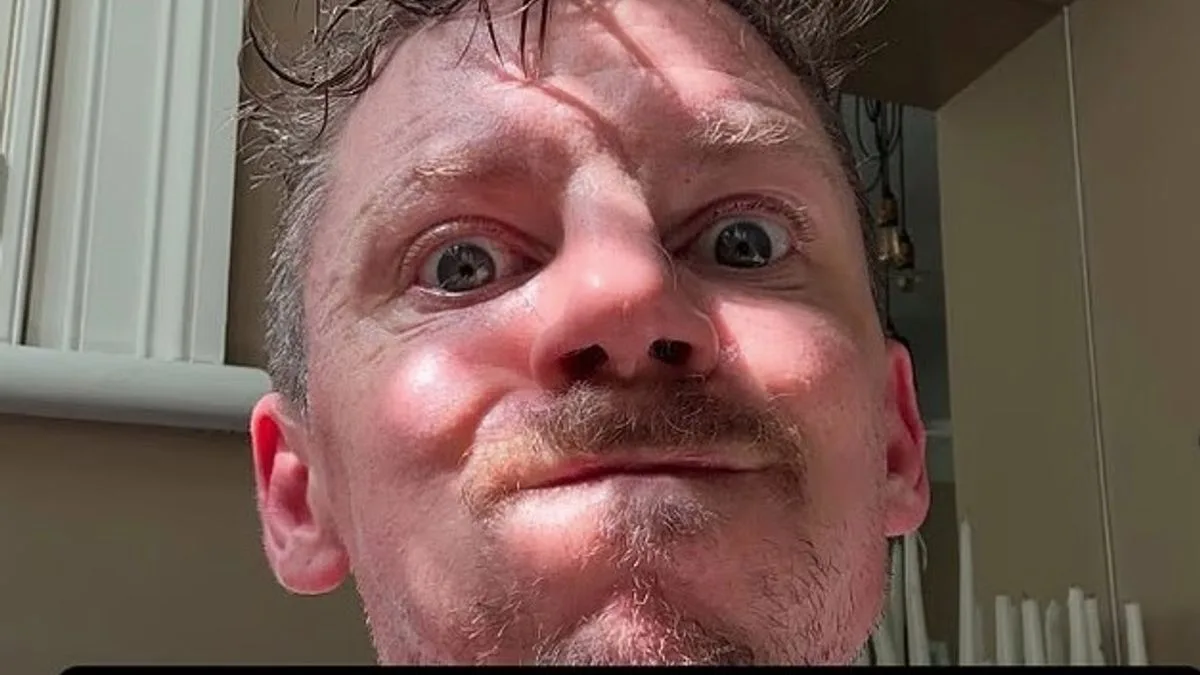
In the post, Professor Green said he has been diagnosed with Schwannomatosis, a condition where multiple benign growths can cause significant pain. He noted that he had 'superficial but painful' tumours removed from his head and neck, but doctors later discovered additional growths elsewhere on his body. Posting a photo of himself looking exasperated on Instagram, he wrote: 'Genes are funny old things. The combo of my parents handed me ADHD, autism, pyloric stenosis, factor VII deficiency and the latest addition: schwannomatosis. My nerve sheath tumours are thankfully benign, but chronic and not without complications — some more than others depending on their location.'
He continued: 'After four relatively superficial but painful growths were removed from my head and neck, I’ve now found out I have one behind my left eye and three along my spine: two smaller lesions at T5 and T6, and one the size of a blemmin’ lime around my S2 nerve.'
Mental Health and Acceptance
The rapper shared his emotional journey, saying: 'After a good few weeks of worrying about whether or not they were benign or malignant, I feel as though, as painful as this is (I thought it was ‘just’ worsening sciatica), the trauma I went through in my head living out worst-case scenarios was worse.' He added: 'I’ve come to a place of acceptance — this is how I’ll experience life, there’s no way around it, and that’s okay. What isn’t okay is descending into cyclical thought, nor is catastrophising or dreaming of some other reality — both are avoidance and neither is conducive to being present.'

He reflected on the interplay between physical and mental pain: 'It's hard knowing what's owing to what sometimes — is the physical pain causing mental anguish, or is my mental load manifesting physically? Again, it's probably not worth too much thought — I’m doing my utmost to acknowledge, accept and exist wholly and fully without becoming avoidant and being somewhat willingly distracted by it all. Though hands up to having been hijacked by it all for a few weeks.'
Hyper-Interoception and Chronic Illness
Professor Green mentioned he likely suffers from hyper-interoception, an overactive ability to feel internal sensations, which he learned about after his autism diagnosis. He explained: 'It’s helped me make sense of a lot… and allowed me to pull my focus away from it when I realise I’m becoming obsessive. But first I have to realise… It's an intense experience, but it's mine, and it's the only one I’ll ever know. Working towards ‘not everything is okay, but I am’ and doing better some days than I am others, but working with whatever I have on any given day.' He concluded: 'To anyone suffering with anything chronic — I see, hear and feel you! Back to programming as usual.'
Mental Health Advocacy
Professor Green, a key campaigner for men's mental health, has previously spoken about his struggles. He told the Mirror that his life spiralled to a dark place two years ago. Diagnosed with ADHD and autism at 40, he said: 'Forty years of being me nearly killed me. And I don’t think it’s dissimilar to what a lot of people go through when we hit middle age.' He spearheaded a study by the British Association for Counselling and Psychotherapy, which revealed that 65% of men have faced mental health issues in the past three years, but 70% of the 2,500 men surveyed would only consider therapy if they reached breaking point.
His father, Peter, took his own life when the star was 24. The rapper said: 'I’ve never tried to kill myself, but through misuse of substances, to a really dangerous extent and in isolation, there was every chance of death by misadventure could have occurred.'
If you're struggling and need to talk, the Samaritans operate a free helpline open 24/7 on 116 123. Alternatively, you can email jo@samaritans.org or visit their site to find your local branch.