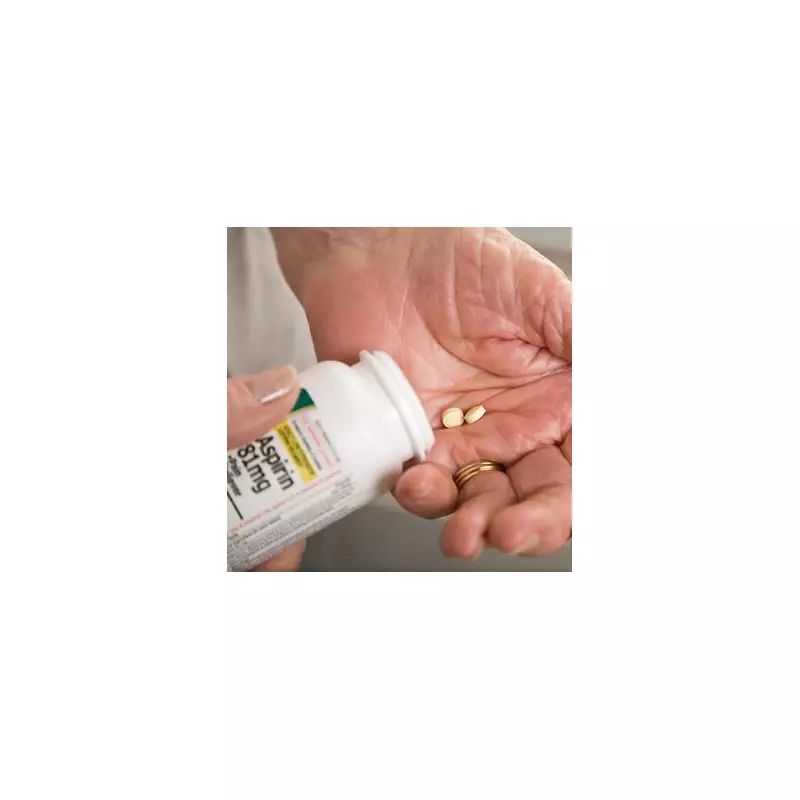
Pharmacies across the United Kingdom are grappling with severe shortages of aspirin, a commonly-used medication essential for preventing heart attacks and strokes, prompting urgent warnings about patient safety. The situation has become so critical that pharmacists are describing current NHS prescribing rules as "madness" that forces unnecessary referrals back to GPs when suitable alternatives exist.
Widespread Supply Disruption Puts Patients at Risk
A comprehensive survey conducted by the National Pharmacy Association (NPA) reveals the alarming scale of the problem. Of 540 community chemists surveyed across the UK, a staggering 86% reported being unable to supply aspirin to patients. The shortage particularly affects the 75mg dose, though all formulations are experiencing supply issues. Many pharmacies have ceased over-the-counter sales entirely, while others are implementing strict rationing protocols for patients with the most acute cardiovascular conditions.
Olivier Picard, chair of the NPA, expressed grave concern: "We're deeply troubled by reports of pharmacies being unable to order aspirin stocks and the serious implications this has for the patients they serve. The current situation represents a clear danger to public health."

Prescription System Creates Dangerous Bottlenecks
Pharmacists are highlighting what they describe as a fundamentally flawed system that prevents them from making simple, safe substitutions when medications are unavailable. Current NHS rules restrict pharmacies from supplying alternative drugs or preparations to what is specifically stated on a prescription, even when clinically appropriate alternatives are readily available.
"It is absolute madness to send someone back to their GP to get a prescription changed when a safe alternative is sitting on our shelves," Mr Picard stated emphatically. "This bureaucratic obstacle risks patients either delaying vital medication or forgoing it altogether, creating a clear and present danger to patient safety. We have long advocated for pharmacists to be empowered to make substitutions where medicines are out of stock and safe alternatives exist."
Multiple Factors Driving Medication Shortages
The Independent Pharmacies Association has identified several interconnected causes behind the aspirin shortage. International manufacturing delays and persistent supply chain disruptions are significant contributors, but the organisation points to a more systemic issue: the low prices negotiated by the NHS with pharmaceutical companies.
Dr Leyla Hannbeck, chief executive of the Independent Pharmacies Association, explained: "These critical shortages stem partly from manufacturing problems, but also because pharmacies cannot order the quantities they need. The reality is that NHS reimbursement rates for many medicines are so low that manufacturers frequently prioritise supplying other countries, leaving the UK at the back of the queue."
Financial Strain Compounds Supply Crisis
The shortage has triggered dramatic price increases for the limited aspirin stocks that pharmacies can obtain. According to NPA data, a packet of 75mg dispersible aspirin tablets has skyrocketed from just 18p last year to £3.90 this month. Since the NHS only reimburses pharmacies £2.18 per packet, the average pharmacy loses £1.72 each time they dispense this essential medication.
"For those pharmacies fortunate enough to secure any supply, costs far exceed NHS reimbursement rates," Mr Picard noted. "This represents yet another sign of a fundamentally broken pharmacy contract desperately requiring government reform. When limited stock becomes available, prices shoot up to levels that become unaffordable for pharmacies, leaving them severely out of pocket."
Government Response and Patient Guidance
In response to the escalating crisis, the Government has added aspirin to its export ban list in an attempt to protect remaining supplies for UK patients. However, healthcare professionals argue this measure alone is insufficient to address the underlying systemic problems.

Dr Hannbeck advised concerned patients: "Anyone affected by medicine shortages should speak to their local pharmacist, who is a highly trained healthcare professional capable of advising on suitable alternatives where available. Pharmacists are implementing careful rationing for patients with the most acute heart conditions or those requiring emergency prescriptions."
James Davies, director of research and insights at Community Pharmacy England, echoed calls for urgent intervention: "As shortages continue to take a toll on patients and pharmacy teams nationwide, Government and the NHS must act immediately to stabilise the medicines market, tackle supply chain disruptions, and improve access to essential medications."
The aspirin shortage highlights broader concerns about medication supply chains and NHS prescribing systems. With approximately one-third of women and 45% of men over 65 regularly taking low-dose aspirin for cardiovascular protection, the current crisis affects a substantial portion of the population. Healthcare leaders are urging comprehensive reform to prevent similar situations from endangering patients in the future.