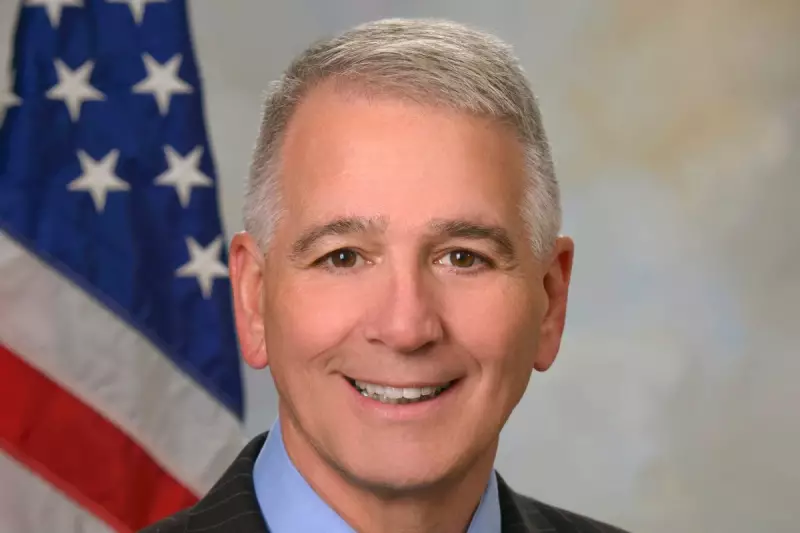
CDC Deputy Director Faces Fury Over Measles 'Cost of Doing Business' Remark
A senior official at the Centers for Disease Control and Prevention has provoked widespread condemnation after suggesting that America's escalating measles outbreaks represent the 'cost of doing business' within a globalised economy. The controversial comments come as the United States faces the alarming possibility of losing its measles elimination status, a designation it has maintained since the year 2000.
Outcry Over Dismissive Public Health Stance
Dr. Ralph Abraham, the CDC's recently appointed principal deputy director, reportedly made the remarks during a phone call on Tuesday. According to STAT News, the former Louisiana surgeon general stated, 'It's just the cost of doing business, with our borders being somewhat porous [and] global and international travel.' He further indicated he would 'not really' view the potential loss of the nation's elimination status as a significant event.
Public health experts responded with swift and severe criticism. 'This is appalling and not how public health leaders typically respond to ongoing outbreaks of preventable infectious diseases,' declared Kathleen Bachynski, an associate professor of public health at Muhlenberg College in Pennsylvania, in a social media post.

Dr. Gavin Yamey, a professor at Duke University's Global Health Institute, emphasised that the status could be preserved through proactive measures. 'You can KEEP your status IF you identify imported cases and ACT to prevent ongoing transmission,' he urged, while criticising the inaction of Health and Human Services Secretary Robert F. Kennedy, Jr.
Surge in Cases and Tragic Deaths
The backlash coincides with a dramatic and dangerous surge in measles infections across the country. Current case numbers are at their highest level since 1991, with more than 2,200 cases reported in 2025 alone—a staggering increase from just 285 cases in 2024. This resurgence has been accompanied by tragic outcomes, including three deaths in 2025, two of which were children. This marked the first child death from measles in the United States since 2003.
Dr. Leana Wen, former commissioner of the Baltimore City Health Department, highlighted the gravity of the situation on social media. 'This is tragic - and not normal,' she wrote. 'In many ways, vaccines are a victim of their own success. People have forgotten the diseases that they prevent.' She noted that while many recover, complications and fatalities do occur.
Vaccination Rates and Current Outbreaks
The CDC maintains that two doses of the measles-mumps-rubella (MMR) vaccine are 97 percent effective at preventing infection. However, data reveals a troubling trend: approximately 93 percent of recent infections have occurred in unvaccinated individuals. Research indicates that the proportion of children not receiving vaccines by the recommended age has increased since the pandemic.
Active outbreaks are currently spreading across multiple states. Health authorities have confirmed over 100 measles cases in nine states so far in 2026, including:
- South Carolina
- Arizona
- Florida
- Georgia
- North Carolina
- Ohio
- Oregon
- Utah
- Virginia
South Carolina is experiencing a particularly severe outbreak, with more than 560 of its 646 cases involving unvaccinated or only partially vaccinated individuals. The state's Department of Public Health reported 88 new cases on Tuesday alone, centred around educational institutions including Clemson University and Anderson University. The department stressed, 'Vaccination continues to be the best way to prevent measles and stop this outbreak.'
A Nation at a Crossroads
As the situation develops, the Department of Health and Human Services, which oversees the CDC, did not immediately return a request for comment on the controversy. The nation now stands at a critical juncture regarding its public health standing.

Dr. Demetre Daskalakis, the former leader of immunization and respiratory disease strategy at the CDC, offered a stark warning in an interview with CBS News. He suggested that without decisive action, measles could become a commonplace threat. 'If this is our vital sign, we're in the ICU,' he stated, painting a grim picture of the potential future if vaccination rates continue to falter and outbreak response remains inadequate.
The debate ignited by Dr. Abraham's comments underscores a deep division in public health strategy at the highest levels, as America grapples with whether it will accept preventable disease outbreaks as an inevitable trade-off or mount a robust defence to protect its hard-won elimination status.