Covid Inquiry Reaches 'Bittersweet' Conclusion After Historic Witness Testimony
The long-running Covid inquiry has marked its final day of witness testimony, with bereaved families declaring that government "incompetence, chaos and callousness is now on the public record." This milestone comes as the inquiry's total costs have soared to £203.98 million, making it the most expensive public inquiry in British history, surpassing the previous record held by the Bloody Sunday inquiry at £191.2 million.
Families Vow to Fight for Full Implementation of Recommendations
Matt Fowler, co-founder of Covid-19 Bereaved Families for Justice UK (CBFFJ), addressed officials outside Dorland House in London, urging them to use the inquiry as a blueprint for "brave, decisive, urgent action." He warned that the country remains unprepared for future crises and pledged to continue pushing for the inquiry's recommendations to be implemented in full. Fowler also emphasised the need to counter conspiracy theorists who seek to politicise life-saving measures.
CBFFJ, representing over 7,000 families, has broadly welcomed the inquiry's findings, describing them as "hard-hitting, clear-sighted and damning." However, they argue that the recommendations should have gone further to address systemic failures.

Inquiry Scope and Costs Under Scrutiny
The Covid inquiry's extensive scope included 238 public hearing days across the UK, featuring 381 individual witnesses and more than 600,000 evidence documents, equivalent to about 5 million pages. Last year, the government reported 286 full-time staff working on ten separate investigation modules, covering areas such as resilience and preparedness, decision-making, healthcare, vaccines, procurement, and the care sector.
Despite criticism from groups like the Taxpayers' Alliance over its length and expense, an inquiry spokesperson defended the costs, noting that the public hearings were the most expensive part of the work. They highlighted that the inquiry had a broader remit than any previous public investigation.
Key Findings and Unresolved Reports
Inquiry chair Lady Hallett has published final findings on the first two modules. Her first report concluded that the UK's pandemic planning was plagued by "fatal strategic flaws," failing citizens. The second report accused former Prime Minister Boris Johnson of presiding over a "toxic and chaotic" government culture, suggesting that 20,000 lives could have been saved with an earlier lockdown.
Five remaining reports are scheduled for publication this year, with three more due in the first half of 2027. The spokesperson argued that "only a fraction of the billions spent during the Covid-19 pandemic needs to be saved next time for this inquiry to have been worth it."
Emotional Gathering and Calls for Justice
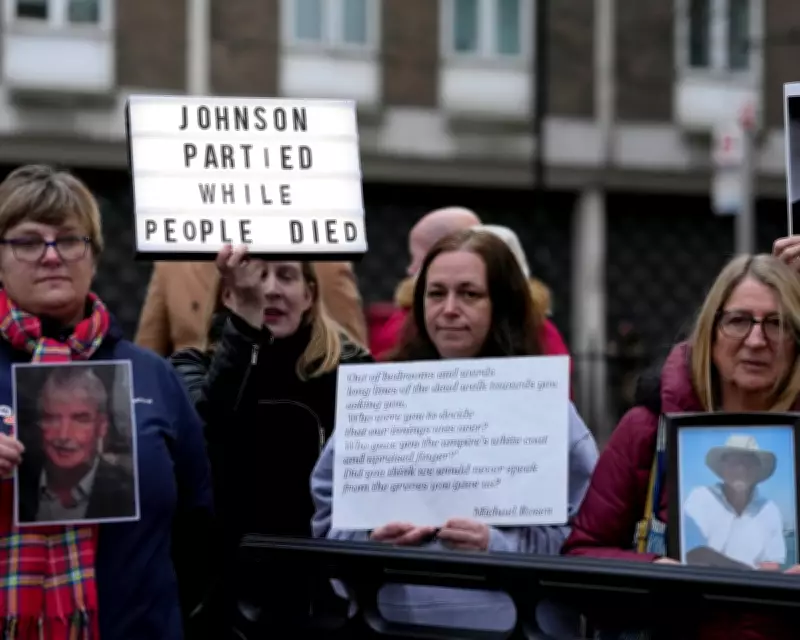
On the final day, a large group of bereaved individuals gathered outside the inquiry, holding photos of deceased family members and signs with slogans such as "Partygate is your legacy Boris." They observed a minute's silence for pandemic victims and vowed to continue their fight for justice.
Naomi Fulop, whose 94-year-old mother died after contracting Covid from a care worker lacking adequate PPE, described the day as "bittersweet." She expressed satisfaction at reaching the inquiry's end but acknowledged the sadness involved. Fulop defended the inquiry's cost, stating it "absolutely has been worth it" and emphasising that per capita, it represents a modest sum compared to the pandemic's overall impact.
Future Preparedness and Legislative Campaigns
The group highlighted the impending results of Exercise Pegasus, the largest pandemic simulation in UK history, which will identify remaining gaps in the system. CBFFJ also continues to campaign for the Hillsborough Law, which would impose a legal "duty of candour" on public authorities, potentially reducing costs of future inquiries.
Fowler added that the group would "fight to remove Covid crooks from the Lords and any public office" and "pursue accountability for the deaths of our loved ones." This underscores the ongoing demand for transparency and reform in the wake of the pandemic's devastating toll.