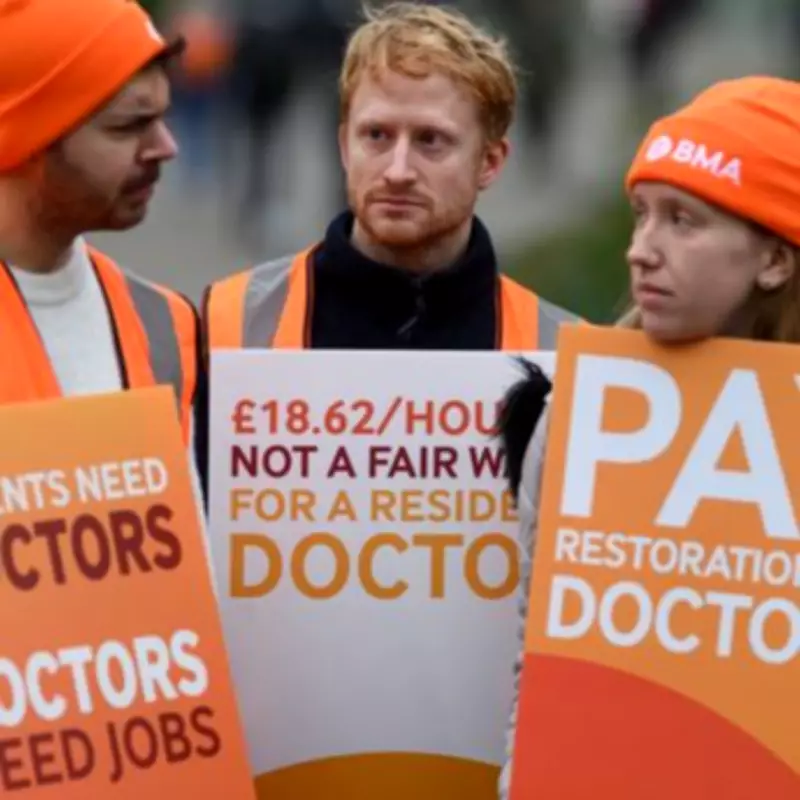
NHS Doctors Vote to Extend Strike Mandate for Six More Months Amid Pay Dispute
Resident doctors across England have decisively voted to continue their industrial action for an additional six months, following a ballot conducted by the British Medical Association. The result grants the union a renewed legal mandate to organise strikes as negotiations with Health Secretary Wes Streeting continue.
Overwhelming Support for Continued Action
A significant majority of 93% of resident doctors voted in favour of extending their strike mandate, although the turnout stood at 53%. Under current legislation, unions must achieve a minimum 50% turnout to secure the legal right to strike, a threshold that was comfortably met in this ballot.
Dr Jack Fletcher, chairman of the BMA's resident doctors committee, emphasised that the vote does not necessarily mean more strikes are inevitable. "None of this needs to mean more strikes," he stated. "In recent weeks the Government has shown an improved approach in tone compared with the name-calling we saw late last year."

Core Demands and Government Response
The dispute centres on two primary demands from resident doctors:
- Restoration of real terms pay to 2008 levels
- Creation of additional fully funded doctor training posts
According to the BMA, using the Retail Price Index measure of inflation, real terms salaries for resident doctors have fallen by approximately one-fifth since 2008. The union is calling for a commitment to increase pay by 26% over the coming years.
The Government, however, points to different metrics. Using the Consumer Price Index measure, which excludes mortgage and permanent housing costs, average resident doctor salaries have decreased by about 5% since 2008. A spokesperson for the Department for Health and Social Care highlighted recent progress: "On top of a 28.9% pay rise over the last three years, this government is continuing to work with the BMA to address the issues resident doctors face in their careers."
Impact on NHS Services and Patient Care
Matthew Taylor, interim chief executive of the NHS Confederation, expressed deep concern about the vote's implications. "NHS leaders will be bitterly disappointed that resident doctors have voted to continue with industrial action, especially given the huge impact that strikes have had on patients and the health service's performance and finances," he said.
Taylor warned that further strikes would impose substantial unplanned costs on NHS organisations, potentially forcing difficult decisions about staff reductions and patient services. "Further strikes will pile yet more unplanned costs on NHS organisations, forcing health leaders to make difficult choices over reducing staff and patient services to try to balance their books," he explained.
Historical Context and Ongoing Negotiations
Resident doctors, previously known as junior doctors, have staged fourteen separate strikes since 2023, with their dispute spanning two different governments. The current disagreement specifically concerns the 5.4% pay increase awarded for the 2025/26 period.
The Government has emphasised its commitment to resolving the dispute through dialogue. "The government has been in intensive and constructive discussions with the BMA Resident Doctors Committee since the start of the new year to try and bring an end to the damaging cycle of strikes," stated the Department of Health and Social Care spokesperson.
Both sides acknowledge the need for a sustainable solution. Dr Fletcher remarked: "A deal is there to be done: a new jobs package and an offer raising pay fairly over several years can be worked out through good will on both sides, in the interests of patients, staff and the whole NHS."
Looking Forward
As negotiations continue, NHS leaders are urging both parties to consider the broader implications of further industrial action. Taylor emphasised: "We cannot let these strikes roll through 2026, using up yet more scarce resources and impeding the progress the NHS needs to make in reducing waiting lists."

The Government remains hopeful that talks will yield an agreement, with the spokesperson adding: "We hope that these talks result in an agreement that works for everyone, so that there is not any more strike action by resident doctors in 2026."
The outcome of these negotiations will significantly impact NHS services, patient care, and the working conditions of thousands of medical professionals across England throughout the coming months.