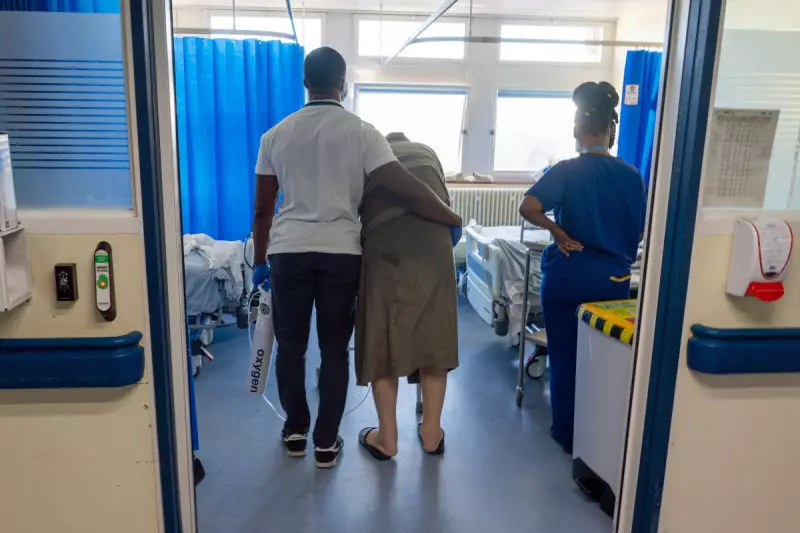
Age UK Analysis Exposes 'Staggering' Corridor Care Crisis for Elderly Patients
More than 100,000 elderly individuals endured waits of up to three days in A&E corridors and waiting rooms last year before finally being moved to a hospital ward, according to new analysis by Age UK. The charity's research, obtained via Freedom of Information requests, reveals a deepening crisis in emergency care provision across the National Health Service.
Distressing Conditions for Vulnerable Patients
The analysis specifically revealed that in 2024/25, 101,972 individuals aged 65 or over experienced these lengthy delays after a decision to admit them had been made. Over half of these patients, totalling 53,870, were aged 80 or over, with some reportedly forced to lie on the floor and wash in toilet sinks during their prolonged waits.
Caroline Abrahams, Age UK charity director, described the figures as "staggering" and condemned the situation as becoming routine in some NHS hospitals. "Waiting for more than 24 hours, often on a hard chair in a corridor or other overspill area, when you are extremely unwell, in pain, probably alone, maybe fearing for your life, would be horrific at any age, let alone if you are in your eighties or beyond," she stated.

Personal Accounts of Prolonged Suffering
The report includes harrowing personal testimonies from elderly patients who endured these extended waits. One 77-year-old patient named David spent 30 hours waiting in A&E and "could barely move." He was told there were no beds or trolleys, and ended up lying on the floor with only a coat under his head.
Another man, Michael, 80, was left on a trolley for 16 hours after having a heart attack with no blankets or pillow. Jennifer, 76, waited 36 hours with no washing facilities and was told to wash herself in a toilet sink with no plug, leaving her feeling "like something that had been left on the streets."
Systemic Pressures and Institutional Responses
These alarming figures come amid broader concerns about NHS capacity and patient safety. A recent probe by the Health Services Safety Investigations Body found some NHS hospitals are adapting corridors and other spaces to provide care by installing plug sockets and emergency call bells in a bid to minimise patient safety risks. Senior staff told the watchdog these changes were necessary as medics "could not avoid using these spaces."
The latest monthly performance figures published by NHS England show the number of people waiting more than 12 hours in A&E departments from a decision to admit to actually being admitted stood at 50,775 in December, up slightly from 50,648 in November. Some 73.8 per cent of patients were seen within four hours in A&Es last month, down from 74.2 per cent in November.
Calls for Government Action and Accountability
Age UK is calling for the Government to create a funded plan with specific deadlines to slash long A&E waits and end corridor care, as well as establishing a system to collect regular data on corridor care. The charity also recommends appointing a minister to be accountable for tackling these issues, with a requirement to report to Parliament every six months.
"It certainly isn't possible to eradicate corridor care and long waits with the stroke of a pen, it will take time and commitment," Ms Abrahams acknowledged. "But the sooner the Government makes a start the quicker we'll restore a sense of decency in and around our A&Es, which is the least that our older population and hard-pressed hospital staff deserve."
The Government and NHS England have set a target of March 2026 for 78 per cent of patients attending A&E to be admitted, discharged or transferred within four hours. However, Age UK expressed doubts that the Government "really appreciates the seriousness of this situation and has the grip to turn it around," highlighting the urgent need for comprehensive intervention.