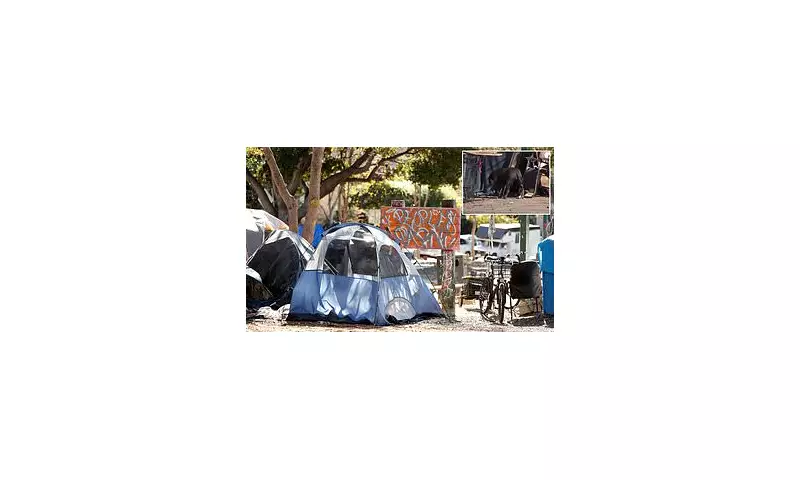
Public health officials in California have issued an urgent warning after a rare and potentially fatal tropical disease was discovered within a homeless encampment in Berkeley. The bacterial infection, leptospirosis, was confirmed in two dogs residing at an encampment on Harrison Street, raising significant concerns for human and animal health.
What is Leptospirosis and How is it Spreading?
Leptospirosis is a severe blood infection caused by bacteria that is rarely seen by doctors in the United States and is typically associated with tropical climates. The primary vectors for the disease are rats, which spread the bacteria through their urine and faeces, contaminating soil and water. Humans and dogs can then contract it through contact with this contaminated environment.
Dr Monica Gandhi, an infectious disease expert at UCSF, explained to KTVU that despite its rarity, the infection is often linked to homelessness and encampment conditions. "As a result the unhoused are particularly affected," she stated. While the disease can be asymptomatic, initial symptoms often mimic the flu and can be treated with common antibiotics. However, if left untreated, it can escalate to severe, life-threatening complications including fever, red eyes, headaches, and muscle aches.

Evacuation Orders and Legal Conflict
In response to the outbreak, Berkeley City officials have issued a public health notice urging residents to evacuate at least one-third of a designated 'red zoned' area immediately. "Immediate departure from these encampments will reduce risk to encampment residents and their dogs, and to the surrounding neighbourhood," the notice declared.
This health emergency unfolds amidst an ongoing legal dispute over the encampment. Officials attempted to clear the site in June, but homeless advocates successfully challenged the move. A federal judge issued a temporary injunction, preventing the city from sweeping the area until disabled residents could be relocated.
Anthony Prince, an attorney representing the homeless union, has accused the city of using the bacterial outbreak as a pretext for eviction. He claims that unsanitary conditions worsened after officials removed a dumpster from the location.
Long-Term Cleanup and Investigation
The city's public health investigation and cleanup operation are expected to take a minimum of 30 days. This timeframe is critical, as leptospirosis bacteria can survive in soil for up to one month. As part of the effort, any recreational vehicle (RV) within the encampment found to have a rat infestation will be demolished.
This incident highlights the complex intersection of public health, homelessness, and legal rights in urban areas. The situation in Berkeley serves as a stark reminder of the vulnerabilities faced by unhoused populations and the challenges local authorities face in managing associated health risks.