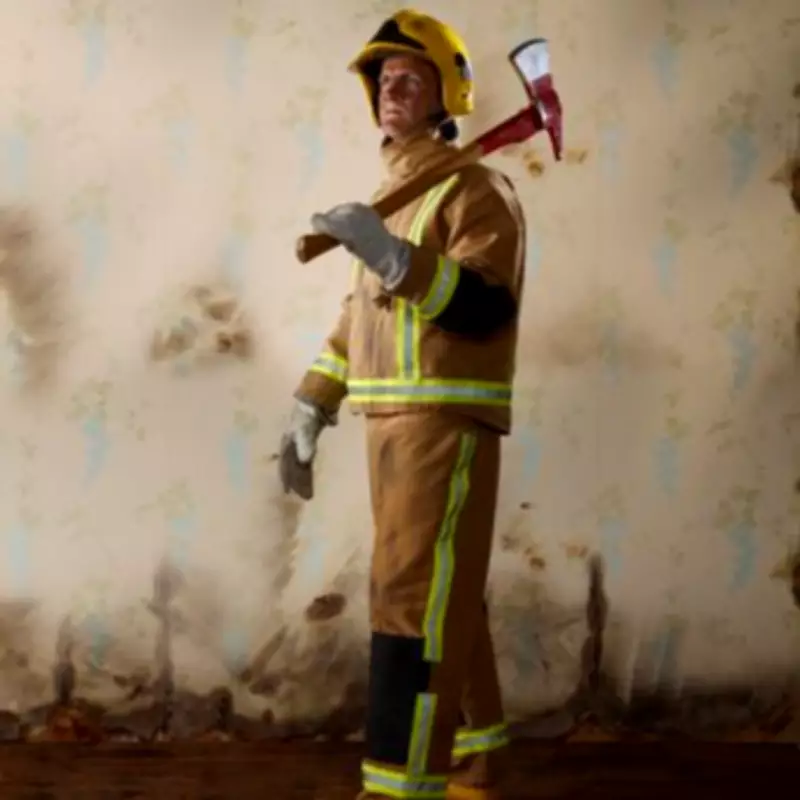
Fire and rescue services across the United Kingdom are now being summoned to assist severely obese individuals at a rate of once every three hours and twenty minutes, according to alarming new statistics. The data reveals a dramatic escalation in these complex and resource-intensive operations, placing unprecedented strain on emergency responders.
A Near Five-Fold Surge in Bariatric Emergencies
Analysis of Freedom of Information requests by ZAVA shows that UK fire services attended a staggering 15,849 bariatric incidents between 2020 and 2025. This figure represents a near five-fold increase compared to the 2,700 similar incidents recorded between 2007/2008 and 2011/2012. With approximately 1.9 million UK adults living with Class III obesity, formerly termed morbid obesity, the scale of the challenge is immense.
Enormous Resource Mobilisation for Single Patients
These are not simple lifts. Firefighter Tom from the London Fire Brigade described a single operation that required a vast array of resources: five fire engines, multiple Fire Rescue Units, USAR prime movers, a command unit, senior officers, police, four ambulances, a specialist bariatric ambulance, and a London Ambulance Service Incident Response Unit. The crew was on scene for around ten hours, during which they had to remove a ground-floor balcony, take out three French doors, and construct a reinforced ramp.

"It took nine firefighters just to lift him from the chair onto an upright stretcher," Tom explained. "One of my crew members injured his back during this job. These incidents routinely push firefighters beyond safe manual handling limits." The sheer concentration of emergency cover in one location reduces availability across wider areas, with significant cost implications for the taxpayer.
Regional Hotspots and Soaring Incident Rates
The burden is not evenly distributed. The London Fire Brigade responded to the highest number of bariatric incidents between 2020 and 2025, totalling 2,025. Within the capital, incidents were heavily concentrated in Croydon (195), followed by Greenwich (151) and Bromley (140).
Nationally, South Wales Fire and Rescue Service reported the second-highest volume, with 1,174 incidents since 2020, representing a 56% increase between 2020 and 2024. Perhaps most strikingly, the Northern Ireland Fire and Rescue Service witnessed a 146% surge in bariatric incidents over the same four-year period.
Physical Toll and Operational Hazards
Overall, UK fire and rescue services have spent 553,609 minutes—equivalent to over 384 days—at bariatric "special service calls." For the London Fire Brigade alone, these emergencies have incurred resource costs exceeding £1 million since 2020.
The physical risks to firefighters are severe. "Jobs that would be straightforward with a casualty of a healthier weight become physically damaging and exhausting," Firefighter Tom noted. "Removing a severely overweight casualty from a fire would mean working harder, using more air, and staying longer in a dangerous environment. This significantly increases the risks of heat exhaustion, collapse, and fire spread."
A Glimmer of Hope and the Path Forward
There is a tentative sign of improvement. ZAVA’s study indicates a 13% reduction in bariatric incidents attended by fire services between 2022 and 2024. Medical experts suggest this decline may be linked to the introduction of weight-loss injections in the UK from 2023.
Dr. Crystal Wyllie of ZAVA commented: "Obesity is an epidemic... First responders have to deal with a tremendous amount of stress, but adding difficult callouts for bariatric patients risks their health and safety. So tackling obesity is key here to reduce strain on our public services."
She added that the decrease in incidents offers "a light at the end of the tunnel," and with millions of Britons now accessing weight management techniques, a further reduction in these high-risk rescues can be anticipated in the coming years. However, the current data underscores a profound and ongoing challenge for the nation's emergency infrastructure.