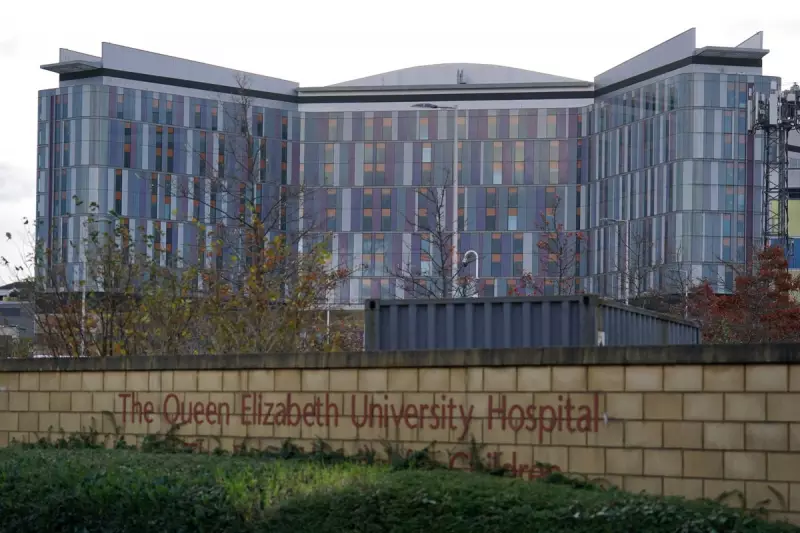
The Scottish Hospitals Inquiry has heard that a health board's significant change in position regarding the potential causes of infections at a major hospital has inflicted "indescribable distress" upon the family of a young patient who tragically died. The inquiry, currently examining the design and construction of the Queen Elizabeth University Hospital (QEUH) and the Royal Hospital for Children (RHC) in Glasgow, was told that the grief of Molly Cuddihy's parents was profoundly intensified by the timing of the board's admission.
A Fundamental Change in Position
Molly Cuddihy, who was 23 years old, passed away in August 2025 after receiving treatment at the Glasgow hospital campus since 2018. In written closing submissions made public recently, NHS Greater Glasgow and Clyde (NHSGGC) accepted there was likely a "causal connection" between certain patient infections and the hospital environment, specifically the water system. This marked a fundamental shift from its earlier stance on the issue.
Clare Connelly, representing the Cuddihy family and that of another patient, Eilidh Mackay, addressed the inquiry. She stated that this change in position, which occurred at the end of 2025, has caused immense suffering to Molly's parents, John and Maria Cuddihy. "Their incalculable grief and distress following the death of their daughter Molly has been further exacerbated by the fact that Molly did not hear or read of that change in position prior to her death," Ms Connelly told the hearing. "For the Cuddihys, that has caused unimaginable pain."

Molly Cuddihy's Heartbreaking Statement
The inquiry heard a statement provided by Molly Cuddihy for a hearing scheduled in September 2025, before her death. In it, she described her deteriorating health, which she attributed in part to intensive antibiotic treatments. "There is now no end in sight," she wrote. "There is no day to look forward to a cure, and I'm very likely to have a much more limited lifespan than the majority of my peers."
She expressed profound resignation, noting that while life isn't fair, being diagnosed with a rare, aggressive cancer at 22 should not have led to such a bleak outlook. Molly also highlighted the extraordinary sacrifice of her older brother, who donated a kidney to her, stating that "that risk should never have had to be taken." While she praised her clinical team's care, she was scathing of NHSGGC management, accusing them of "utter contempt for the entire process" and a "total disregard" for patients and families.
Systemic Breaches and a Second Case
Ms Connelly further argued that NHSGGC's failures constituted a "systemic breach" of its commitments under the United Nations Convention on the Rights of the Child (UNCRC) and the Scottish Government's Getting it Right for Every Child (GIRFEC) framework. She emphasised the right to the best possible health and the right to clean water, asserting that the board's actions represented a failure to uphold these fundamental child welfare principles.
The inquiry also considered the case of Eilidh Mackay, a cancer patient at the RHC who contracted infections in 2016. Submissions on behalf of her family stated she "continues to live with the life-impacting and life-limiting effects" of those infections. In a statement read to the inquiry, Eilidh said, "In this hospital I should have been safe, but the building was killing me. My life is important and should never have been jeopardised the way it was." She described the ongoing ordeal as a "torment" that will never go away, forever changing her family's life.
Ongoing Investigations and Health Board Response
The death of Molly Cuddihy is currently under investigation by prosecutors. Furthermore, NHSGGC has been named in an ongoing corporate homicide investigation concerning the deaths of three children and a 73-year-old woman at the QEUH campus. This broader context underscores the gravity of the issues being examined.

In response, an NHSGGC spokesperson offered a "sincere and unreserved apology" to the affected patients and families. The board sought to reassure the public, stating, "We want to reassure patients and families that the QEUH and RHC are safe today. Ensuring the safe care of our patients is our key priority at all times." They outlined comprehensive steps taken to address past physical defects in the building and highlighted a significant, ongoing programme of maintenance and monitoring, affirming staff commitment to providing safe, high-quality care.
The Scottish Hospitals Inquiry, presided over by Lord Brodie in Edinburgh, continues its work, delving deeper into these critical matters of patient safety and institutional accountability.