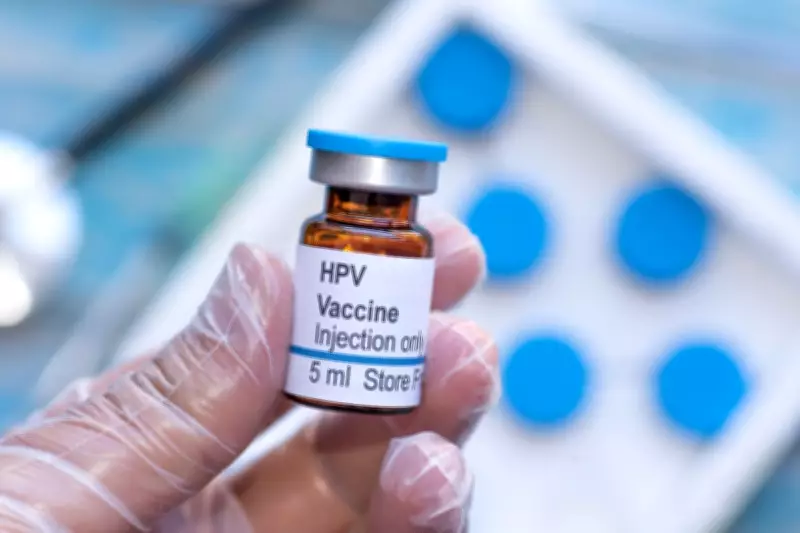
Health authorities have issued a stark warning after new statistics revealed that a quarter of all UK students are completing their secondary education without receiving the potentially life-saving HPV vaccine, leaving them at substantially higher risk of developing several types of cancer.
Concerning Vaccination Gap Persists
The latest figures from the UK Health Security Agency for the 2024/25 academic year show that, while uptake rates have stabilised, a significant proportion of young people remain unprotected. In England, only 75.5% of Year 10 girls and 70.5% of Year 10 boys have received the vaccination, representing a substantial decline from pre-pandemic levels that approached 90% coverage.
Regional Disparities Highlighted
The data exposes troubling geographical variations in vaccination rates across the country. London recorded the lowest uptake figures, with just 61% of girls and 56.9% of boys in Year 10 receiving the jab. In contrast, East England achieved the highest coverage rates at 82.8% for girls and 78.2% for boys, though still falling short of optimal levels.

There is some encouraging news for younger cohorts, with Year 9 students showing modest improvements compared to the previous academic year. Girls demonstrated a 1.2 percentage point increase in uptake, while boys showed a 2 percentage point rise, suggesting potential for gradual recovery in vaccination rates.
Understanding HPV and Cancer Risks
The human papillomavirus represents a significant public health concern, with certain strains directly linked to multiple cancer types. These include cervical cancer in women and people with a cervix, various head and neck cancers affecting the mouth and throat, genital cancers, and genital warts.
Medical experts emphasise that the HPV vaccine offers exceptional protection, potentially preventing up to 90% of cervical cancers according to NHS England guidance. The vaccination programme now involves just a single dose administered in schools to students in Year 8, capitalising on research showing significantly stronger immune responses and greater cancer protection when vaccination occurs before age 16.
Expert Perspectives and Government Response
Dr Sharif Ismail, UKHSA consultant epidemiologist, underscored the vaccine's importance, stating: "The HPV vaccine stands as one of the most effective cancer-preventing vaccines available. Administered as just a single school dose, it provides protection against cervical cancer and several HPV-related cancers affecting both genders, potentially saving thousands of lives and preventing immense family distress."
Health minister Stephen Kinnock expressed concern about the current situation, remarking: "Every child deserves protection against HPV-related cancers, and it's deeply worrying that so many young people complete their education without this crucial vaccine. I strongly encourage parents of children who missed their HPV vaccination not to delay - contact your GP or local NHS service immediately."
Catch-up Programmes and Future Plans
Young people who missed their school vaccination have until their 25th birthday to receive the jab through their GP surgery. The government has announced plans to expand access to catch-up vaccinations in 2026 as part of the National Cancer Plan, including making the vaccine available through community pharmacies to improve accessibility for those who missed earlier opportunities.
This initiative forms part of the broader NHS 10-year health strategy, which aims to eliminate cervical cancer entirely by 2040 through comprehensive vaccination and screening programmes.
Continued Importance of Screening
While the HPV vaccine provides excellent protection against infection, health professionals stress that attending regular cervical screening appointments remains absolutely essential, even for vaccinated individuals. These screenings can identify abnormal cells before they develop into cancer, enabling early intervention and prevention of more serious health outcomes.
The combination of widespread vaccination and consistent screening represents the most effective approach to reducing HPV-related cancer incidence across the population, offering hope for substantially improved public health outcomes in the coming years.