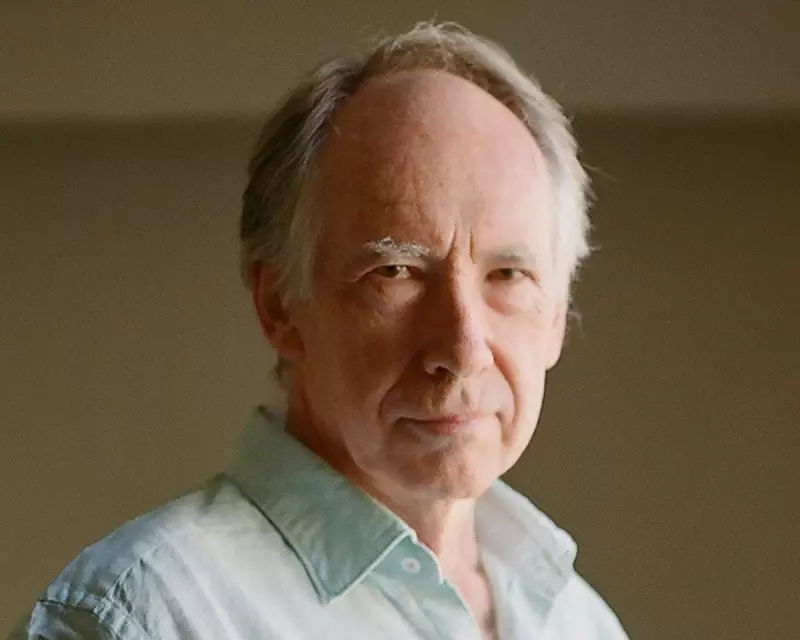
Renowned author Ian McEwan has publicly called for the legal framework surrounding assisted dying to be gradually expanded to include individuals suffering from dementia. Speaking at a literary event in London, McEwan shared his personal connection to the issue, revealing how dementia has impacted his own family.
Personal Experience Fuels Advocacy
McEwan described the profound effect dementia had on his mother, Rose, who lived with the condition alongside his brother-in-law and another close relative. He poignantly recounted his mother's decline, stating she reached a point where she "could not recognise anyone" and was effectively "alive and dead all at once." This experience, he emphasised, creates a devastating burden on families, which he termed "part of the radioactive damage of it all."
The Current Legislative Battle
The author expressed frustration with the parliamentary process surrounding the UK's assisted dying bill, which he said is being hindered by extensive opposition tactics. He noted that supporters now believe it is "near impossible" for the legislation to pass the House of Lords before the current session ends in May, due to what he described as filibustering through over 1,000 proposed amendments.

Currently, the bill would only legalise assisted dying in England and Wales for terminally ill adults with a prognosis of less than six months to live. McEwan, who serves as a patron of the campaign group Dignity in Dying, argued this scope is too limited. "We're not asking much," he stated, directly addressing critics who warn of a slippery slope by saying, "I like it when some bishop says on the radio: 'It's the thin end of the wedge,' and I think yes, it is the thin end of the wedge."
A Case for Gradual Expansion
When questioned specifically about extending rights to dementia patients, McEwan responded: "Gradually, yeah, I would. But I think it does require a lot more thought and the idea of living wills." He highlighted the potential of advance directives or living wills to document a person's wishes before cognitive decline makes communication impossible.
He illustrated the current legal dilemma with a personal anecdote about his mother, who once told him, "If I ever become really terrible, I'd like you to finish me off." Under present law, acting on such a request would constitute murder. "Imagine standing up in court and saying: 'Well, she did say when we were on the beach 20 years ago...'" McEwan remarked, underscoring the need for clearer legal frameworks.
Broader Literary and Social Commentary
McEwan made these remarks during a conversation at St Martin-in-the-Fields church in central London, part of an event series discussing his latest novel, What We Can Know, where dementia serves as a significant theme. The author has explored this subject in previous works, including Lessons and Saturday.
The discussion also touched on other contemporary issues. McEwan revealed he is working on a new novel that examines the digital age's impact on childhood, expressing support for potential social media bans for under-16s, similar to measures being considered in Australia. He reflected nostalgically on the 1970s, describing solitude as "one of the great luxuries of civilisation" that has been eroded by the internet, from which "so much dark stuff is coming out."
Climate Change and Human Resilience
A major element of What We Can Know is climate change, with parts of the novel set in a future 2119 where Britain has become an archipelago due to rising sea levels. Despite acknowledging he has "never known the world in a worse state," McEwan maintains a "little streak of optimism that we're going to scrape through."
He described the novel's emotional landscape as a blend of despair and hope, particularly for those with children and grandchildren who "want the human project to survive." However, he also identified a "countervailing current" of elderly pessimism, where individuals might think, "with the end of me, it'll be the end of everything." McEwan sees his work as an exploration of these "contrary forces" shaping our response to existential challenges.