Minnesota Files Legal Challenge Against Trump Administration's Medicaid Funding Withholding
The state of Minnesota has initiated legal action against President Donald Trump's administration in a bid to prevent the withholding of $243 million in Medicaid spending. The lawsuit, filed in a U.S. court in Minneapolis, seeks a temporary restraining order to block the funding freeze, which officials warn could force cuts to healthcare services for low-income families across the state.
Background to the Funding Dispute
The legal move follows Vice President JD Vance's announcement last week that the administration would "temporarily halt" certain Medicaid funding to Minnesota due to fraud concerns. Vance described this action as part of an aggressive crackdown on the misuse of public funds, though specific details about the alleged fraud have not been publicly disclosed.
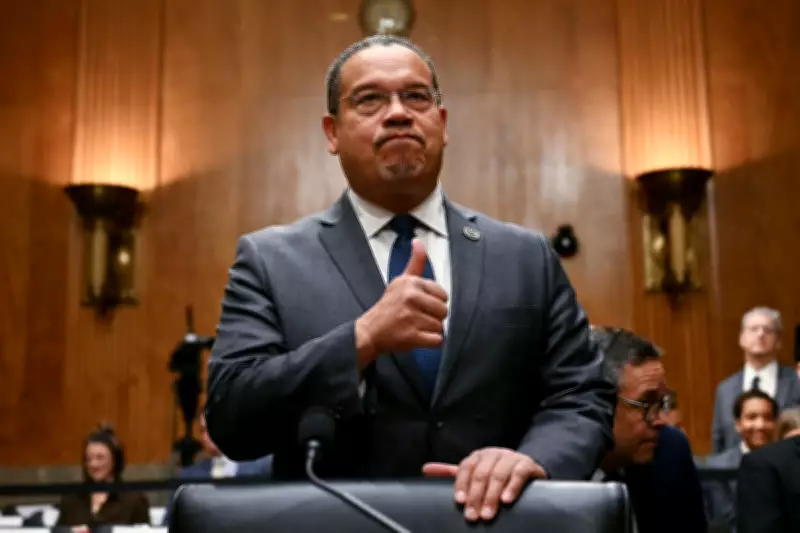
Minnesota Attorney General Keith Ellison has strongly contested the administration's justification, pointing to his office's established record in combating Medicaid fraud. During Ellison's tenure, his office has secured more than 300 convictions and obtained $80 million in judgments and restitutions related to Medicaid fraud cases.

Legal Arguments and Constitutional Concerns
The lawsuit names multiple federal entities and officials as defendants, including the Department of Health and Human Services, the Centers for Medicare and Medicaid Services, Dr. Mehmet Oz in his capacity as CMS administrator, and Robert F. Kennedy Jr. as HHS secretary.
Minnesota's complaint alleges several legal violations by the administration:
- The withholding violates due process procedures by taking hundreds of millions of dollars without proving Minnesota's noncompliance with Medicaid regulations through proper discovery and evidentiary hearings
- The administration failed to provide Minnesota with adequate details about its decision, contravening federal law requirements
- The funding block imposes retroactive conditions on Minnesota's Medicaid funding, potentially violating constitutional principles
- The action appears arbitrary, capricious, and part of a pattern of political punishment directed at Minnesota
The lawsuit cites legal precedents emphasizing that while Congress may impose conditions on states' acceptance of federal funds, "the conditions must be set out unambiguously."
Potential Impact on Minnesota Residents
The threatened funding cuts represent approximately 7% of Minnesota's quarterly Medicaid allocation, according to Ellison's office. If implemented, these reductions could force the state to significantly curtail healthcare services for low-income families or make cuts to other essential government programs.
Medicaid, known as Medical Assistance in Minnesota, provides health insurance coverage to approximately 1.2 million residents who would otherwise struggle to afford healthcare. Eligibility extends to families of four with incomes at or below $42,759 annually.
"Trump's attempts to look like he's fighting fraud only punish the people and families who most need the high-quality, affordable healthcare that all Minnesotans deserve," Ellison stated. "As long as I am attorney general, I will do everything in my power to defend our tax dollars, both from fraudsters and from the Trump administration's cruelty."
Administration's Position and Financial Details
The Trump administration has indicated it would withhold $259.5 million from Minnesota's fourth-quarter 2025 Medicaid spending. Minnesota's legal challenge specifically targets $243 million of this amount. The Department of Health and Human Services, which oversees CMS, did not immediately respond to requests for comment following the lawsuit's filing late Monday.
This legal confrontation highlights ongoing tensions between state governments and federal administrations over healthcare funding and regulatory authority, with potentially significant consequences for vulnerable populations dependent on Medicaid services.