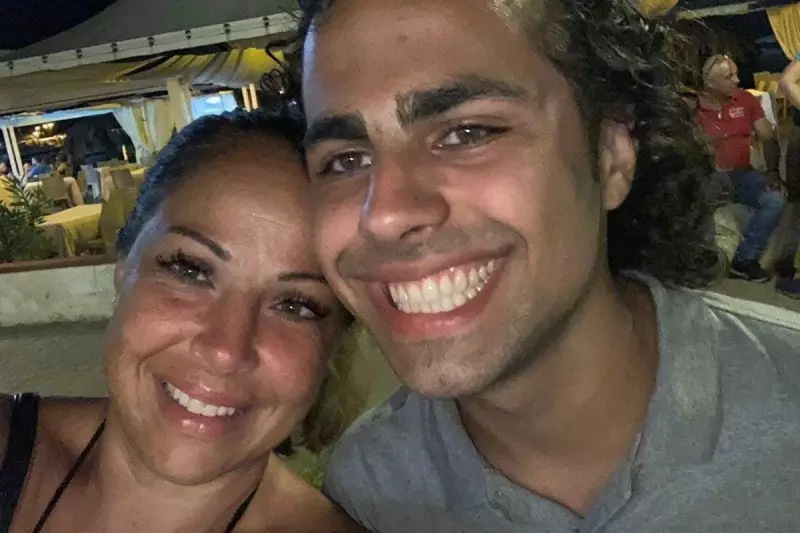
The heartbroken mother of a 26-year-old Canadian man has spoken of her devastation after her son, who was blind and diabetic but not terminally ill, was euthanised under the country's controversial Medical Assistance in Dying (MAiD) programme.
A Mother's Fight Against the System
Margaret Marsilla believed she had saved her son Kiano Vafaeian's life in 2022 when his initial request for assisted dying was denied. The Caledon, Ontario mother found help for her son and thought he was on a path to recovery. "Four years ago, here in Ontario, we were able to stop his euthanasia and get him some help," Marsilla wrote on Facebook. "He was alive because people stepped in when he was vulnerable – not capable of making a final, irreversible decision."
Devastating News After Christmas
Just after Christmas, Marsilla received a devastating phone call informing her that her 26-year-old son had been approved for MAiD and had died four days earlier. Vafaeian, who was blind in one eye, suffered from type 1 diabetes, and struggled with depression, had been living with what his mother describes as deep psychological suffering.

"He was not sound of mind, he was having highs and lows all the time," Marsilla told York Region News. "There were times when he loved life, there were times he was in a deep dark hole."
A Life of Struggle
Diagnosed with Type 1 diabetes at age four, Vafaeian later developed diabetic retinopathy, losing all sight in one eye and most vision in the other. His mother tried to maintain normalcy by enrolling him in diabetes camps, soccer, and Taekwondo. However, by age 11, he began showing signs of emotional volatility and aggression.
"At the time, I blamed the diabetes," she said. "Other kids bullied him because he was pricking himself at school to test his blood sugar."
Spiralling Mental Health
Vafaeian's behaviour became increasingly erratic during his teenage years. He attended multiple high schools before dropping out, and his grades collapsed. His mother suspected drugs had entered the picture. After a serious car accident at 18 left him with chronic pain, Vafaeian obtained a medical marijuana prescription, which his mother approved over opioids.
"We went through hell and back," Marsilla told York Region News. "It didn't matter how much money or help I gave him. At this point, I knew how bad his mental health was."
Troubling Assessment Process
In 2022, after Canada expanded eligibility for assisted dying beyond terminal illness, Vafaeian reportedly applied for MAiD and was approved, claiming his diabetes and blindness were "irremediable." However, doctors did not proceed at that time. The family's story was featured on CBC's The Fifth Estate, where troubling allegations surfaced, including that part of his assessment occurred over FaceTime while he was at a restaurant.
Marsilla believed she had won him back from death. "I thought he was finally coming around with positive hopes for his future," she said. She arranged housing, a caregiver, and encouraged him to join a gym. Months before his death, Vafaeian traveled to New York City to buy smart glasses.
Sudden Death and Disputed Assessment
On January 3, their family received a call from a law firm in British Columbia informing them that Vafaeian had died four days earlier. Marsilla says she was stunned to learn the MAiD approval cited blindness, diabetes and "severe peripheral neuropathy."
"Kiano spoke occasionally about numbness in his hands and feet, but he wasn't on medication for it," she said. "He was able to eat and walk comfortably."
Calls for Stronger Safeguards
Marsilla now wants stronger safeguards for people with mental illness, including mandatory psychiatric and addiction assessments. "When people have sicknesses or diseases that are not terminal and treatable," she said, "why would the government or any MAiD-approved doctor qualify them for it?"
She questions why someone calling a suicide hotline is directed to therapy, while someone seeking MAiD can be approved to die. "I feel as though someone killed my son," Marsilla said.

Canada's Expanding MAiD Programme
Canada legalised assisted dying in 2016 for terminally ill adults. Eligibility expanded in 2021 to include people with chronic illness and disability. In 2027, MAiD is set to expand further to include mental illness alone.
Canada now has one of the highest rates of medically assisted deaths in the world, with 16,499 deaths in 2024 – about 5.1 percent of all deaths, according to a report viewed by The Free Press. The fastest-growing category is a catch-all labeled "other," which includes Vafaeian's case.
Expert Concerns About 'Gray Zone' Cases
Sonu Gaind, a University of Toronto psychiatry professor, told The Free Press that in "gray zone" cases, physical diagnoses are often cited even when despair and isolation are the real drivers.
Marsilla told the outlet that she supports assisted dying for terminal patients, but not for those she believes could still be helped. "When people are already dying, it's different," she said. "If it wasn't for MAiD and track 2, Kiano would still be alive."
Official Response and Continuing Fight
Health Canada said MAiD may be provided to individuals with mental disorders if safeguards are met. "MAID may be provided to an individual who is suffering intolerably from an eligible medical condition (such as cancer or a neurological condition), who also has a mental disorder, providing they meet the remaining eligibility criteria and the required safeguards are satisfied," Karine LeBlanc wrote in an email to Metroland.
Marsilla says she will never know exactly what happened in her son's final days. But what she does know, she says, is that she will do whatever she can to stop it from happening to another family. "And I promise I will fight tooth and nail for my son and other parents who too have children that suffer from mental illness," she wrote in a post on Facebook. "No parent should ever have to bury their child because a system – and a doctor – chose death over care, help or love."