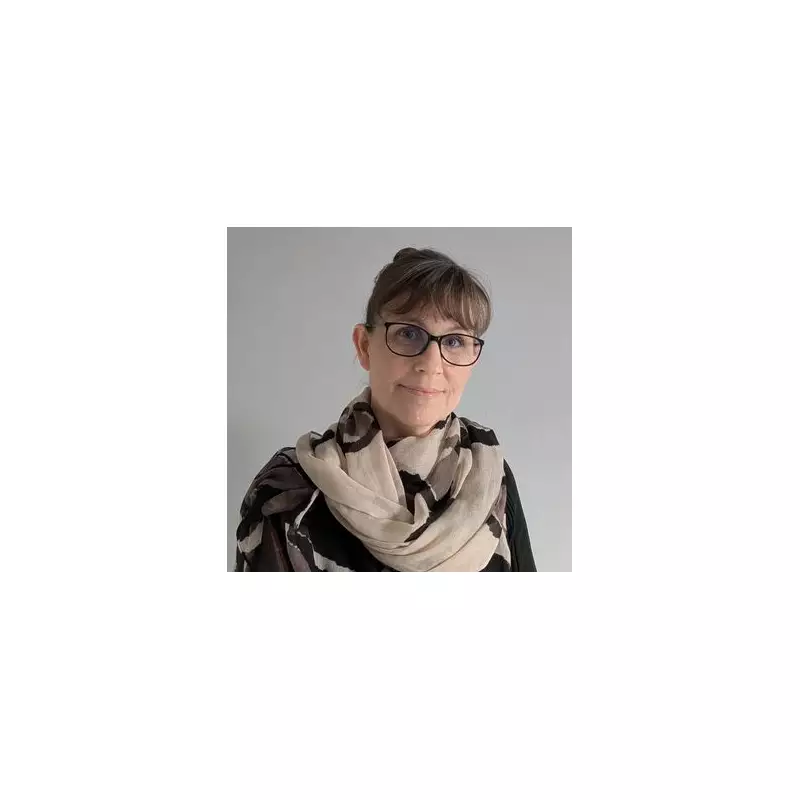
Claire McDonald, a 49-year-old mother from South Derbyshire, once thrived as a formidable corporate professional, balancing a demanding career with a bustling family life. She had envisioned her future as a time of "more freedom, less worry" once her children grew up, but those dreams were abruptly shattered when she received a life-altering diagnosis.
From Stress to Diagnosis: The Unseen Symptoms
In her mid-40s, Claire began noticing subtle changes in her health that she initially dismissed as normal signs of aging or stress. She experienced persistent fatigue, which she brushed off as mere tiredness, and found herself tripping over her own feet, attributing it to clumsiness. As her symptoms progressed, she started forgetting words mid-sentence, a troubling sign she again linked to stress.
It was only after these warning signs persisted that Claire sought medical advice, leading to a shocking diagnosis of multiple sclerosis (MS). MS is a chronic autoimmune condition where the immune system mistakenly attacks the protective sheath around nerve fibres in the brain and spinal cord. This can affect vision, balance, motor skills, muscle strength, senses, and cognition, among other functions.

A Progressive Condition Without Remission
Claire suffers from primary progressive MS, a form of the disease that differs from others in a crucial way: it does not include periods of remission where symptoms might ease. Instead, it relentlessly deteriorates over time, making management particularly challenging. While there are treatments available to help manage symptoms, there is currently no cure for MS.
Reflecting on her diagnosis, Claire says, "I felt like my life had been whipped from under my feet, taken away in the blink of an eye." The condition has forced her to leave her job, resulting in long days spent alone at home with limited social interaction. "I've always been an independent woman, so I couldn't accept that there were things I could no longer do. I still keep thinking it must be a dream," she admits.
The Financial and Emotional Toll of Disability
The impact of Claire's diagnosis extends beyond her physical health, severely affecting her family's finances. She explains, "I have gone from having a lot of money at the end of each month to having hardly anything left." This sudden income gap, combined with rising living costs, mirrors a broader issue faced by disabled households across the UK.
According to estimates from Scope, disabled households face an average extra monthly burden of £1,095 on living costs. For Claire, one minor silver lining has been discovering Purpl, a cost-cutting platform specifically designed for people with disabilities. Founded by Georgina Colman, who also lives with MS, Purpl aims to provide financial breathing room and restore a sense of control and dignity.
Georgina explains, "I know how it feels to have your life changed by a diagnosis. I wanted to create something to give disabled people back some control, dignity, and financial breathing room."
Finding New Purpose Through Creativity
Despite the profound challenges, Claire has channeled her experiences into a creative outlet, finding new meaning in her condition. She has authored a series of children's books titled 'The World of Tilda Jones', aimed at helping children, parents, and teachers navigate emotions. "I decided to write a book that would help children, parents and teachers with emotions and how to deal with them. The book has now turned into a series of books! I've written five of them," she shares.
Claire acknowledges that MS has taken away many aspects of her former life, such as walking for miles in the sunshine, racing her grown-up children, or even simple outings to the shop. She lives with physical pain, exhaustion, and the need for crutches or a wheelchair. Yet, she also notes that the condition has strengthened her empathy, resilience, and creativity.
"MS has taken things from me I can't get back," Claire reflects. "But it has also given me a new outlook on life and has strengthened my empathy, resilience, and creativity to new heights." Her story serves as a poignant reminder of the unpredictable nature of health and the resilience required to adapt to life's unforeseen challenges.