




Holyrood Votes to Force Scottish Government Hospital Scandal Communications Release
MSPs Vote to Force Scottish Government Hospital Scandal Comms Release

Holyrood Demands Transparency Over Hospital Scandal Communications

Members of the Scottish Parliament have taken decisive action, voting to compel the Scottish Government to publish all communications connected to the Queen Elizabeth University Hospital scandal. The vote, which occurred on Wednesday at Holyrood, saw MSPs back a motion demanding full disclosure regarding the Glasgow hospital's contaminated water, inadequate ventilation, and premature opening.

Cross-Party Support for Transparency Motion

The chamber voted 64 in favour to 56 against, with no abstentions recorded. The motion was tabled by Scottish Labour leader Anas Sarwar, who has been at the forefront of calls for greater transparency surrounding the hospital's troubled history. The vote represents a significant parliamentary challenge to the Scottish Government's handling of the ongoing hospitals inquiry.

The motion specifically calls for the Scottish Government to authorise immediate full disclosure and preservation of all communications connected to multiple critical issues at the hospital. These include the contaminated water supply that has been linked to patient infections, the inadequate ventilation systems, and the decision-making process that led to the hospital opening before these fundamental problems were properly addressed.

Inquiry Context and Family Tragedies

The vote comes at a crucial juncture for the Scottish Hospitals Inquiry, which heard closing submissions just last week. The inquiry has been examining the design and construction of both the Queen Elizabeth University Hospital and the Royal Hospital for Children, which share the same campus in Glasgow.

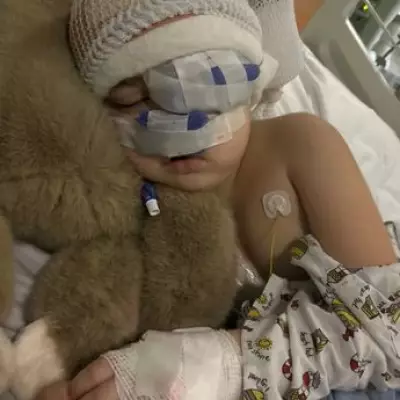
The investigation was launched following tragic deaths linked to infections at the hospital, most notably that of 10-year-old Milly Main in 2017. The local health board has since admitted in its closing statement to the inquiry that there could indeed be a connection between the building's environment and the infections that led to multiple deaths.

Political Accountability Demands

During the Holyrood debate, Mr Sarwar pushed strongly for current and former ministers involved in the hospital's construction and commissioning to be properly questioned by the inquiry. He highlighted that key political figures including Nicola Sturgeon, John Swinney, and Shona Robison have not given testimony or faced cross-examination.

"Without that, we will never have the full picture of what happened," Mr Sarwar argued during the debate. "There's a further risk if political decision making is not examined, ministers will attempt to use the final report of the inquiry as proof that the problems were contained entirely within the health board and could not have been prevented by government intervention."

He emphasised that such claims "cannot be allowed to stand without proper scrutiny" and that the motion also calls for the release of documents held by the government regarding the hospital's opening.

Government Response and Legal Constraints

Responding to the calls, Scotland's Health Secretary Neil Gray acknowledged the concerns behind the motion but argued that supporting it would be "incompatible with the legal framework that governs this inquiry." He explained that all statutory public inquiries in Scotland operate under the Inquiries Act, which was passed by the Scottish Parliament itself.

"That Act exists to protect the independence, integrity and credibility of inquiries," Mr Gray stated. "It gives inquiry chairs powerful legal tools, the power to compel witnesses, to require the production of documents, to take evidence on oath and to determine what evidence is relevant to their terms of reference."

The Health Secretary emphasised that these powers are held by independent inquiry chairs, not by ministers, and that any attempt to influence the chair's actions would be incompatible with the legislation. He did, however, commit to providing any additional information requested by inquiry chairman Lord Brodie, though he stopped short of promising publication regardless of such requests.

Post-Vote Reactions and Demands

Following the successful vote, Mr Sarwar declared: "The Scottish Parliament has spoken and the SNP Government needs to listen. For too long grieving families and brave whistleblowers have been lied to, bullied and forced to fight for the truth while powerful institutions closed ranks."

He continued with strong criticism of what he called "the SNP's culture of secrecy and cover-up," adding: "People have died and their families deserve the truth. We need to know what exactly the SNP Government knew and when, what action they took and what decisions they signed off on."

The Labour leader concluded with a direct demand: "The SNP Government must immediately start work to release all communications on this scandal and they must come clean on whether any documents have been destroyed already."

The vote represents a significant moment in the long-running hospital scandal, with parliamentary pressure now formally applied to the Scottish Government to release potentially sensitive communications. The outcome places additional scrutiny on how the government handles transparency requests while navigating the legal boundaries of an ongoing statutory inquiry.