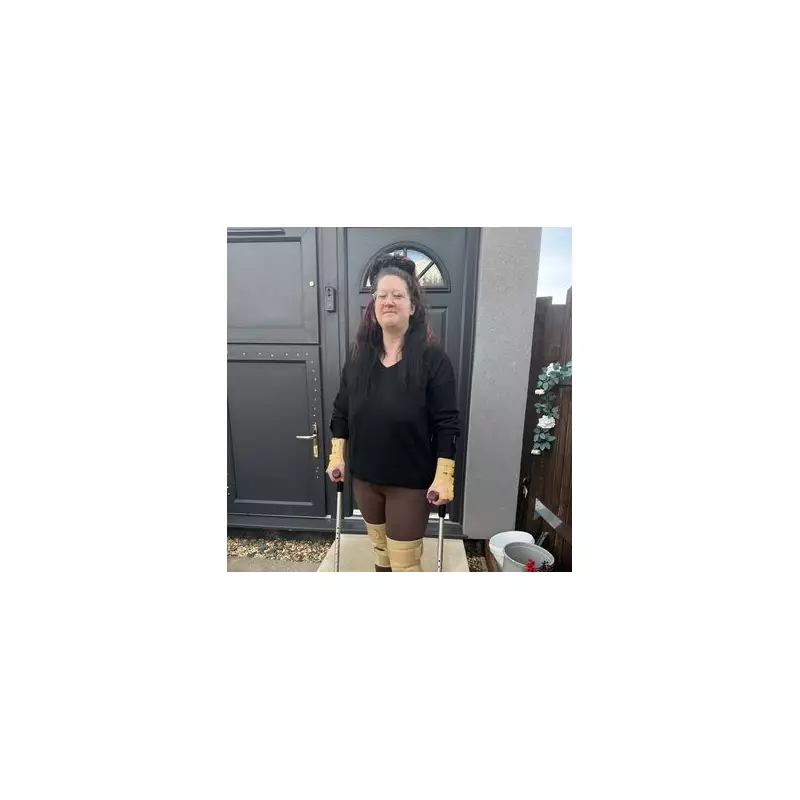
A young mother from Milton Keynes has described how her life was shattered after a sudden collapse led to a paralysing rare disease, with doctors taking nearly three years to deliver a full diagnosis.
A Sudden Collapse That Changed Everything
In April 2022, Victoria Johnston, then 32 and in good health, stepped out of a door at work. Her legs gave way without warning, leaving her temporarily paralysed and unable to feel them. The sensation in her right leg never fully returned. "I walked out the door and collapsed into a pile on the floor," the 35-year-old recalled.
What followed was a gruelling and protracted medical journey. Initial fears of Cauda Equina Syndrome were ruled out, though scans revealed two slipped discs and spinal stenosis. It was not until October 2022, six months after her fall, that a spinal consultant suggested she might have Chronic Inflammatory Demyelinating Polyneuropathy (CIDP), a rare and progressive autoimmune disorder.

The Fight for a Diagnosis and Treatment
Victoria's full and confirmed CIDP diagnosis did not arrive until November 2024, a staggering two-and-a-half years after her initial collapse. During this time, her condition deteriorated rapidly. She has lost 75% of the feeling in her right leg and 50% in her left, and some days are filled with excruciating pain.
"It's a progressive disease - it just eats away at your body," Victoria explained. Her family's life was transformed overnight. Her partner, David McReynolds, had to become her full-time carer and give up the cleaning business they ran together. Victoria is now reliant on him for basic tasks like getting dressed, and their two children have been homeschooled.
"I feel like I've failed my kids," she shared. "I am almost grieving for the life I thought I was going to have."
Campaigning for Change and Raising Awareness
Frustrated by the diagnostic delay and lack of information—she was not even given a leaflet about CIDP—Victoria has looked abroad. She discovered that in the United States, treatment often begins within six months of symptoms appearing. An estimated 650 people are diagnosed with CIDP in the UK each year, yet many face years of uncertainty.
"I felt abandoned and unsupported," she said. "You can't muck about with people's physical health." Doctors are now planning to start her on an intensive immunotherapy regimen, though they suspect she may have an even rarer variant of CIDP.
To help others, Victoria has turned to TikTok, creating a page to document her experience and raise awareness of the condition. "If I can help others going through the same journey, that would make me happy," she said. She hopes her story will highlight the need for faster diagnosis and treatment for rare diseases in the UK.