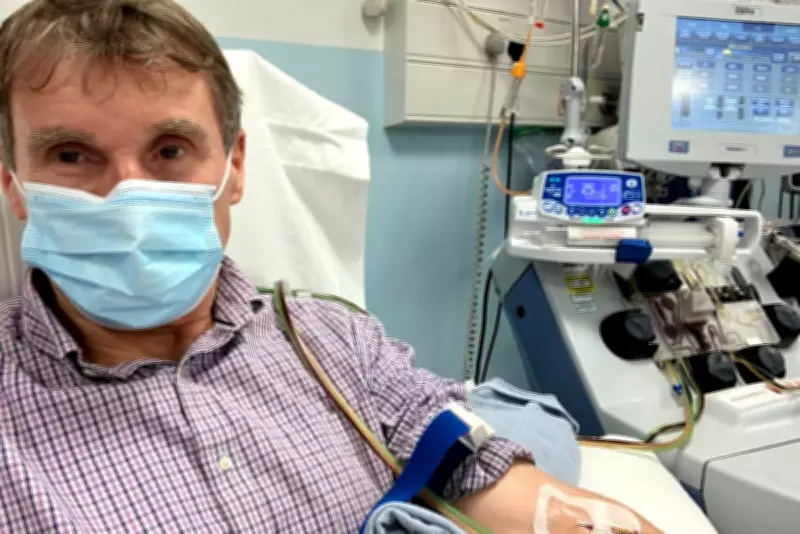
A formal appeal has been lodged with the NHS spending watchdog following its controversial recommendation to withdraw a potentially life-saving cancer treatment from health services across England and Wales. The decision has sparked significant concern among leading blood cancer charities and patients alike.
Charities Challenge 'Backward Step' in NHS Care
Blood Cancer UK, Lymphoma Action, and the stem cell charity Anthony Nolan have formally challenged the National Institute for Health and Care Excellence's (NICE) decision to recommend against the continued rollout of Tecartus on the NHS. The group has branded the move a "backward step for NHS care" and expressed serious concerns for patients facing "very limited alternatives."
What is Tecartus?
Tecartus, also known as brexu-cel, is a pioneering CAR T-cell therapy that re-engineers a patient's own immune cells to target and destroy cancer. It was initially made available for individuals suffering from a rare form of non-Hodgkin lymphoma called mantle cell lymphoma through the Cancer Drugs Fund, which allowed for further data collection on its long-term efficacy.

The treatment is specifically recommended for certain patients over the age of 26 with relapsed or refractory mantle cell lymphoma, a blood cancer that impacts the white blood cells that help fight infection. Significantly, it remains the only CAR T-cell therapy available for this disease, which affects approximately 600 people annually in the United Kingdom.
Clinical Evidence and Patient Impact
NICE concluded that the treatment did not "work as well in clinical practice as it did in trials," with median survival of 2.5 years in NHS patients compared to four years in the original trials. However, charities argue this assessment overlooks the transformative impact on individual lives.
Dr Rubina Ahmed, director of research, policy and services at Blood Cancer UK, stated: "For some people with mantle cell lymphoma, whose cancer has come back or hasn't responded to previous treatment, this CAR T-cell therapy offers a last hope of a cure. We recognise that NICE decisions involve complex clinical and economic considerations but we are concerned about what this could mean for patients who have very limited alternatives."
Patient Testimony: 'Truly Unbelievable' Decision
Paul Madley, 66, from Cardiff, was diagnosed with stage 4 mantle cell lymphoma in 2021. After multiple rounds of chemotherapy and entering remission, his cancer returned in July 2024. He received CAR T-cell therapy in autumn 2024 and was in remission by March 2025.
"I lead a full and active lifestyle – I have returned to work as a consultant chartered surveyor three to four days a week, walk my dog most mornings, play golf and generally enjoy my life as I did before my illness," Mr Madley said. "To therefore be told that NICE have decided to remove this treatment I find truly unbelievable. I have a whole host of different emotions on their decision – sadness, incredible disappointment and anger to name but a few. This treatment is helping to prolong lives of people like me – without it goodness knows where I would be."
Specialist Concerns and Community Distress
Emily John, a specialist nurse in the treatment at Anthony Nolan, added: "As a specialist nurse, I've seen first-hand how Tecartus has transformed the lives of patients living with mantle cell lymphoma, offering them a lifeline when other treatment options haven't worked. The removal of the only CAR T-cell therapy available for people with mantle cell lymphoma is incredibly troubling and a backward step for NHS care."
Ropinder Gill, chief executive at Lymphoma Action, reported that the charity has received numerous enquiries from concerned and anxious members of its community, noting: "There is now a lot of distress that this treatment could be removed as an option."
NICE Response and Future Alternatives
A NICE spokesperson acknowledged the decision would be "deeply disappointing" for patients and their families, recognising "the distress it has caused." The organisation welcomed the formal appeal and confirmed that anyone who has started treatment will be able to complete it.

The spokesperson explained: "Our independent committee carefully considered all available evidence, including patient experiences and data from almost five years of real-world NHS use through the Cancer Drugs Fund. Sadly, this evidence shows the treatment does not work as well in clinical practice as it did in trials."
NICE also highlighted that other treatment options remain available and is currently evaluating two further treatments – sonrotoclax and acalabrutinib – which could offer hope for this patient group in the future. The formal appeal process will now consider the points raised by the charities through established procedures.