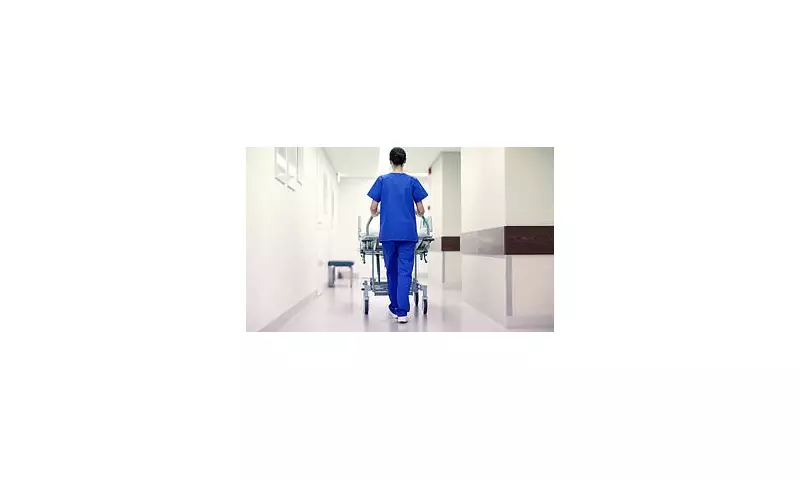
NHS Night Workers Endure Days Without Daylight in Winter Months
A concerning new study has revealed the stark reality facing Britain's night shift workforce during the darkest winter months. Research commissioned by Blue Light Card has found that during January, a significant 43 per cent of night shift workers within the NHS and other emergency services can go three days or even longer without experiencing any daytime sunlight whatsoever.
The 'Daylight Deficit' Facing Frontline Staff
The investigation paints a troubling picture of winter working conditions for those keeping essential services running through the night. On average, these dedicated workers receive a mere 29 minutes of genuine daylight during their typical working day in January. This accumulates to just 2 hours and 25 minutes across an entire working week, a fraction of what their daytime counterparts experience.
This substantial "daylight deficit" means night shift personnel are missing approximately 12 hours and 57 minutes of waking sunlight per working week compared to other workers. This is equivalent to losing an entire day's worth of daylight, a significant deprivation with tangible consequences.

Impact on Wellbeing and Morale
The lack of natural light is having a profound effect on workers' mental and physical states. Nearly a quarter (24 per cent) of those surveyed reported that this prolonged absence from sunlight leaves them feeling cut off from the outside world. Many described feeling drained, irritable, and struggling with motivation during the winter period when morale is naturally at its lowest ebb.
Rebecca Clarke, Head of Partnerships for Blue Light Card, commented on the findings, stating: 'The problem of depleted sunlight in the winter is one we all face, but for some of our members who work night shifts, our research shows that it is having a measurable effect on fatigue and motivation.'
Seeking Solutions and 'Daylight Savings'
In response to these challenges, many frontline workers are taking proactive steps to reclaim some daylight. The research indicates that those working gruelling shift patterns are more inclined to seek solutions to combat winter sun deprivation, a concept being termed 'daylight savings'.
Travel expert Tracey Davies, speaking to the Mail, offered practical advice for workers with limited holiday allowance. 'If your holiday allowance is a little tight, consider your shift patterns and where you could take three or four days off,' she suggested. 'The warmest parts of mainland Europe can be reached by plane in under three hours, which is very doable for a long weekend in the sun.'
Over half of Britons booking January holidays cited seeking a mood boost as their primary motivation, with trips helping to maintain energy and motivation at work.
Dream Destinations and Closer-to-Home Alternatives
When it comes to ideal locations for a winter sun break, mainland Spain topped the list of dream destinations, followed closely by the Canary Islands and Greece—all regions known for their reliable sunshine during January and February. Spain's Costa del Sol and Portugal's Algarve were highlighted as offering around six hours of proper sunshine daily.
For those unable to travel abroad, the research pointed to domestic options. According to Met Office data, the Isle of Wight is officially the sunniest place in Britain, enjoying more than five hours of sunshine each day on average, outperforming Kent, Essex, and Cornwall.
Despite these options, the study found that one in five night shift workers remain unsure how to recoup their lost sunlight, often simply enduring the situation until the clocks go forward in late March.
Support for Essential Workers
Blue Light Card, a membership organisation providing discounts for the emergency services, NHS, social care sector, teaching community, and armed forces, has emphasised its commitment to offering affordable and flexible holiday options for members. The card can save active members an estimated £3,126 per year.
Clarke added: 'It's no surprise that this leads to an increased appetite to book a holiday, so we've made sure that we have affordable and flexible options for those members looking to boost their mood and reclaim some sunlight this January.'

The research underscores a critical wellbeing issue affecting hundreds of thousands of essential workers across the United Kingdom, highlighting the need for greater awareness and support for those working through the night during the winter's shortest days.