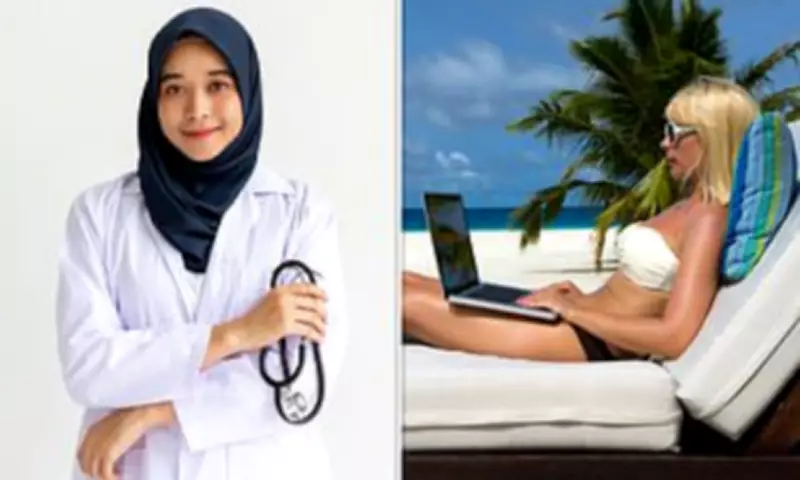
The traditional face-to-face appointment at your local GP surgery may soon become a relic of the past, as the National Health Service implements plans enabling general practitioners to treat patients 'from the beach' anywhere across the globe. This represents a complete departure from the conventional in-person consultation model, with the NHS now permitting existing doctors to manage patient care through video chats conducted via phone or computer.
Global Workforce Expansion
General practitioners are already embracing this virtual approach, working remotely from international locations including Australia, India, and Malaysia following the launch of an NHS pilot programme. The company operating this initiative proudly claims it is 'solving the NHS workforce crisis' through innovative staffing solutions. This development forms part of the NHS's comprehensive 10-year strategy to 'free up' general practitioners while simultaneously training new medical professionals to support British surgeries and 'increase productivity' across the healthcare system.
International Recruitment Drive
The revolutionary scheme means qualified doctors can effectively leave the country and practice medicine from virtually any global location. Concurrently, the NHS is actively recruiting and training overseas medical professionals to treat United Kingdom patients using identical remote methodologies. The health service is even providing language tutors to enhance English communication skills among international recruits, ensuring they can effectively manage patient consultations and medical discussions.

The pilot programme operated in partnership with Asterix Health actively markets itself to doctors worldwide, promising NHS employment opportunities 'without having to relocate' to the United Kingdom. However, critics have vehemently condemned these plans as nothing more than 'offshoring people's health to call centres abroad' and argue that patients should not receive medical treatment from general practitioners situated 'thousands of miles away' from their communities.
Medical Community Concerns
Dr Katie Bramall-Stainer, Chairman of the British Medical Association's GP Committee, highlighted that hundreds of 'home-grown GPs actively seeking NHS work' currently reside within the United Kingdom. She informed The Telegraph newspaper: 'We have advised the Government how they can use existing funds to secure the GPs we have here right now in this country to see patients, face to face.'
The pilot scheme maintains that most participating doctors are 'ex-UK GPs' and focuses on retaining UK-trained medical professionals 'who will have otherwise left the workforce entirely.' Asterix Health asserts it remains the sole company officially approved to employ doctors remotely from abroad on behalf of the National Health Service.
International Job Opportunities
The company is currently seeking 'a remote NHS GP' based in Malaysia, with the job listing prominently featuring the strapline 'Work for the UK NHS without leaving Malaysia.' Prospective applicants are informed they can work either remotely or from an office situated in Malaysia's capital city, Kuala Lumpur. The position's responsibilities outlined in the official job description include triaging patients, reviewing laboratory results and medical correspondence, and conducting telephone consultations with UK-based patients.
A case study featured on the firm's website showcases Dr Zilal Kamel's experience, describing how the remote working arrangement proved 'perfect' for her family life. She explained she could complete clinical work with British patients from Kuala Lumpur during morning hours and be 'home in time for dinner with my family' each evening.
Political and Professional Criticism
Shadow Home Secretary Stuart Andrew offered strong criticism of the initiative, stating: 'The whole idea of a GP is built around continuity and knowing your community, not being thousands of miles away. While technology can help improve access, outsourcing care overseas risks turning general practice into a remote call centre model which could undermine trust between patient and doctor as well as the quality of patient care.'

Defence of Remote Healthcare Model
Julian Titz, Chief Executive of Asterix Health, defended the programme by emphasizing it offers 'a real solution that enables under-pressure practices to get additional support from professional, highly qualified doctors for clinical tasks.' He elaborated: 'We're solving the workforce crisis in a way that's been approved by regulators, meets the needs of patients, and helps support the NHS.'
A Department of Health and Social Care spokesperson provided additional context: 'We've recruited 3,000 GPs in the past year, given primary care a £1.1 billion boost, and rolled out online GP booking requests to ease pressure on services and improve access to appointments.' This statement underscores the government's broader efforts to enhance healthcare accessibility while addressing systemic workforce challenges within the National Health Service.