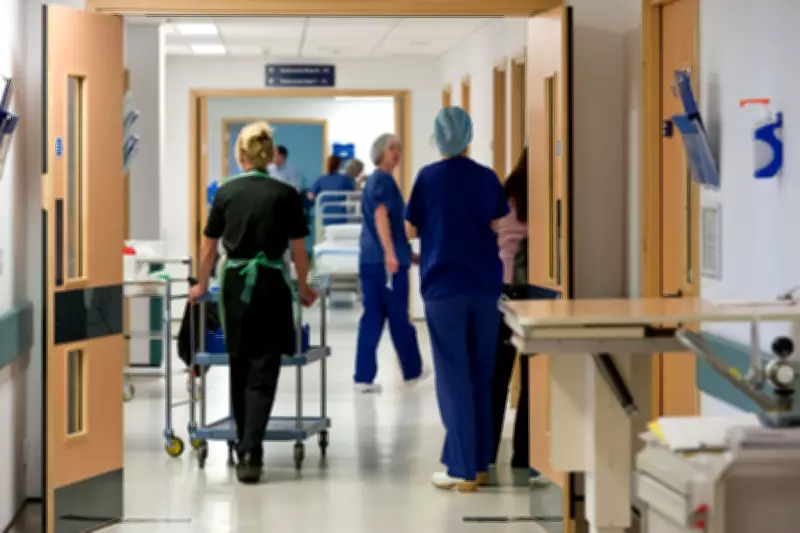
More than 1.4 million NHS workers across England are set to receive a 3.3% pay increase from April, the Government has announced. Health Secretary Wes Streeting confirmed the uplift, stating it exceeds the Office for Budget Responsibility's forecast inflation rate of 2.2% for the 2026-27 financial year.
Government Hails "Real Terms Pay Rise" for NHS Staff
Mr Streeting emphasised that this represents a "real terms pay rise" for NHS employees, marking the first time in six years that the increase will be delivered in April pay packets. "We have listened to the workforce and understand the difficulties they face when pay awards are not delivered on time," he said.
The Health Secretary highlighted the Government's commitment to accelerating the pay review process, noting that pay review bodies were remitted months earlier than in previous years, with written evidence submitted sooner. "In making this award, I am accepting in full the recommendation from the NHS Pay Review Body," Mr Streeting added.

Health Unions Voice Strong Criticism
Despite the government's positive framing, health unions have reacted with disappointment and anger. Unison's head of health, Helga Pile, stated: "Hard-pressed NHS staff will be downright angry at another below-inflation pay award." She argued that staff are expected to deliver more while effectively receiving less as pay continues to slide behind living costs.
Rachel Harrison, GMB national secretary, acknowledged the improvement in timing but called the award insufficient. "GMB welcomes the efforts made to ensure NHS workers will receive their pay increase when it is due, in April," she said. "But this award is just not enough to make up for more than a decade of pay cuts under the Tories."
Specific Union Concerns and Warnings
Jim Fahie, Chartered Society of Physiotherapy's assistant director for employment relations, warned that the award falls short of members' expectations. "It is less than last year's award and lower than the current rate of inflation, so is a real-terms pay cut," he explained, noting the additional pressures from chronic staff shortages and huge waiting lists.
Gill Walton, Royal College of Midwives general secretary, expressed frustration: "The Government has let down midwives and maternity support workers yet again. Without fixing the unfair pay system, this real-terms pay cut is an insult." She highlighted that midwives work approximately 100,000 unpaid hours weekly to maintain services.
Unite general secretary Sharon Graham criticised the Labour Government's approach: "It beggars belief that a Labour Government should seek to ride roughshod over the health unions when deciding on NHS pay." She warned that low pay continues to drive healthcare workers away, exacerbating recruitment and retention crises.
Professor Nicola Ranger, Royal College of Nursing general secretary and chief executive, called the award "an insult" and criticised the Pay Review Body as "not fit for purpose." She noted that unions had been misled to expect direct negotiations with the Government.
Department of Health and Social Care Response
A Department spokesperson reiterated appreciation for NHS staff, stating: "This Government hugely appreciates the incredible work of talented staff across our NHS." They confirmed collaboration with the NHS Staff Council on reforming the Agenda for Change pay structure, with a focus on increasing pay for graduates and the lowest-paid staff.
The spokesperson added: "This pay boost will be in pay packets from the start of April for the first time in six years, demonstrating our commitment to getting money into the pockets of NHS staff in a timely fashion."
Employer Perspective and Financial Implications
Dean Royles, interim chief executive of NHS Employers, welcomed the early acceptance of the Pay Review Body's recommendations. "This will ensure that for the first time in many years, all NHS Agenda for Change staff will receive their annual pay uplift at the very start of the pay year in April," he said.
However, Mr Royles cautioned about financial challenges: "NHS employers continue to navigate an increasingly challenging financial environment while maintaining high-quality patient care." He stressed the need for immediate clarification on funding the award, as NHS Trusts had prepared for a lower increase.

The announcement sets the stage for continued tensions between the Government and health unions, with structural pay talks promised but dissatisfaction lingering over the perceived inadequacy of the 3.3% increase.