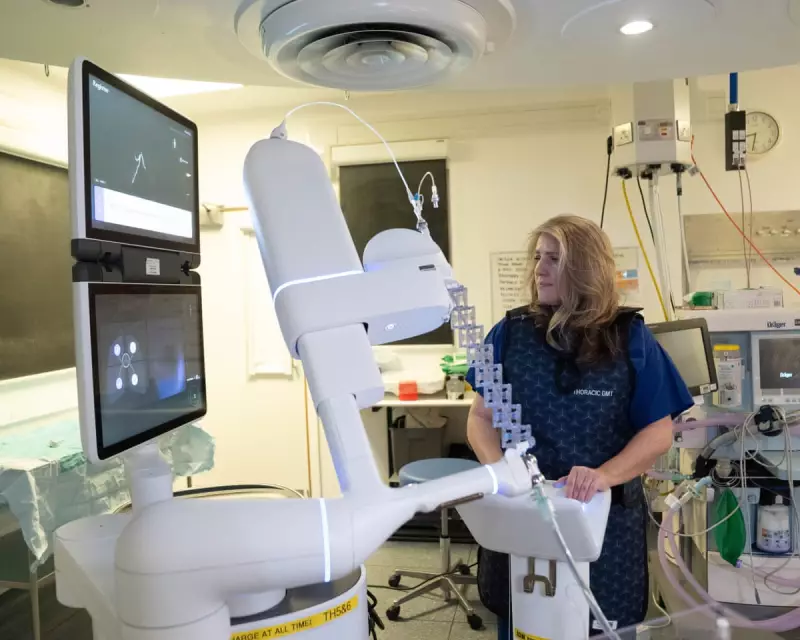
NHS England Launches Groundbreaking AI and Robotic Lung Cancer Detection Trial
NHS England has announced a pioneering trial that will combine artificial intelligence and robotic-assisted technology to dramatically speed up the detection and diagnosis of lung cancer, the United Kingdom's most lethal form of the disease. This innovative pilot programme is set to be conducted at Guy's and St Thomas' NHS Foundation Trust in London, marking a significant step forward in the health service's approach to tackling this major public health challenge.
Simultaneous Screening Expansion for Smokers and Ex-Smokers
The launch of this technological trial coincides with a crucial NHS pledge to offer all current smokers and former smokers the opportunity to undergo lung cancer screening by the year 2030. This ambitious expansion of screening services is projected to lead to the diagnosis of approximately 50,000 lung cancer cases by 2035, with an estimated 23,000 of these being identified at an early stage. Such early detection could potentially save thousands of lives across the nation.
Lung cancer remains a particularly urgent focus within the government's forthcoming national cancer plan for England, as it represents Britain's biggest cancer killer. This grim statistic reflects historic high rates of smoking across the population. The disease claims around 33,100 lives annually throughout the UK, equating to approximately 91 deaths every single day.

Addressing Stark Health Inequalities
Furthermore, lung cancer represents a critical area for healthcare improvement because it serves as a stark example of the health inequalities that mirror people's socioeconomic status. The disease disproportionately affects poorer individuals to such an extent that it accounts for an entire year of the nine-year gap in life expectancy between England's most and least deprived areas.
NHS leaders are hopeful that deploying advanced AI and robotic technology will assist doctors in uncovering more cases of lung cancer at earlier stages. This would enable treatment to commence sooner and substantially enhance patients' chances of survival.
How the AI and Robotic Technology Works
Professor Peter Johnson, NHS England's national clinical director for cancer, described the initiative as "a glimpse of the future of cancer detection." During the trial, sophisticated AI software will meticulously analyse lung scans and promptly alert medical professionals to the presence of small nodules – some measuring just 6mm in length, comparable to the size of a grain of rice – that are most likely to be cancerous.
Following this initial detection, a robotic camera will guide miniature surgical tools to undertake precise biopsies, producing tissue samples that can be analysed in laboratory settings with greater accuracy than existing techniques permit. This advanced approach will enable potentially cancerous nodules hidden deep within a patient's lungs, which are currently difficult to spot, to be safely removed and thoroughly examined.
Potential to Transform Diagnostic Procedures
NHS England has stated that "if shown to be effective, the technology could help transform lung cancer diagnosis as the NHS screening programme increasingly identifies more people with very small nodules that would previously have gone undetected until much later." The health service further explained that "for many patients, weeks of repeat scans and procedures could be replaced with a single half-hour cancer biopsy, reducing prolonged uncertainty and avoiding more invasive surgery."
The medical team behind this trial has already conducted approximately 300 robotic biopsies, which have resulted in 215 individuals receiving timely cancer treatment based on the findings.
Expert Endorsement and Future Implications
Michelle Mitchell, chief executive of Cancer Research UK, emphasised that "lung cancer is the leading cause of cancer death in the UK, but diagnosing it at an earlier stage can significantly improve people's chances of survival." She added that "new technologies like this have huge potential, and tests to ensure they're accurate and beneficial for patients in the real world should happen quickly so that innovations can reach everyone sooner."

This comprehensive trial represents a significant investment in cutting-edge medical technology that could revolutionise how lung cancer is detected and treated within the National Health Service, potentially saving countless lives while addressing profound health inequalities across English society.