NYC's Cash with Care: $15,800 Handouts to Homeless Youth Spark Debate
Providing homeless young adults with up to $15,800 in unrestricted, no-strings-attached cash might appear an imprudent use of public funds at first glance. Yet this is precisely the controversial experiment New York City has launched under its Cash with Care initiative, aiming to permanently move youth out of shelter systems.
The Pilot Program Details
The $1.5 million program, approved by the City Council in December, selects 60 homeless individuals aged 18 to 24 through a lottery system. Participants receive $1,200 monthly for nine months alongside a one-time $5,000 lump sum, totaling $15,800 per person with absolutely no spending restrictions or requirements.
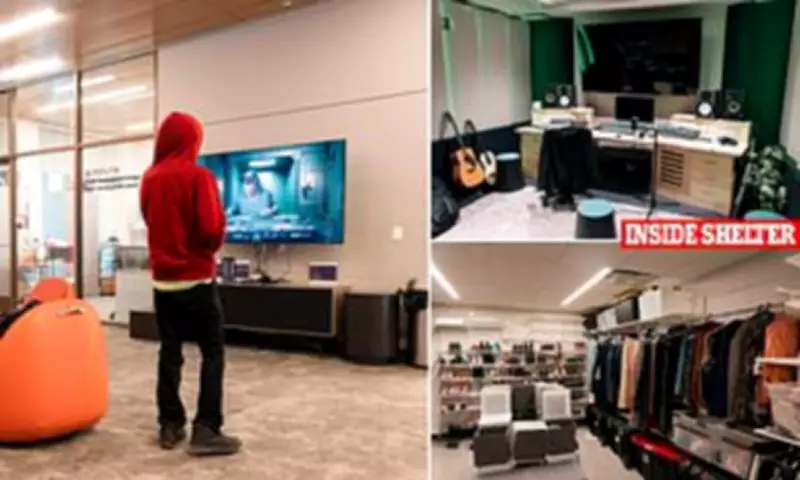
Recipients reside at Covenant House, the city's largest provider of services for homeless youth. The state-of-the-art facility features a professional recording studio, an NBA-funded basketball court, and a walk-in closet stocked with free clothing. Many residents have escaped dangerous home environments, family rejection, or sex trafficking.

Skepticism and Criticism
The program immediately raised eyebrows, drawing skepticism from taxpayers, City Hall critics, and even leaders at Covenant House itself. City Council member Frank Morano told the Daily Mail that while youth homelessness represents "a real and heartbreaking problem," he questioned whether unrestricted cash was the appropriate solution.
"New Yorkers deserve to know exactly what outcomes we are getting for that money," Morano stated, suggesting housing stability, education, and long-term independence as measurable success indicators.
Taxpayers echoed these concerns on social media platforms. One Reddit user commented, "I'd like to keep my tax money on useful things instead, thanks!" while another argued, "Guaranteed Income Program is a social construct. It may or may not work."
Changing Perspectives
Covenant House New York CEO Shakeema North-Albert admitted she was initially unconvinced when the free cash proposal first emerged. "You're going to give kids this influx of cash and not give them any kind of guidance?" she recalled thinking, worrying about how financially inexperienced youth would manage the funds.
Lyndell Pittman, Covenant House's senior vice president of support services, shared even stronger initial reservations. "When we first got this, I was not a believer," Pittman revealed. "I was like, 'This doesn't make sense. We're just gonna give these kids this money, and how are we going to protect them from themselves?'"
Both leaders noted that similar programs elsewhere had raised concerns after participants spent impulsively or diverted funds to family before stabilizing their own housing situations.
Support Services and Early Results
What ultimately shifted their perspectives was the comprehensive support structure accompanying the cash payments. Participants receive financial coaching, educational support, and mental health services alongside the funds, with organizers hoping this combination will help secure permanent housing sooner, build food security, and clear debt.
Early indications suggest participants are spending cautiously, with approximately 40 percent having "barely spent any money since the start" according to Pittman. This challenges assumptions that young people would quickly exhaust the funds and may reflect either prudent saving or financial apprehension.
"Because they've never had this type of money, there's a fear in spending it," Pittman observed, comparing the experience to receiving a first credit card.
Participant Experiences
The Daily Mail spoke anonymously with several program participants about their experiences. A 20-year-old musician who previously had no income reported saving 95 percent of his payments for college and future expenses while investing in music supplies and training.
"I'm planning on going to Juilliard soon," he stated with striking certainty, explaining the cash has afforded him time to plan and work rather than scrambling to survive.
Another 20-year-old participant described using payments to experiment with photography while learning financial responsibility. "It feels good, but I know that it's supposed to teach me about financial responsibilities," he said. "I know I can't be reckless and spend all of it."

A 19-year-old who recently moved into a Brooklyn apartment uses the money for basics like subway fares while making small discretionary purchases like Pokemon cards he hopes might appreciate in value.
Long-Term Implications and Research
North-Albert believes the program could ultimately save money, noting that sheltering a young person for one year costs approximately $70,000 compared to $15,800 in direct cash support. Even modest reductions in shelter stays could significantly alter the financial equation.
Researchers from Chapin Hall have established a control group of 60 Covenant House youth who qualified but weren't selected for payments. They will track housing stability, food security, debt, employment, and education outcomes, comparing results between payment recipients and non-recipients.
Between 2024 and last year, nearly 154,000 young people experienced homelessness in New York City according to the Citizens' Committee for Children of New York. Covenant House served 1,256 young people last year alone through its comprehensive facility that includes health services, classrooms, creative spaces, and employment support areas.
The four-story facility, funded by major corporate donors including Cisco and Madison Square Garden's Garden of Dreams Foundation, represents a radical departure from traditional homeless shelters in both appearance and approach.