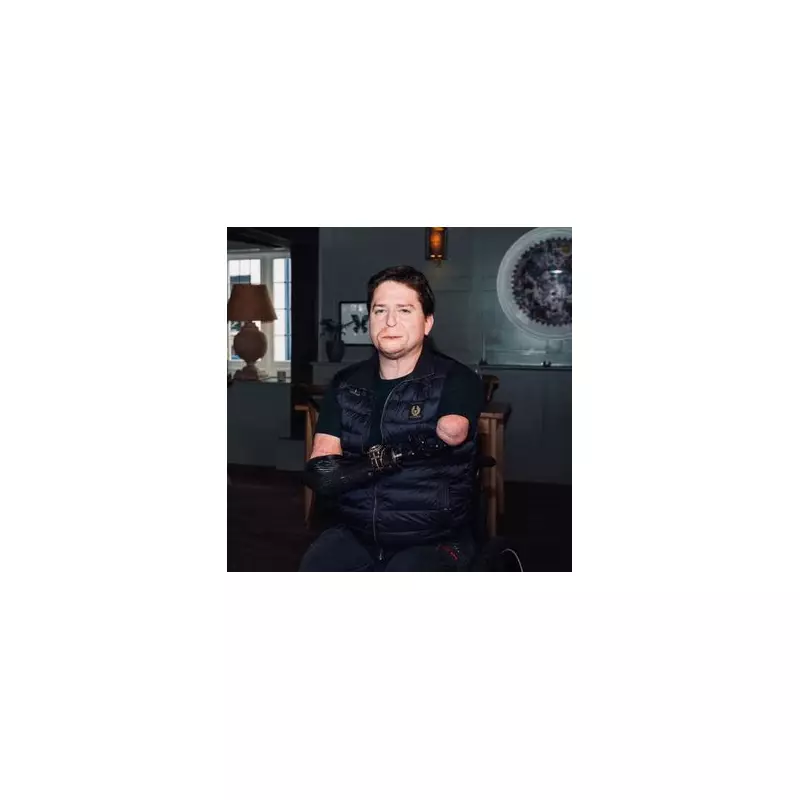
A father has recounted the terrifying moment his life was irrevocably altered after a seemingly ordinary flu escalated into a catastrophic medical emergency, resulting in the loss of all four limbs and significant facial reconstruction.
From Common Cold to Life-Threatening Crisis
Alex Lewis, who was 33 years old in November 2013, initially dismissed his symptoms as nothing more than a typical case of 'man flu'. Working as a pub landlord in Winchester, he attributed his malaise to the various illnesses circulating among customers during the winter season.
"It was November, and I was working in the pub – we had all these people with different lurgies coming in. I caught a cold and didn't think much of it. But I couldn't shift it," Lewis explained during an interview with the Daily Mail's Apple & The Tree podcast last year.

The Alarming Warning Signs
For approximately ten days, Lewis continued to believe he was battling a standard influenza virus. However, the situation took a dramatic turn when blood appeared in his urine and disturbing purple and grey markings began to spread across his skin.
"A couple of days later, it became flu, and I remember not being able to get out of bed. I didn't even want to drink – that's how much of an effect it had," he recalled, noting that his diminished desire for alcohol was particularly unusual given his admitted drinking problem developed through constant exposure to alcohol in his profession.
Medical Emergency and Devastating Diagnosis
Lewis had actually contracted a severe form of Strep A that developed into sepsis and streptococcal toxic shock syndrome (STSS), a rare but potentially fatal complication. His body entered a state of crisis as septicaemia, or blood poisoning, took hold, leading to multiple organ failure.
"I remember waking up and being attached to all these machines. It was nuts – I couldn't see my legs or hands," Lewis described of his hospital experience. "The colour of my body began to change – I could see these huge purple patches start to develop everywhere. I was just black, my legs were black, my arms were black, my mouth was black."
Fighting for Survival Against Overwhelming Odds
Medical professionals gave Lewis just a one percent chance of survival during his initial three days in hospital. After clinging to life for a week in intensive care, doctors faced the agonising decision to amputate his limbs to save his life.
"The doctors told me that if the infection got into my upper torso, I would have had it," Lewis revealed, underscoring the severity of his condition.
Reconstruction and Rehabilitation Journey
Following the multiple amputations, Lewis underwent extensive facial reconstruction surgeries and embarked on the challenging process of learning to walk with prosthetic limbs. The physical transformation presented particular difficulties for his young son, Sam, who was just three-and-a-half years old at the time.
"I think if I were a three-and-a-half-year-old and I was looking at my father in this condition, then I would find it very, very odd and very strange," Lewis acknowledged during a 2016 interview.
Unexpected Silver Linings and Personal Transformation
The prolonged recovery period, which spanned nine months, unexpectedly provided Lewis with an opportunity to confront his drinking problem. "The recovery process gave me clarity. For a start, it gave me nine months away from drinking. I started to see a path ahead of me that I was not on before," he reflected.
This newfound perspective prompted Lewis to channel his traumatic experience into positive action. He began assisting others, particularly those who depend on mobility aids, and supported charitable initiatives aimed at improving access to essential equipment for people with disabilities.
Embracing Extreme Challenges and New Perspectives
Determined to demonstrate that his physical limitations would not define him, Lewis has set himself a series of ambitious physical challenges. His future plans include rowing across the North Atlantic, travelling across Africa in 2028, and cross-country skiing across Greenland.

The life-altering ordeal has fundamentally changed Lewis's worldview, encouraging him to travel more extensively and develop a deeper appreciation for life in the United Kingdom. Recalling his time in Ethiopia, where he helped establish a wheelchair factory, Lewis observed that the experience made him realise his condition has ultimately given him more than it has taken away.
Despite the unimaginable losses he has endured, Lewis maintains that his journey through adversity has provided him with unexpected gifts – a renewed sense of purpose, clarity about what truly matters, and the determination to help others facing similar challenges.