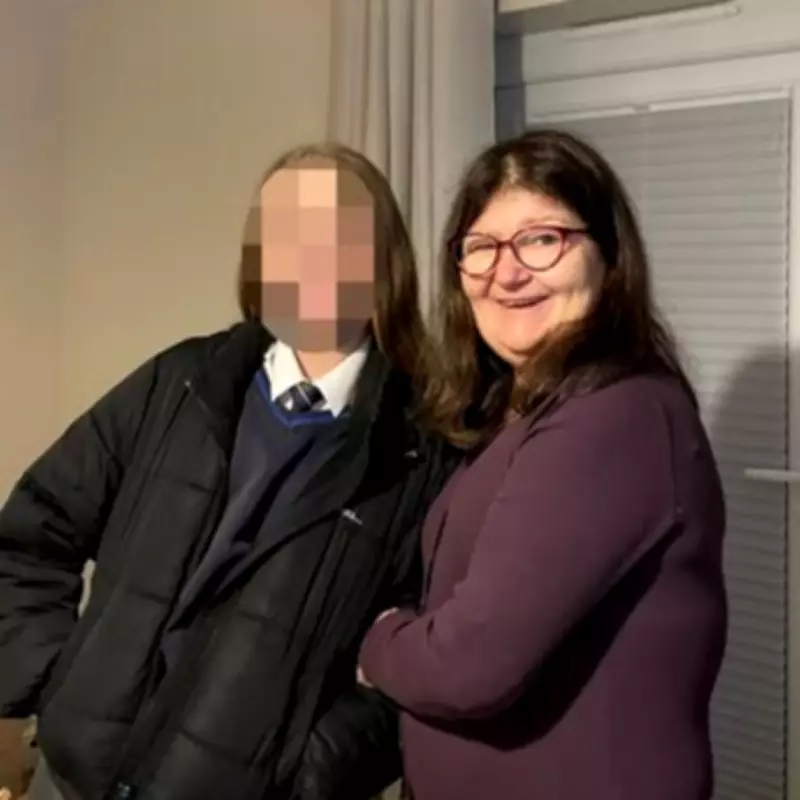
Andrea Berry, a 57-year-old mother and grandmother from Cardiff, went for a routine lunchtime nap after a busy day, only to wake up with her life irrevocably changed. She found herself unable to move her right side and struggling to speak, with no immediate understanding of what was happening.
A Sudden Onset with Subtle Warning Signs
In the month leading up to the event, Andrea had been experiencing persistent pain in her left neck, shoulder, and arm, which gradually intensified. While she managed a high blood pressure reading, it was attributed to the stress of rushing to appointments. Her active lifestyle, involving arts and crafts, weekly darts, and packing for a house move, masked the underlying danger.
"When my alarm went off at three, I felt strange," Andrea recalled. "I tried to get up, but I couldn’t move my right side. My voice sounded funny. I didn’t understand what was happening."

Critical Delay and Improvised Rescue
Unable to shout for help, Andrea used her left foot to bang on the floor, alerting her son downstairs. He immediately recognised the signs of a stroke, remembering the FAST campaign from his childhood, and called an ambulance. However, the operator delivered devastating news: help could take up to four hours to arrive.
Panic ensued as Andrea's son called his father, her ex-husband, for assistance. They faced the daunting task of moving her downstairs. "They ended up wrapping me in a duvet cover and bumping me down the stairs," Andrea said, describing the scene as something from a comedy sketch, though it was anything but funny at the time.
Race Against Time in Hospital
By the time they reached A&E, Andrea's condition was deteriorating rapidly. Medical staff identified she was having a classic stroke and explained the urgent need for thrombolysis, a clot-busting drug. "They told me I had just half an hour left in the treatment window," she said. "I was terrified, but I said yes. I was lucky. So, so lucky."
Andrea spent four and a half weeks in hospital, undergoing intensive physiotherapy and occupational therapy to relearn basic movements like sitting, standing, and walking. The stroke left her paralysed down her right side, severely affecting her dominant hand.
The Long Road to Recovery
"I was scared, overwhelmed and I thought that was it. I thought my life was over," Andrea admitted. "You just expect your hand and foot to start working again like magic, but they don’t. You have to fight for every little movement."
She has redefined her relationship with her body, calling her left hand her "helping hand" instead of her main one. Support from Brian Williams of the Early Discharge Service proved instrumental, guiding her through incremental progress, from walking to a lamppost to gradually increasing distances.
Invisible Challenges and New Realities
Andrea also confronted the less visible aspects of stroke recovery, particularly profound fatigue. "Fatigue hit me like a ton of bricks," she explained. "It’s not like being tired, it’s something deeper. I have to have proper rest days. My body tells me when to stop."
Her family, including her 26-year-old son, sometimes struggles to comprehend her new limitations, expecting her to carry on as normal. Andrea has learned to accept a slower pace, finding solace in small victories like using a smaller Hoover to maintain independence.
Finding Community and Giving Back
Andrea discovered vital support through the Stroke Association, attending Steph’s Fairwater Stroke Support Group, which she describes as a "lifeline". The group offers coffee chats, light exercise, memory quizzes, and walks, fostering a positive environment for recovery.
She now volunteers at the Connect Café at Spectrum, a warm space for stroke survivors, and has become a Stroke Association Connect volunteer. "At first, it’s overwhelming, you don’t know where to turn," she said. "I try to share what I’ve learned, even simple things like hint cards, bladder cards, and where to find help. Those little things make a big difference."

Embracing a New Perspective
Looking ahead, Andrea has set new goals, including relearning to drive with left-hand controls and planning travels across Wales, England, Ireland, and Europe. Her outlook is rooted in gratitude and mindfulness.
"I’m thankful to still be here," she reflected. "When I couldn’t drive, I started walking to the bus stop. Seeing the gardens, the flowers, saying hello to people, you miss all that when you’re in a car. Life in the slow lane isn’t bad. It’s peaceful."
Andrea emphasises that life after a stroke involves embracing change. "You’re not the same person. You just learn to be the best version of who you are now, one small, grateful step at a time."