Mother-of-Six's Swift Action at Boots Opticians Saves Her from Eye Cancer
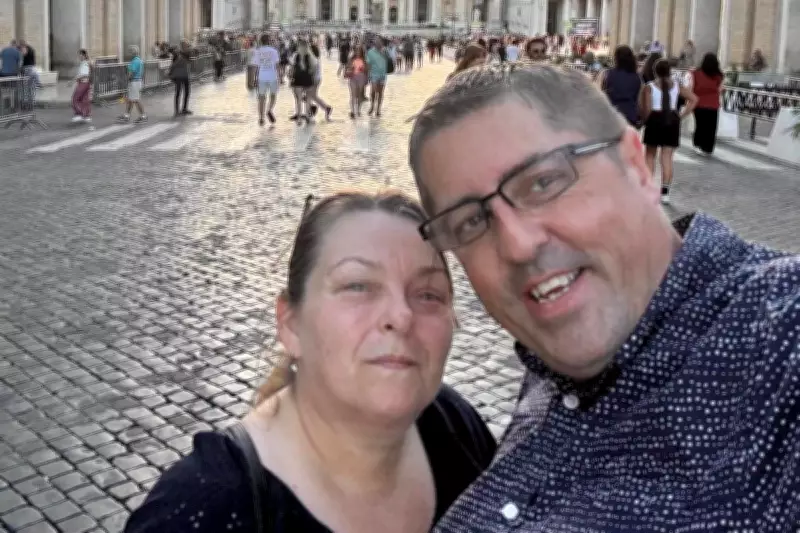
A 51-year-old mother-of-six from Swindon has revealed how a last-minute appointment at Boots Opticians potentially saved both her sight and her life after sudden vision changes turned out to be symptoms of eye cancer.
Tammy Jackson experienced what she described as a "quick flash" in her vision followed by sudden blurring days later, prompting her to contact her local Boots Opticians branch. She believes that being able to secure an appointment that same morning made all the difference in her prognosis and treatment outcome.
Sudden Symptoms and Immediate Concern
Prior to these alarming symptoms, Tammy reported normal eyesight aside from a lazy eye, a birthmark, and typical strain from computer work and aging. She had even undergone a routine eye test earlier in 2025 where nothing unusual was detected.

The trouble began on September 22, 2025, when Tammy noticed what appeared to be a small black fly zooming across her face while making tea at work. Working at a funeral home made her particularly concerned about this unusual visual phenomenon.
"A few days later, the flash happened again, but I didn't really think anything of it," Tammy recalled. "When I woke up on September 27, my vision was blocked by a black dot the size of a five pence piece right in the centre of my eye. It looked like I was seeing through smeared wet paint."
Emergency Appointment and Rapid Referral
That morning, Tammy called her local Boots Opticians at The Brunel Shopping Centre in Swindon, where staff informed her of a last-minute cancellation if she could arrive by 10:30am. She immediately sensed something was seriously wrong during the examination.
Optometrist Hassan Awan, a Boots Macmillan Optician Professional, identified swelling in her right eye that suggested either a detached retina or something more suspicious. He promptly referred her to Great Western Hospital for further investigation.
"I was seen quite quickly, but my gut was immediately telling me that there's something not quite right," Tammy said of the examination.
Diagnosis and Emotional Toll
After initial hospital confusion about receiving her scans from Boots, Tammy returned on September 29 for more tests. Medical staff focused intently on her right eye, and a consultant eventually revealed they had found something "sinister" that required specialist care at Moorfields Eye Hospital in London.
"When Monday came, I woke up and I just thought 'it's cancer'," Tammy remembered telling her husband Martin. "Working in a funeral home, death stares you in the face every day, so I was planning for the future. I just thought that if I'm going to die, I need to make sure people know what songs I want at my funeral."
By her October 9 appointment at Moorfields, Tammy's condition had worsened significantly. The blind spot had expanded from five pence to ten pence piece size, accompanied by fluid leakage, increased swelling, and headaches.
Choroidal Melanoma Diagnosis
After approximately seven hours of testing at Moorfields, consultants diagnosed Tammy with a small choroidal melanoma. They explained the Moles Scoring Chart diagnostic system, which assesses five factors: mushroom shape, orange pigment, large size, enlargement, and subretinal fluid.
Tammy presented with four of these factors, indicating a "high suspicion" of cancer. "Just hearing those words, you automatically think that's it. Your life's over," she said.
"The hardest thing I had to do was tell my children," Tammy added, referring to her four children and two step-children ranging from 22 to 34 years old. "Seeing their faces and the uncertainty of what was to happen next broke my heart."
Targeted Treatment and Recovery
Treatment began on November 13 with ophthalmic plaque brachytherapy, a procedure that places a small radioactive disc over the eye during surgery. According to Cancer Research UK, treatment duration depends on cancer thickness, with some plaques remaining for up to seven days.
Because her cancer was detected early, Tammy's plaque was removed after just a day and a half. Following the procedure, she experienced swelling, blistering, and required eye drops four times daily.

While her current prognosis is good with a follow-up scheduled for May, Tammy's vision hasn't completely returned to normal. Consultants explained that the cancer will always be present, with eye removal being the only complete elimination option—an "extreme" measure unlikely due to early detection.
Public Health Message and Gratitude
"I never in a million years thought that you could get cancer in your eyes," Tammy emphasized. "And if that's what I think, maybe other people think that way as well. The number one thing: If you're due an eye test, have it done. It's really not worth putting it off."
She highlighted common eye cancer symptoms including shadows, flashes of light, wiggly lines in vision, blurred vision, dark patches that grow, partial vision loss, eye bulging, increasing lumps, persistent irritation, and rare pain.
"With Boots getting me seen so quickly and by doing the referrals—it sounds dramatic—but it's saved my eye, but potentially also saved my life," Tammy concluded. "If it weren't for them being so fast-acting on what they were seeing, it could potentially have been missed. If my story only helps one person, then that's one more person who's getting the help that they need."