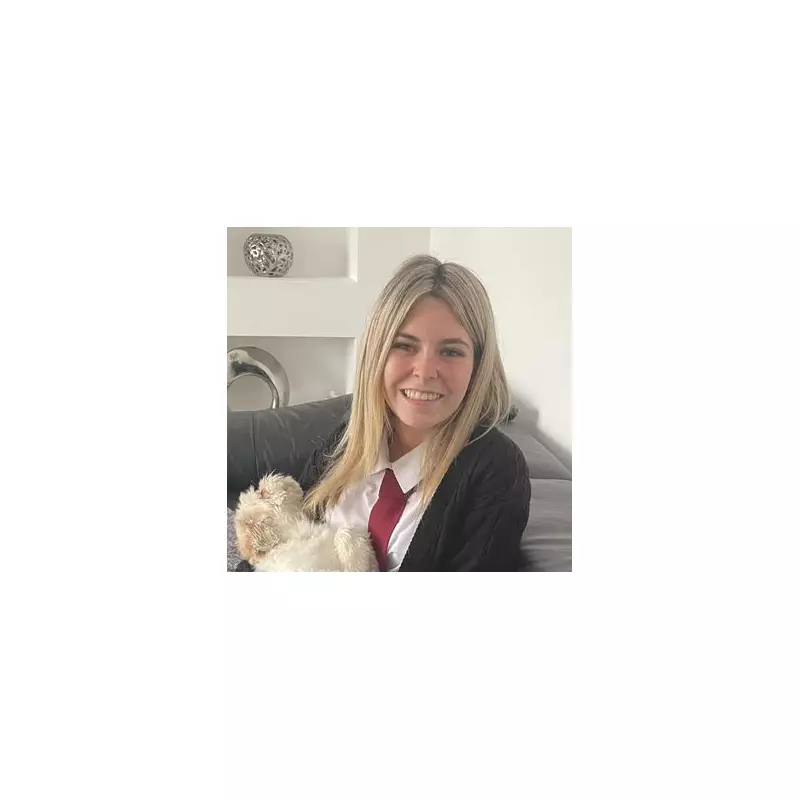
Family Campaigns for Legal Change After Teenager's Breast Cancer Death
The grieving parents of a Scottish teenager who died from breast cancer are fighting to change healthcare law, claiming their daughter would still be alive if she had been treated as an adult patient. Isla Sneddon's tragic case has exposed what her family describe as dangerous disparities in how the NHS handles cancer referrals for young people compared to adults.
Delayed Diagnosis With Devastating Consequences
Isla first discovered a lump in her breast at just fifteen years old, but medical professionals initially dismissed her concerns. Doctors told the teenager the lump was likely benign and attributed it to normal hormonal changes during adolescence. This response, her parents believe, was directly influenced by her age and would not have occurred had she been an adult presenting with identical symptoms.
Two years later, at age seventeen, Isla was finally recommended for a biopsy. However, in what her family describe as a critical failure, this referral was subsequently downgraded due to her youth. By the time she received a definitive diagnosis of breast cancer, the disease had progressed to an advanced stage. Medical professionals delivered the devastating news that Isla had only six months to a year to live.

A Family's Heartbreaking Journey
Mark and Michelle Sneddon supported their daughter through ten weeks of hospital treatment across various Scottish medical facilities during the summer of 2024. Isla's condition deteriorated rapidly after what had initially been planned as a family holiday to Rome. "We were never thinking it was cancer," Mark recalled. "There was no history of cancer in mine or my wife's family. It was the last thing on our mind."
The family's hopes were shattered when specialists at Glasgow's Beatson Cancer Centre revealed the cancer had metastasised from Isla's breast to her lungs, heart, and lymph nodes. "A woman took us into a room and said our daughter was going to die," Mark remembered. "She had six months to a year to live. By the time they detected it, it was too late - it was damage limitation."
Isla passed away in March last year after six months of chemotherapy, with her parents by her side. "We nursed her for six months of chemotherapy and she died in our arms in hospital," said Mark. "We thought we'd have a lot more time with her. It's the sort of thing you see on television - it happens to other people and you don't think it'll happen to you."
The Campaign for Isla's Law
Determined to prevent other families from experiencing similar tragedy, the Sneddons have launched a campaign to establish Isla's Law. This proposed legislation would require General Practitioners to ensure that urgent paediatric cancer referrals are subject to the same maximum waiting times as adult cancer referrals within the NHS system.
"We believe that if Isla had been an adult presenting with the same symptoms, there would be a lot more done," Mark explained. "There would have been a longer investigation - she wouldn't have been told it was something she'd grow out of. We'll never know, but we believe that if that had been caught then, it maybe wouldn't have got to where it was."
The family's Change.org petition has already attracted over 35,000 signatures, demonstrating significant public support for their cause. Scottish Health Secretary Neil Gray has agreed to meet with the family next month to discuss their concerns, stating: "I would like to express my deepest sympathies to the family of Isla Sneddon for their very sad loss. I will be meeting with her family next week to further discuss their petition and concerns."
Healthcare System Response
NHS Lanarkshire, which oversaw aspects of Isla's care, maintains that her treatment followed expected clinical pathways. Arwel Williams, the health board's director of acute services, commented: "Our team have been responding to the family's concerns through correspondence and face to face meetings and we have reassured the family that Isla's treatment was in line with expected clinical pathways. However, we fully recognise how devastating this has been to the family and our thoughts and sincere sympathies remain with them."

The Scottish Government has recently updated its referral guidelines for suspected cancer, including new provisions specifically for children and young people. These changes, implemented in August, aim to ensure patients receive appropriate care pathways in a timely manner.
Mark Sneddon remains resolute in his campaign, driven by both grief and determination: "I don't want another father or mother to feel like we do. We're empty, we're lost - I would never wish this on another family. If this gets passed, it can save another child from going through what Isla went through." He remembers his daughter as "the best daughter you could ask for" - bright, bubbly, with a good sense of humour and beautiful spirit whose memory now fuels a national conversation about healthcare equality for young people.