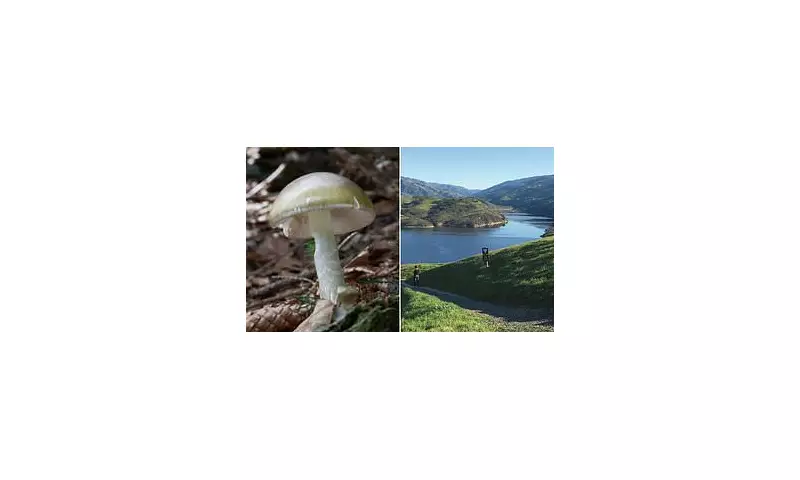
Public health officials in California have issued urgent warnings to foragers after a spate of poisonings linked to wild mushrooms left three people dead and more than two dozen others hospitalised. The toxic death cap mushroom, which resembles edible varieties, has proliferated across Northern California due to unusual weather conditions.
Surge in Poisonings Triggers Health Advisory
Sonoma County health officials escalated their warnings on Thursday, advising the public to avoid eating any wild mushrooms. This followed the death of a man who consumed them the previous weekend. Statewide data reveals a shocking spike in cases: between November 18 and January 4, there were 35 cases of wild mushroom poisoning. This resulted in three confirmed deaths and three patients requiring emergency liver transplants.
Dr Michael Stacey, Sonoma County's interim health officer, linked the crisis to environmental factors. "Early rains and a mild fall have led to a profusion of the toxic death cap mushrooms in Northern California," he stated. Normally, health authorities would expect fewer than five such poisoning cases across the entire state in a comparable period.

A Deadly and Deceptive Fungus
The primary culprit is the death cap mushroom, scientifically named Amanita phalloides. Its danger lies in its deceptive appearance and taste, which are similar to common edible field mushrooms. Officials stress that no method of preparation—including cooking, boiling, drying, or freezing—renders these mushrooms safe to eat.
They contain potent amatoxins, which attack the liver. Initial symptoms like diarrhoea, nausea, vomiting, and abdominal pain typically appear six to 24 hours after ingestion and may subside after a day. However, this creates a false sense of recovery. Fatal liver failure can still strike 48 to 96 hours after consumption.
The East Bay Regional Park District, which manages parks where the fungi are appearing in large numbers, echoed the health advisory. "The best way to stay safe is to ensure that no mushrooms are consumed by humans or pets," a spokesperson said.
Experts Urge Extreme Caution
Both medical professionals and seasoned foragers are pleading with the public to exercise extreme caution. Dr Stacey told KTVU he wouldn't trust himself to pick mushrooms currently. "It really takes an expert to be able to make a differentiation between a poisonous mushroom and a non-poisonous mushroom," he admitted.
Julie Schreiber, a nationally recognised mushroom expert and educator, noted the abundance of fungi this year has tempted more novice foragers. Despite her decades of experience, she emphasised the complexity of identification. "I still feel like there's a lot that I don't know," Schreiber confessed, highlighting the risks even for the knowledgeable.
The California Department of Public Health (CDPH) is closely monitoring the situation. They warn that other local species, including the western destroying angel (Amanita ocreata), and mushrooms from the Galerina and Lepiota groups, also contain deadly amatoxins. These mushrooms are commonly found near oak trees.
The death cap is an invasive species, accidentally brought to North America on the roots of European cork oaks, and is now spreading along the West Coast. Foraging for mushrooms is prohibited in East Bay Regional Parks, a rule officials are now strongly enforcing.