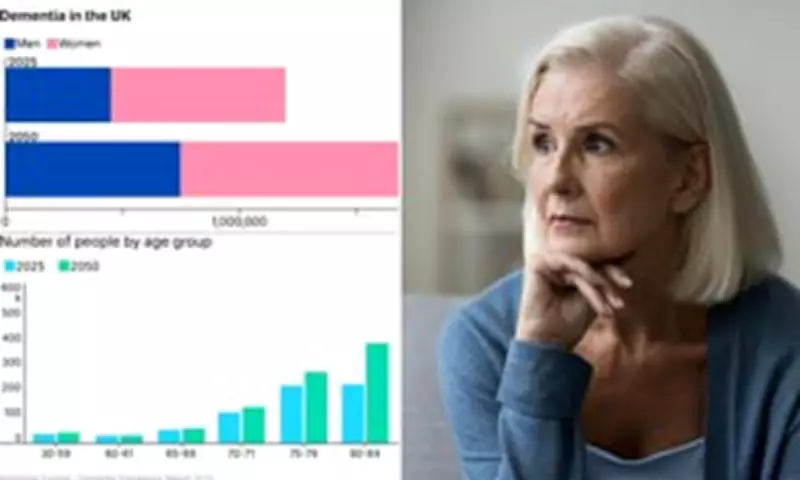
By 2050, an estimated two million people in the UK will be living with dementia, according to a stark new forecast from Alzheimer Europe. This projection represents a significant rise from current figures and underscores a growing public health challenge that could overwhelm services without immediate action.
Alarming Increase in Dementia Prevalence
The report from Alzheimer Europe predicts that the number of individuals across Europe diagnosed with this debilitating brain condition will escalate by almost two-thirds over the next quarter-century. In the UK specifically, cases are expected to jump by nearly 63 per cent, from an estimated 1,204,368 people last year to 1,959,592 by 2050.
This surge is largely attributed to rising instances of Alzheimer's disease, the most common form of dementia. The new figures mark a substantial increase compared to previous estimates, such as the Alzheimer's Society's prediction of 1.4 million cases in Britain by 2040.

Statistical Insights and Demographic Shifts
Based on data compiled from 18 studies, the analysis suggests that by 2050, one in every 26 Britons aged over 30 could be living with dementia. This translates to an overall increase of approximately 90 per cent in the number of people affected by some form of the disease.
Jean Georges, executive director at Alzheimer Europe, commented on the findings, stating: 'The scale of the challenge posed by dementia across Europe is substantial. We hope our updated figures motivate decision-makers to prioritise dementia across health, research, disability policy, and support for informal caregivers.'
Pressure on NHS and Care Services
The projected rise in dementia cases is set to place immense strain on the National Health Service and social care systems. Recent analyses reveal a postcode lottery in care quality, with the NHS failing to meet diagnosis targets in over half of local authorities across England.
Currently, the national average for dementia diagnosis stands at 66.5 per cent, slightly below the Government's target of 66.7 per cent. Campaigners highlight a 'cruel injustice' faced by dementia patients, who often incur high care costs while lacking access to NHS drugs that can cure, prevent, or significantly slow the disease.
Government Response and Future Frameworks
In response to mounting criticism, the Government has pledged to introduce the first-ever Modern Service Framework for Frailty and Dementia. This initiative aims to establish national standards and enhance care quality by:
- Setting clearer guidelines for tests and treatments.
- Identifying gaps in care pathways.
- Encouraging better coordination among local NHS services.
Potential innovations under this framework could include an expansion of 'virtual wards' for frail patients, community-based care groups, and wearable devices that alert healthcare professionals to deteriorating health conditions.
Urgent Calls for Action and Risk Reduction
The warning comes amid figures showing dementia-related deaths in England exceeded expectations by 2,500 last year. Earlier this month, experts outlined 56 evidence-based recommendations to reduce dementia risk, focusing on better management of high blood pressure and improved public-health messaging.
Kieran Winterburn, Head of National Influencing at Alzheimer’s Society, emphasised: 'These figures remind us that dementia remains one of the biggest health challenges in the UK. Early and accurate diagnosis is crucial to unlock treatment and support, helping people manage symptoms and avoid crises.'
He added: 'We urge the UK Government to develop a bold and ambitious framework that supports people at earlier stages of dementia, reduces overall harm, and fosters innovation in community-centred care.'
Understanding Dementia: A Global Health Issue
Dementia is an umbrella term for a range of progressive neurological disorders that affect memory, thinking, and behaviour. Alzheimer's disease is the most prevalent type, accounting for 50 to 75 per cent of cases. While dementia is a global concern, it is more common in wealthier nations with ageing populations.

Currently, there is no cure for dementia, but early detection and new medications can slow its progression. The Alzheimer's Society reports over 900,000 people living with dementia in the UK today, with projections rising to 1.6 million by 2040.