UK Launches Groundbreaking Social Media Curfew Trial for Teenagers
Thousands of school children across the United Kingdom are set to participate in a world-first trial that will impose a strict social media curfew, examining the profound effects on their mental health and wellbeing. This pioneering research initiative comes as the Government actively considers implementing an Australia-style ban, having announced plans to consult on limiting social media access for individuals under the age of sixteen.
Details of the Landmark Study
The NHS, in collaboration with researchers from the University of Cambridge, is launching an extensive study that will limit approximately 4,000 teenagers to just one hour of social media usage per day. Furthermore, the trial will completely block access to platforms between 9pm and 7am. Participants, aged between twelve and fifteen, will have a specialised research application installed on their personal devices. This software will prevent them from accessing popular sites such as TikTok, YouTube, and Instagram throughout the six-week duration of the study.
The trial, which will track adolescents in Bradford for approximately six weeks, aims to compare levels of anxiety, depression, and sleep quality against a control group of children who continue to access social media without restrictions. Ministers unveiled this study amidst mounting political pressure on the Government to enact a comprehensive ban on under-16s using social media platforms. Peers in the House of Lords are being urged to press for immediate legislative action.

Political Pressure and Parliamentary Dynamics
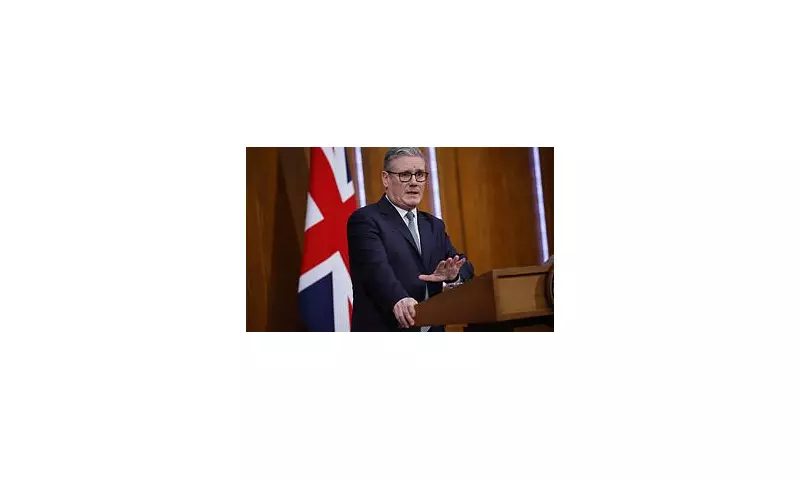
The Prime Minister was compelled to act decisively ahead of a crucial Lords vote on an amendment to the Children's Wellbeing and Schools Bill. Should this amendment pass, Sir Keir Starmer faces the significant prospect of a major backbench rebellion when the legislation returns to the Commons. This follows more than sixty Labour MPs publicly advocating for Britain to emulate Australia, which recently became the first nation to prohibit social media access for young people.
Sir Keir Starmer had previously stated that he was not personally in favour of such a ban. However, earlier this week, the Prime Minister conceded that he needs to 'do more' to safeguard young people in the digital realm. This strategic move is widely perceived as a political victory for the Conservatives, especially after Kemi Badenoch intensified pressure by vowing to block under-16s from social media if she secures victory in the next general election.
Expert Insights and Research Perspectives
Professor Amy Orben, co-lead of the trial and programme leader at the MRC Cognition and Brain Sciences Unit at the University of Cambridge, emphasised the critical nature of this research. She stated, 'There is a range of evidence that social media is harming individual children and adolescents, including very severe harms, and that is irrefutable. This is leading to considerable debate regarding how we can make the online world safer for young people while encouraging healthy development.'
Professor Orben further explained that while certain harmful aspects of social media—such as exposure to extreme content, abuse, and bullying—are well-documented, the broader impact of time spent on these platforms on the wider adolescent population remains less understood. 'To our knowledge, there has been no large-scale experimental study reducing or removing time spent on social media among healthy under-18-year-olds anywhere in the world. This study is a world first attempting to address that vital question,' she added.
Dr Dan Lewer, from Bradford Teaching Hospitals NHS Foundation Trust and the other co-lead of the study, shared insights from preliminary discussions with teenagers. 'They are very aware of the potential harms of social media, frequently mentioning issues like sleep disruption due to late-night scrolling, the displacement of real-life relationships, and online bullying. However, they did not want us to test a total ban,' he noted. Data collected as part of the Born In Bradford study indicates that the average daily screen time for this age group is around three hours, with heavier users typically exhibiting worse mental health outcomes on average.

Government Consultation and Opposition Criticism
On Tuesday, the Prime Minister published a blog post clarifying his stance, stating, 'No option is off the table, including examining what age children should be able to access social media.' Technology Secretary Liz Kendall informed the Commons that the consultation on a potential social media ban will be 'swift,' with a clear government position expected by the summer. She told MPs, 'We will bring forward a swift three-month consultation on further measures to keep children safe online. This will include the option of banning social media for children under sixteen, and raising the digital age of consent to prevent companies from exploiting children's data without proper authorisation.'
However, Shadow Technology Secretary Julia Lopez accused the Labour government of using the consultation as 'a way of elegantly managing yet another U-turn' and to help 'get the Prime Minister through the parliamentary week.' She urged the Government to follow the Conservative lead and implement a ban without unnecessary delay, arguing that the internet now requires retrofitting with clear rules specifically designed to protect children.
Cross-Party Support and Charitable Concerns
A number of Labour MPs have also voiced strong support for an immediate ban, suggesting that some may vote in favour if the amendment returns to the Commons. Labour MP Catherine McKinnell, a former schools minister, stressed that 'time is of the essence,' urging Ms Kendall to ensure the consultation is conducted rapidly and that its outcomes are delivered swiftly. Meanwhile, Mohammad Yasin, among the sixty-one Labour MPs who signed a letter advocating for an Australia-style ban, demanded a 'clear timetable for bold action before more young lives are damaged.'
Despite this political momentum, several prominent children's charities, including the NSPCC, Childnet, and the Molly Rose Foundation, have expressed opposition to a blanket social media ban. In a joint statement, they argued that such a measure would create a false sense of safety, potentially driving children—and the threats they face—to migrate to other, less regulated areas online. They maintained that while well-intentioned, blanket bans would fail to deliver the necessary improvements in children's safety and wellbeing.
The Government's forthcoming consultation will also explore alternative regulatory options, such as restricting night-time usage through curfews, imposing limits on application time, and curbing addictive design features like 'infinite scrolling.' The results of this consultation are anticipated to shape future policy decisions, with a formal response expected in the summer.