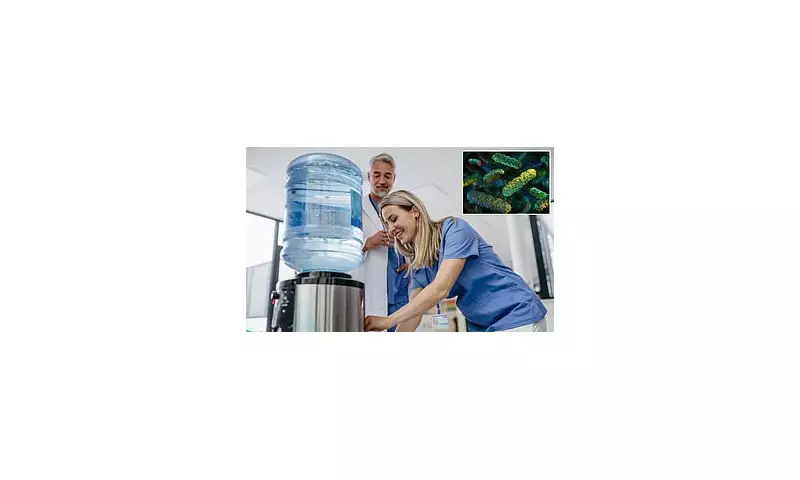
A new scientific review has issued a stark warning about a common fixture in offices across the UK and beyond: the humble water cooler. The research suggests these dispensers, along with soda machines, can become breeding grounds for billions of potentially harmful bacteria, sometimes surpassing the bacterial load of the tap water supplying them.
Study Uncovers Widespread Contamination
Researchers from Loma Linda University in California analysed data from 70 studies conducted over the last two decades in five countries, including the US and UK. Their findings, published in the journal AIMS Microbiology, indicate that the internal surfaces of water dispensers often harbour dangerous microbes.
The investigation looked at both plumbed-in units and those using large bottles of distilled water. Scientists tested the inside of the coolers, their internal tubing, and the dispensing nozzles. They discovered that these surfaces can become coated with biofilms – a slimy, protective layer produced by microorganisms that allows bacteria to thrive and multiply.

Alarmingly, in some instances, bacterial growth was detected just days after the machines had been disinfected. The study was led by water quality expert Dr Thomas Hile of Crafton College Hills, California.
How Bacteria Thrive in Dispensers
Dr Ryan Sinclair, an environmental microbiology expert involved in the study, explained the core issue. "Filtering out residual chlorine that's in water makes an ideal situation for bacteria to grow," he stated. Municipal tap water typically contains trace chlorine that suppresses microbial growth. However, water coolers often filter this disinfectant out, creating a favourable environment for bacteria to regrow inside the tubing and outlets.
Damp surfaces on the nozzles further encourage bacterial colonisation. Compounding the problem, staff frequently fail to clean the machines or change their filters regularly. The experts warned that neglected filters can themselves transform into a significant breeding ground for bacteria.
Among the microbes identified was fecal coliform, bacteria associated with human and animal waste that can raise the risk of gastrointestinal illnesses like nausea and vomiting. In rare cases, such infections can prove fatal.
Soda Fountains and the Call for Action
The review also highlighted contamination risks in self-service soda machines. It cited a 2010 study from Virginia where 48 percent of 20 sampled soda fountains were contaminated with coliform bacteria. Another study of 36 machines in Las Vegas found a staggering 88 percent contamination rate. In some cases, this included E. coli, a specific type of coliform.
"The presence of microbial contaminants in soda fountains should not be overlooked," the researchers cautioned. They emphasised that, like water dispensers, these machines lack residual disinfectant, allowing microorganisms to proliferate.
The authors' primary goal is to boost awareness of these hidden risks. To mitigate them, they recommend that water dispensers be cleaned every two to four weeks, or even weekly in cases of very high usage. Regular maintenance and filter changes are non-negotiable for ensuring the water from these office staples remains safe to drink.