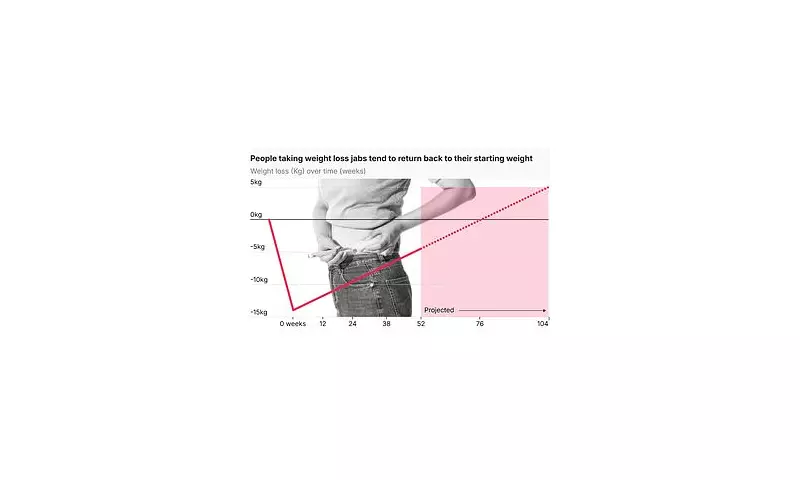
Millions of Britons using revolutionary weight-loss injections may need to stay on the medication for life, a major new scientific review has concluded. The stark warning comes from Oxford University researchers who found that the benefits of drugs like Wegovy and Mounjaro rapidly disappear once treatment stops.
The 'Rapid Rebound' Effect
In the first comprehensive analysis of its kind, experts examined 37 separate studies involving more than 9,300 people. They discovered a consistent and troubling pattern: when patients stop the injections, the lost weight returns quickly, regardless of how much was initially shed.
On average, users began regaining weight at a rate of around one pound (0.4kg) per month after quitting. The modelling suggests that most people would regain much, if not all, of the weight they lost within 17 to 20 months of ending treatment.

Professor Susan Jebb, a co-author of the study and a key government and NHS adviser on obesity, framed the findings in clear terms. 'Obesity is a chronic relapsing condition,' she stated. 'I think one would expect that these treatments need to be continued for life, just in the same way as blood pressure medication. We should see this as a chronic treatment for a chronic condition.'
Heart Health Gains Also Reversed
The research, published in The British Medical Journal, delivered a further blow. It revealed that stopping the drugs doesn't just reverse weight loss; it also leads to a reversal of key cardiometabolic benefits that are a major selling point for the treatments.
Improvements in blood sugar levels, blood pressure, and cholesterol – all crucial for heart health – returned to pre-treatment levels in less than 18 months after patients ceased the jabs.
This weight regain happens around four times faster than in people who lose weight through traditional diet and exercise programmes alone. While those on behavioural plans lost less weight initially (around 5kg on average in year-long studies), they regained it far more gradually, at just a fifth of a pound per month, and their health benefits persisted for up to five years.
Implications for NHS Policy and Patients
The findings pose significant questions for current NHS policy. Under present rules, the drug Wegovy is prescribed for a limited period of up to two years. This new evidence suggests such a time limit may be clinically counterproductive.
Furthermore, with an estimated 2.5 million people in the UK now using these GLP-1 drugs – and the majority accessing them privately at costs of up to £300 per month – the prospect of lifelong treatment raises serious concerns about affordability and health inequality.
Professor Jebb highlighted the real-world challenge of adherence, noting that around half of people discontinue these medications within a year. Nutrition expert Dr Adam Collins, who was not involved in the study, explained the biological mechanism: 'As soon as the drug is stopped, appetite is no longer kept in check. If people haven't built sustainable habits alongside treatment, going cold turkey can be extremely difficult.'
The research underscores the scale of Britain's obesity crisis, with two in three adults now overweight or obese. This trend is linked to at least 13 types of cancer and has fuelled a 39% rise in type 2 diabetes among the under-40s.
While the drugs have transformed treatment options, offering dramatic results, experts like Professor John Wilding from the University of Liverpool urge a shift in perception. 'We don't expect treatments for diabetes, high blood pressure or high cholesterol to continue working once medication is withdrawn,' he said. 'These drugs should be considered long-term treatments, not a quick fix.'