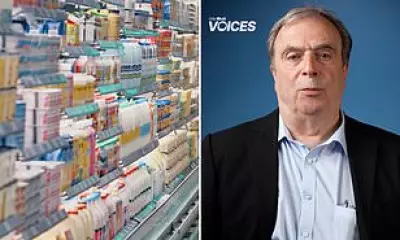
Chris Whitty Warns Weight-Loss Jabs Alone Are 'Wrong Answer' to Obesity Crisis
England's chief medical officer, Professor Chris Whitty, has issued a stark warning that relying solely on weight-loss injections is "the wrong answer" to the country's worsening obesity epidemic. Speaking at a Medical Journalists' Association lecture, Whitty emphasised that pharmaceutical solutions must be complemented by broader public health measures.
Critique of GLP-1 Drug Dependence
Professor Whitty directly challenged the growing dependence on GLP-1 agonist drugs like Mounjaro and Wegovy, which an estimated 1.6 million adults across England, Wales, and Scotland used between early 2024 and early 2025 according to a UCL study. "Just relying on the drugs seems to me the wrong answer," he stated, contrasting with Health Secretary Wes Streeting's recent praise of these medications as a "real game changer."
Whitty posed a provocative question to his audience: "Does anyone here believe that the correct answer is to allow obesity to rise because of pretty aggressive marketing of obesogenic foods to children and then stick them on GLP-1 agonists at the age of 18? I think it is shocking if that is where we end up."

Health Risks and Limitations of Weight-Loss Injections
While acknowledging that GLP-1 drugs can be "transformational" for some individuals, Whitty highlighted significant concerns about their widespread use. He noted that weight typically returns once patients stop taking the medications, potentially leaving older individuals with less muscle mass and more fat than before treatment.
The chief medical officer also detailed concerning side effects:
- Digestive problems, diarrhoea, constipation, and stomach pain affect approximately one in ten users
- An increased risk of acute pancreatitis impacts about one in one hundred patients
- A substantial number of users experience unpleasant side effects, with a small minority suffering severe reactions
Call for Systemic Food Environment Changes
Instead of pharmaceutical reliance, Whitty advocated for fundamental changes to Britain's food environment. He specifically recommended:
- Curbing junk food advertising, particularly marketing targeting children
- Encouraging food manufacturers to reduce sugar and fat content in their products
- Addressing the widening obesity gap between deprived and affluent communities
Whitty revealed alarming statistics showing that in England's most deprived areas, approximately 30 percent of ten-year-olds are already overweight or obese. "That is setting them up to fail over a lifetime," he warned, describing obesity as a major health challenge moving in the wrong direction.
International Comparisons and Industry Resistance
The professor pointed to France as a positive example, where obesity rates have remained largely stable since 1990. He attributed this success to differences in food environments and marketing practices. Meanwhile, Whitty accused food industry lobbyists of using "very strong" tactics to dissuade ministers from implementing bold policies, often framing beneficial measures as "nanny state" interventions despite public support for action.
With the UK suffering some of Europe's worst obesity rates and global predictions suggesting 220 million children worldwide could be obese by 2040 without intervention, Whitty concluded: "If it's a high proportion of the population, particularly in areas of deprivation rather than areas of affluence, I think that is a societal failure."