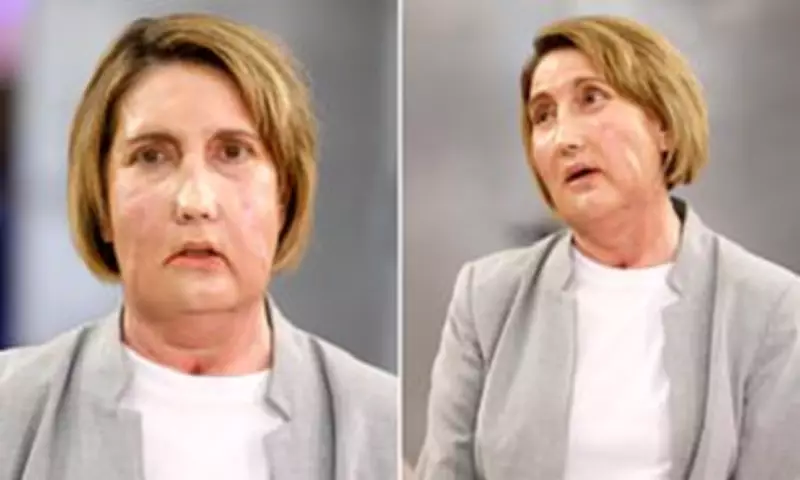
In a landmark medical achievement, a hospital in Barcelona has conducted the world's first facial transplant where the donor voluntarily offered her face before undergoing an assisted dying procedure. This pioneering surgery represents a significant ethical and technical milestone in the field of transplant medicine.
A Complex Surgical Feat
The prestigious Vall d'Hebron hospital announced the successful operation, which involved transplanting composite tissue from the central part of the face. The intricate procedure required the coordinated efforts of approximately 100 medical professionals, including specialists such as psychiatrists and immunologists, highlighting the multidisciplinary approach necessary for such complex transplants.
The Donor's Extraordinary Decision
Elisabeth Navas, the hospital's transplant coordinator, expressed profound admiration for the donor's selfless act. Navas remarked that the donor demonstrated 'a level of maturity that leaves one speechless'. She elaborated, 'Someone who has decided to end their life dedicates one of their last wishes to a stranger and gives them a second chance of this magnitude.' This unprecedented donation bridges the realms of end-of-life choices and regenerative medicine.

Carme's Journey to Recovery
The recipient, identified only by her first name Carme, had suffered severe facial tissue necrosis resulting from a bacterial infection caused by an insect bite. This condition had severely impaired her ability to speak, eat, and see, drastically affecting her quality of life. Speaking at a press conference, Carme shared her positive outlook, stating, 'When I'm looking in the mirror at home, I'm thinking that I'm starting to look more like myself.' She confirmed that her recovery is progressing very well, offering hope to others with similar conditions.
Medical and Ethical Considerations
For facial transplants of this nature, stringent compatibility criteria must be met. The donor and recipient must share the same sex, blood group, and have a similar head size to ensure the transplant's success and minimise rejection risks. This case also intersects with Spain's legal framework on assisted dying, as the country became the fourth European Union nation to legalise euthanasia in 2021.
Spain's Leadership in Transplant Medicine
With a population of 49.4 million, Spain has maintained its position as a global leader in organ transplants for over three decades. The Vall d'Hebron hospital itself has a storied history in this field; half of the six facial transplants ever performed in Spain have been conducted by its staff. Notably, the Catalan hospital also performed the world's first full-face transplant back in 2010.
According to recent Health Ministry data, Spain carried out approximately 6,300 organ transplants last year, with kidney transplants being the most common. This latest achievement at Vall d'Hebron further cements Spain's reputation for innovation and excellence in transplant surgery and medical ethics.